
Beirut
I was pretty excited – I’ve had Beirut as a green marker on my Google Maps list for years now but obviously there wasn’t exactly that perfect time to pay a visit. Initially, I was a little cautious – there is a travel advisory map that marked out where travellers shouldn’t be going, which included the area around the international airport. At check in, my check-in agent had to move to a different counter that was signed into the airline’s system. It was busy, just like any other typical day at Heathrow. The agent then screamed at me, “Sir!” I looked at her. “Have you been to Israel?” Obviously everyone around were a little perplexed – what was I up to to the point where the agent had to ask such a question. I then went up to her to let her know that I haven’t been. But yeah, good to know that you won’t be able to enter Lebanon especially if you have an Israeli stamp on your passport.
Flight was uneventful – I did a transit for the first time via Warsaw airport. Within 5 minutes of leaving the plane, some guy came to me to ask where the smoking area was, and as I went down a flight of stairs, a bunch of guys in their mid-30s fit themselves in a baggage trolley laughing away, zooming up and down the terminal.
Immigration was surprisingly quick especially for a country where I needed a visa-on-arrival. “First time in Lebanon?” “Yes.” “Welcome to Lebanon.” I arrived at around 3-ish in the morning so I pre-booked a taxi to get to my hotel. The arrivals area of the airport was quiet except for a handful few who were waiting for their relatives on my flight. As I was texting the taxi company, in the distance, there was this guy calling out for me to which I assumed he was the driver I booked. Assuming he was my driver, I asked if he was with the company. He nodded, confident. So I hopped into the car and I was on my way into town.
I knew we were driving through the red zone so my curiosity kept me intrigued by what’s outside. As we whizzed through the empty highway, I got interrupted by my phone’s beep. It was accompanied with a text, “I’m here.” Realisation hit me – this guy wasn’t the driver I booked. My brain went a little wild with all the possibilities of what might happen next. In fact, in the travel advisory, there was the risk of foreigners being kidnapped. Uber was available in Beirut but everyone was advised against using it by their Minister for Transport themselves. For the rest of the ride, I had one hand on my phone’s SOS trigger and the other on my keys as a makeshift karambit. Thankfully, all that tension evaporated as we finally pulled into my hotel. I was charged an extortionate amount but I got to my place safely, nevertheless.

My body was crying out for rest, but I couldn’t check in yet, and the lobby wasn’t exactly the place to lie down. On my overnight journey, I’d only managed to steal a couple of minutes of sleep on the plane. I figured there might be a nice place along the coast close to my hotel to rest and watch the sunrise. My search eventually turned into a full-on hike. I spent the rest of the early morning walking endlessly along the coastline towards Raoucheh in the dark. It was quiet, save for the crashing waves and distant conversations—fishermen and friends just chilling out. It was a good feel and temperature check of the city.
All of that silence was then broken by the morning call to prayer echoing across the streets. As I entered the doors of a mosque, in contrast to the dark emptiness outside, I was surprised at how bright and full of life it was as people got ready to offer their morning prayers.
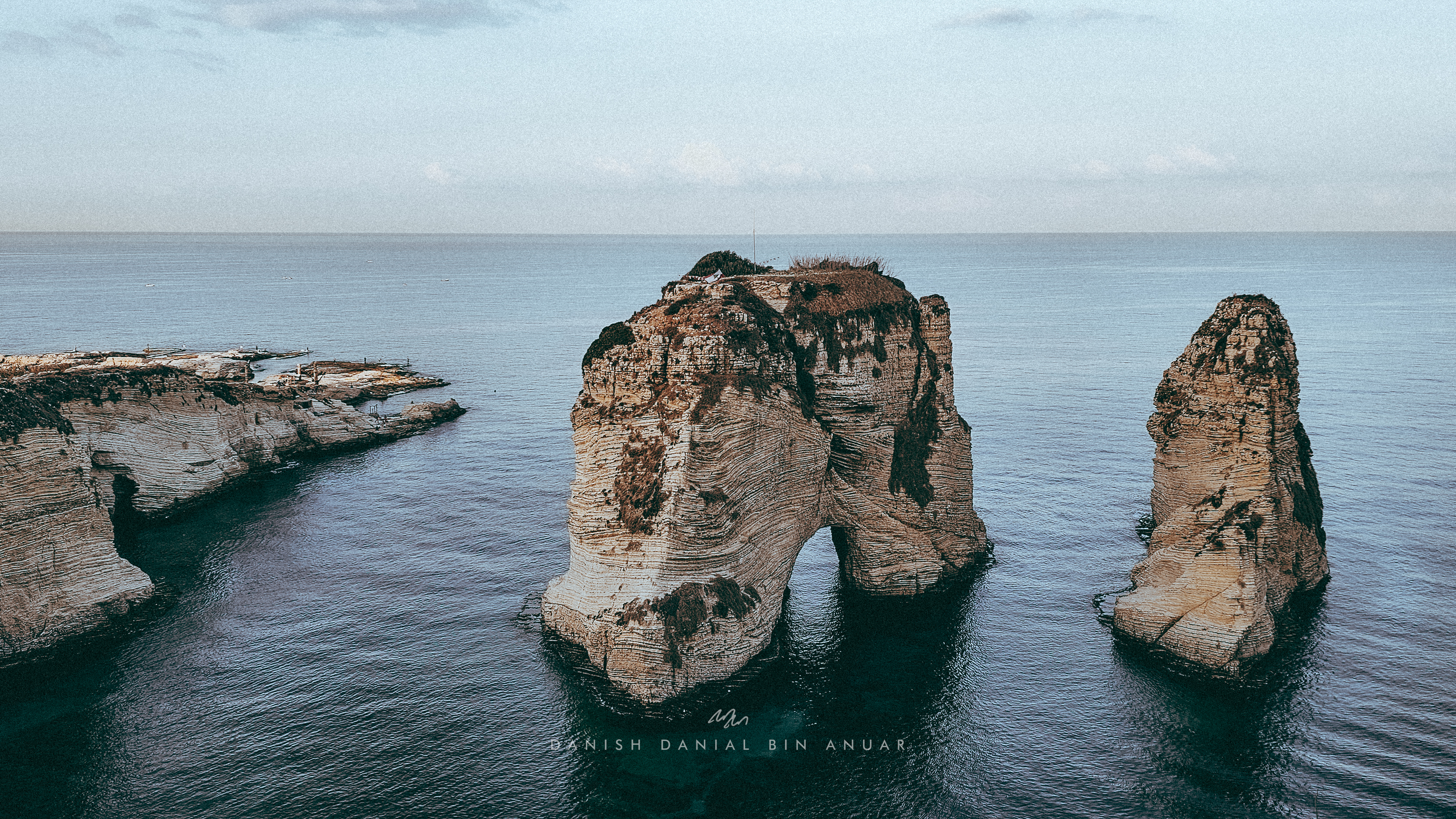
I watched the sunrise by the coast as the sun’s rays shone on the fishermen and the Raoucheh rocks in all its glory in the backdrop. I was on one end of the city so I decided to spend the rest of the day walking across all the main districts. From Hamra to Mar Mikhael, it’s as if I’ve travelled to 5 different countries; each district has its own character. It makes sense as Beirut is a very metropolitan city, representing many of Lebanese different communities. Along the way, I also got distracted by the many cats that approached me for attention – I think Beirut could rival Istanbul.
In Hamra, street art and independent bookstores told many stories. There was a memorable moment when a bookshop owner showed me a book he had written and exclaimed sarcastically, “Haha, I’m such a narcissist.” His bookstore caught my attention particularly because, within that tiny space, it had walls covered in political posters and boasted an impressive collection of old books.
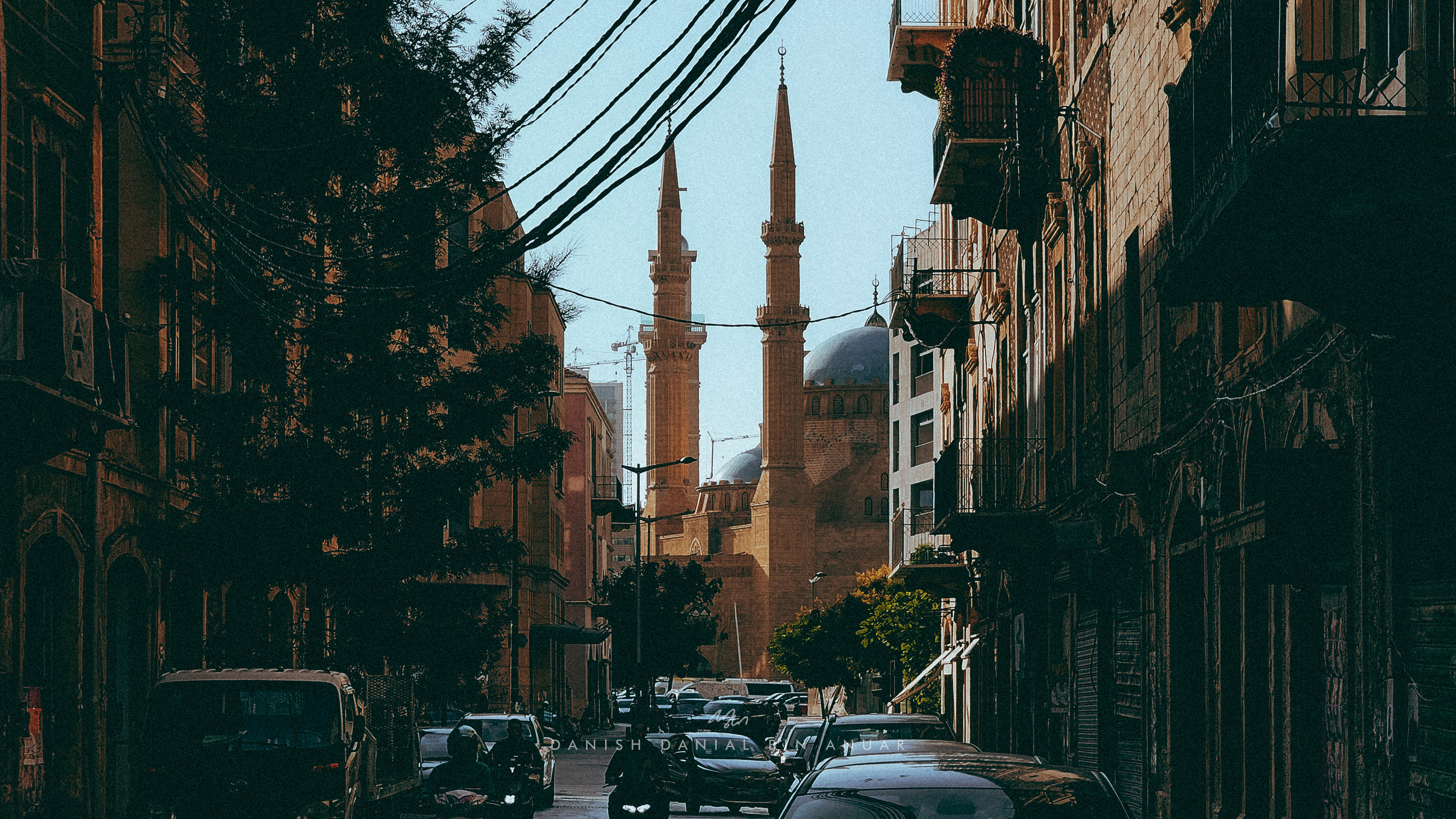
Then, there was Zaitunay Bay, an affluent area with high-end restaurants I couldn’t afford overlooking gleaming yachts I too can’t afford. There was also the city centre where you’d understand why they call it the “Paris of the Middle East” with avenues and buildings blending Middle Eastern and European styles. It was also home to the grand Mohamed Al-Amin Mosque, the St. George Orthodox Church, as well as many Roman ruins. From an angle, you could see the Lebanese flag, the crescent on the dome of the mosque, as well as the cross of the church all in the same frame. In Mar Mikhael, I was spoilt by the many options of Lebanese food within the labyrinth of streets and stairs. A unique snack I had was the Soujouk Shawarma. Unlike the shawarma I was used to, the meat was bright red with a salami-like texture. One wasn’t enough. I also visited the National Museum which held an impressive collection of artefacts from across the country including a series of mummies that were in the basement.
As I looked around, I saw reminders of the struggles the country has faced. Currency was a little confusing for me at first – I was told I could get by using USD. In my first shop, I handed over a USD note, and was returned with a mix of USD and LBP. In fact, the cashier gave me multiples of their largest Lebanese notes they have available, the 100,000 LBP note. The country faced multiple inflation crises to the point where they’ve used their equivalent of their 100 dollar notes as dollar notes. So, I walked around with a bunch of oversized notes in my wallet. Each shop had very varying different currency rates that I became numb to what it actually was and simply accepted what the cashier would return to me.
Additionally, many buildings were still riddled with bullet holes from the civil war. One building, in particular, stopped me in my tracks: Beit Beirut. Standing on the corner of what used to be the ‘Green Line’ dividing the city, the architects didn’t plaster over the wounds; instead, they preserved the sniper bunkers and the thousands of bullet holes that scar the elegant facade.
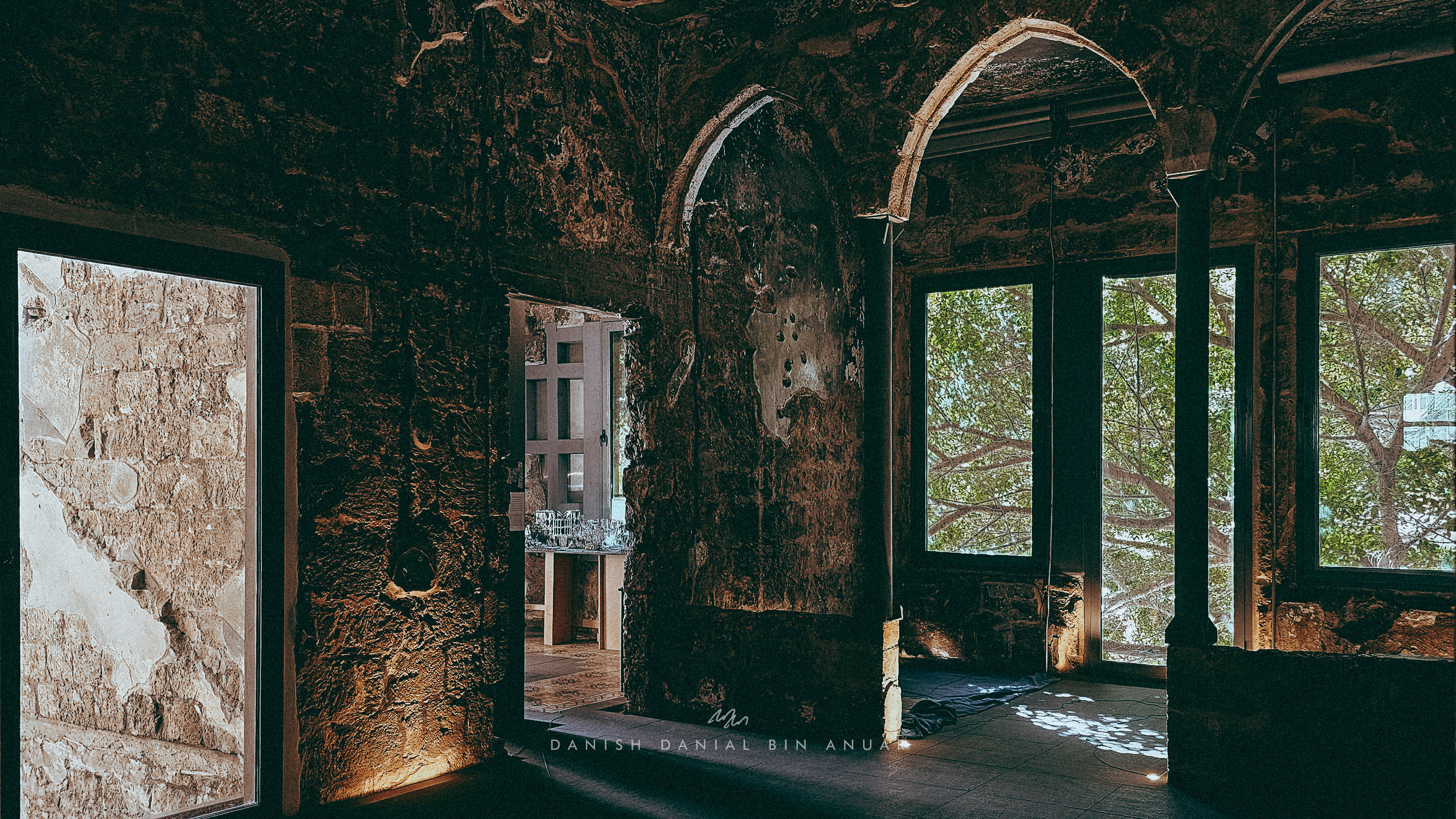
In the area where I stayed, the power kept flickering on and off (I recalled a barber laughing with his customer when it cut out). Of course, I also saw whatever is left of the grain silos that exploded in 2020. Hell, Israeli drones were still flying overhead with a deafening buzz. Yet, even with all of that, everyone kept going on with their day—a testament to the resilience of the people.
Byblos
An old beaten-up Toyota screeched and pulled up in front of my hotel (the driver did admit he needed to get a new car). “Are you Muhammad?” I replied, “Yes.” “I am Jihad, and this is Osama. Yalla, let’s go!” And so, for the next three days, the three of us—Jihad, Osama, and I—went on a little adventure up and down the country.
We kicked off with a tour to the north, a predominantly Maronite-Christian area. Our first stop was Jeita Grotto, a network of limestone caves containing stalactites and stalagmites that formed over millions of years, dating back to the Jurassic period. It was impressive—I’ve never seen anything like it, and photos don’t do it justice at all. In the upper grotto, where phones and cameras were not allowed to protect the formations from flash lighting, the sights were massive and beautiful beyond description. From where I was standing, the cave ceiling was around 40 metres high, and as I looked down into the abyss below, it was about 80 metres deep. I actually got dizzy and held tightly to the railings as I ascended and descended the steps drenched from water dripping above.
In the lower grotto, where we could take photos, we had to navigate via boat, and that was equally impressive. There were formations resembling many different things, including mushrooms. Jihad asked if I watched football. “That looks like a football audience, haha.” I thought to myself: That could be any audience, come on.

We then drove around the winding hills—which the car struggled with—to get to Harissa, a town overlooking Jounieh Bay. There stood the statue of Our Lady of Lebanon, where we managed to get breathtaking views of the bay to the north and the mountains to the south. We then travelled down to Jounieh itself via this claustrophobic cable car which could only fit an absolute maximum of four people. As the cable car descended, creaked, and swayed side-to-side, Osama said, “Let’s keep still—this feels really sketchy,” to which I was like, “Yeah, agreed.” As the cable car approached Jounieh, we went in between apartment buildings which was quite funny as we had 360 views of people’s houses. We starting waving at people we passed by and they waved back.

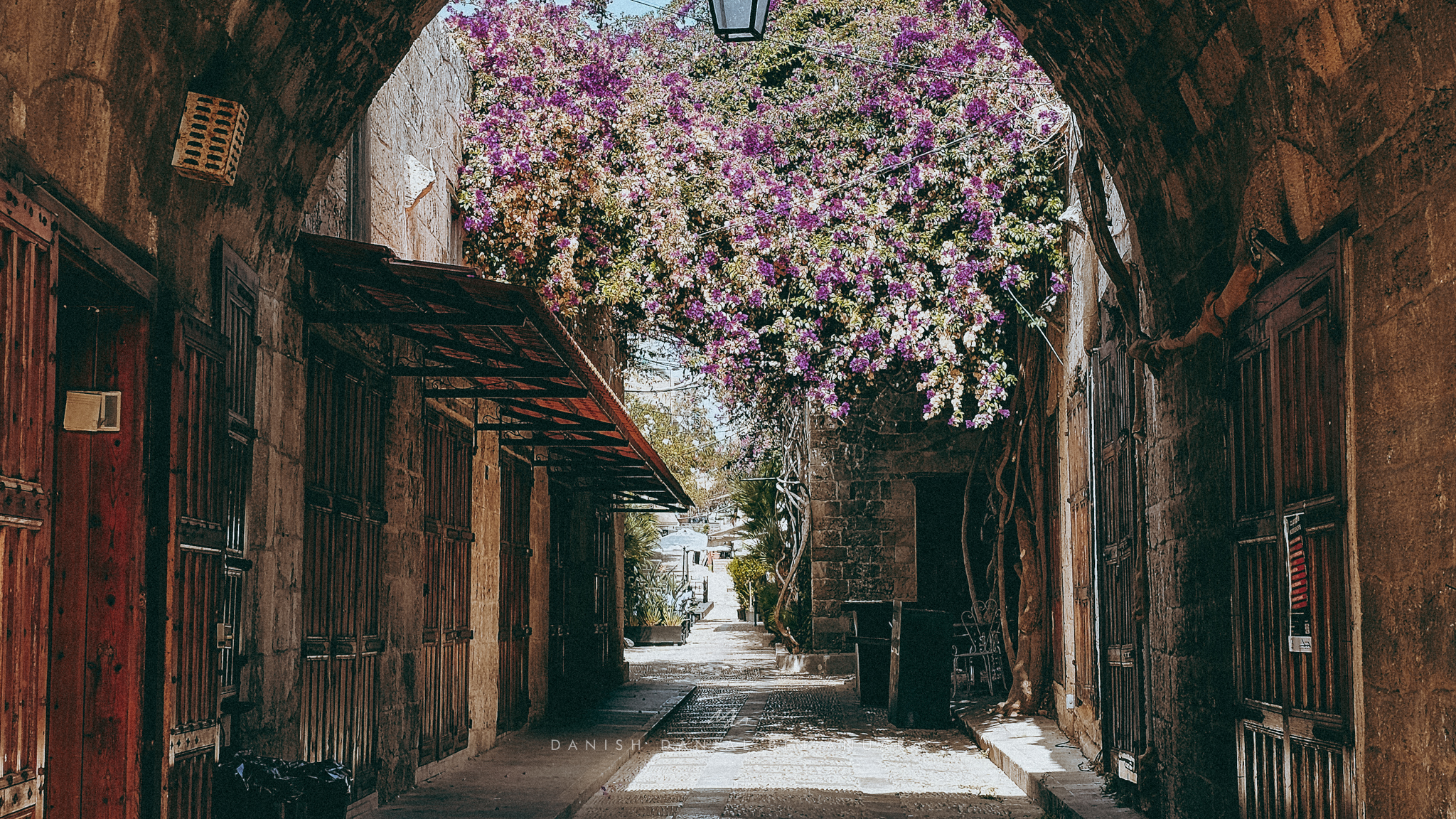
Our final stop was the historical city of Byblos, where we explored a Crusader-era Citadel that had ruins from the Phoenician and Roman eras, as well as the old souk. The old souk, like many old markets found here in Lebanon, were built by the Ottomans and were typical of what you’d expect of middle-ages Arabian markets. It was also home to an impressive Fossil Museum which housed some of the largest collections of fossils in the world. This is due to Lebanon’s limestone-rich geography and position as an earthquake-prone area. Highlights of that was the world’s largest shark fossil, as well as this fossil of a fish still in the stomach of another fish.
Beqaa Valley
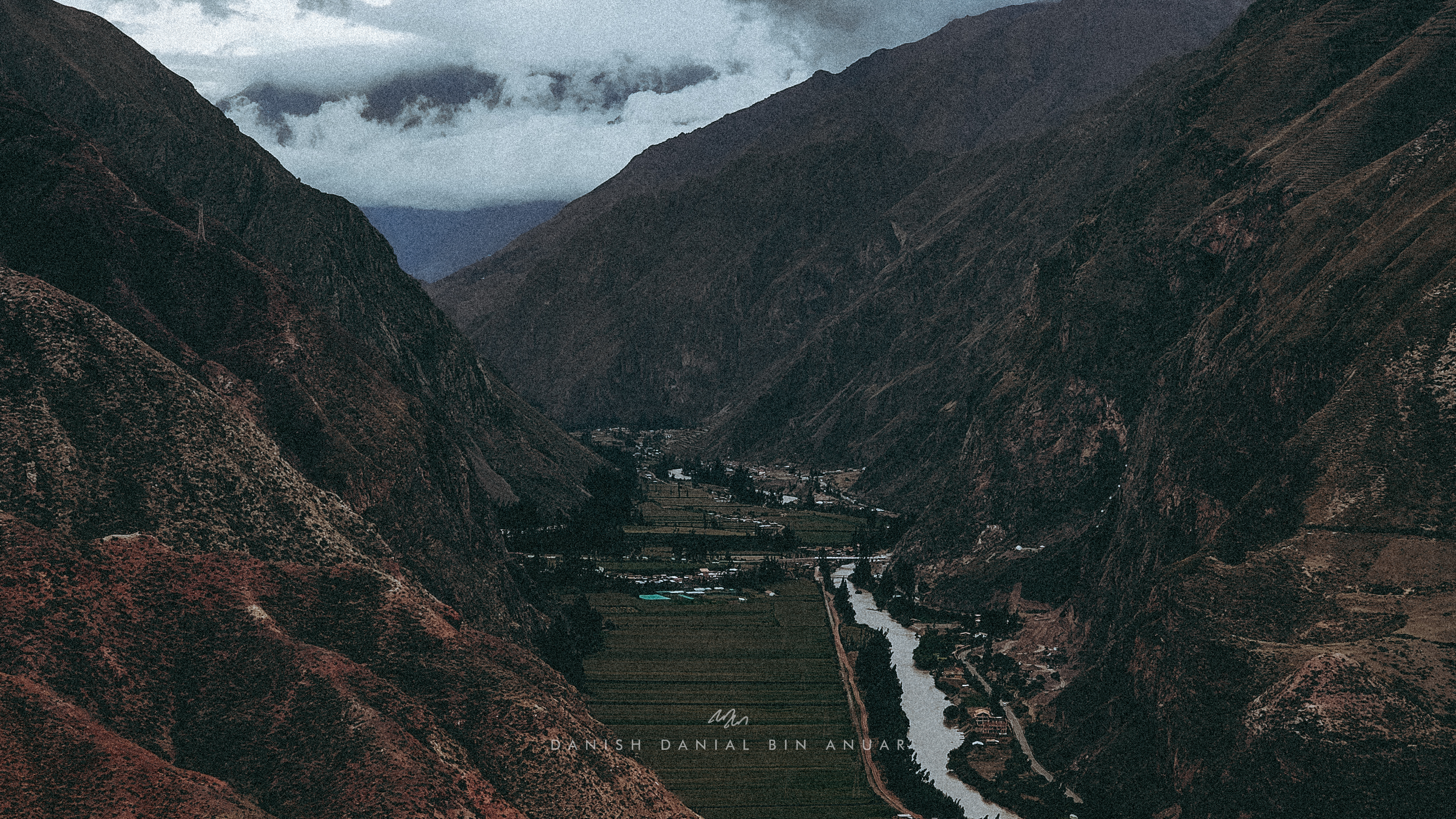
On the second day of our tour, we made our way towards the Beqaa Valley. What was pretty cool was passing an elevated point where we had a view of the valley from above. The landscapes here are reminiscent of my time in the Sacred Valley in Peru. We were driving through what the travel advisory map calls a “high-risk zone,” so we had to slow down and pass through a few fortified, concrete-blast-walled military checkpoints as soldiers armed with assault rifles peered into our windows. From my time in the police service, I know we used to look into cars to check if people were wearing their seatbelts. In this case, my educated guess told me that seatbelt compliance wasn’t exactly what they were looking for.
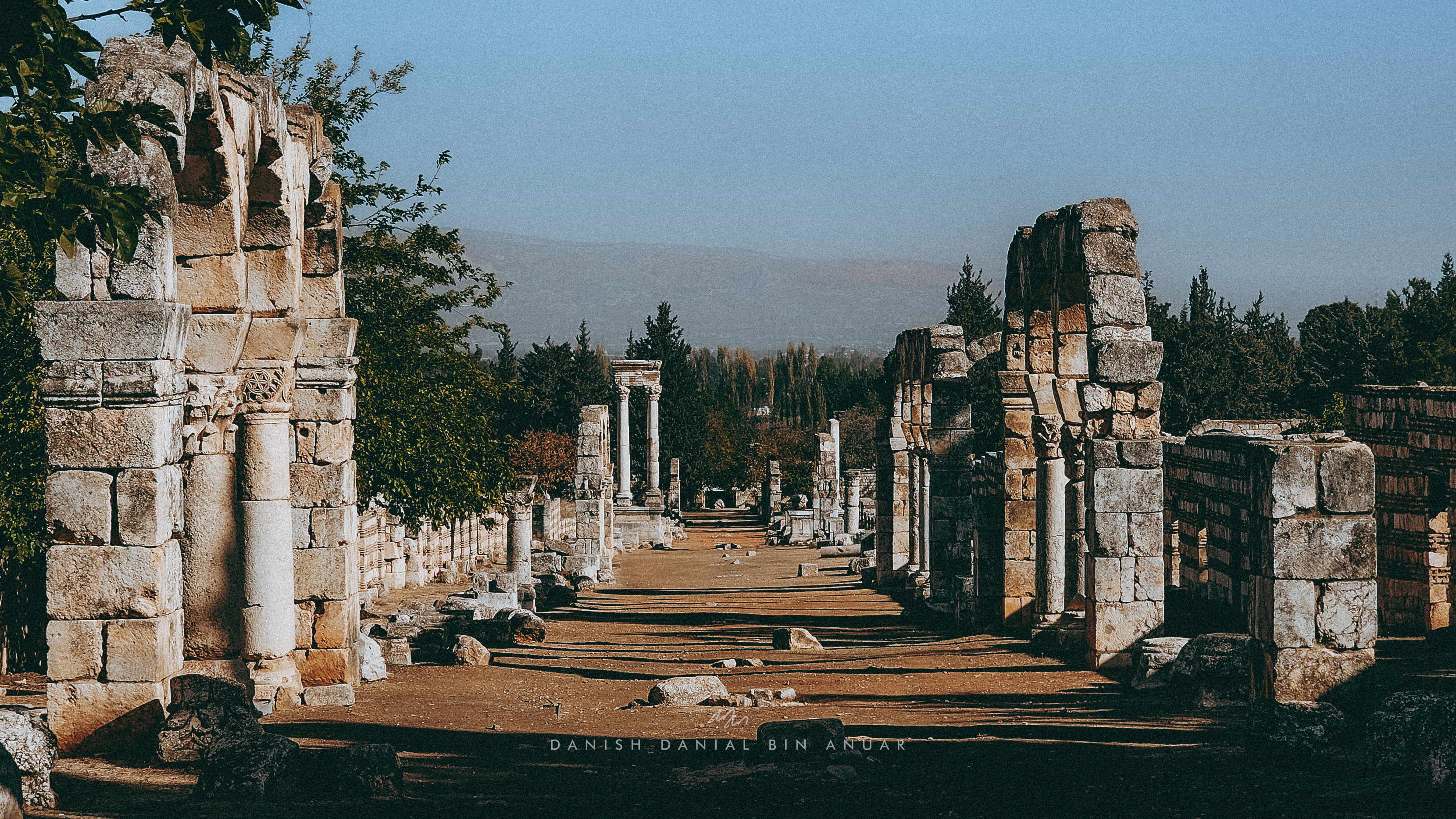
Anyway, our first stop was Anjar, home to the ruins of an Umayyad city dating from the 8th century, just kilometres away from the Syrian border. My first impression was that this was a huge site—though it would be superseded by the next one (spoiler alert). It’s a good example of medieval city planning; there were shops, houses, a mosque, and a grand palace that were still intact. This used to be an important stop for trade routes between Damascus and the Levantine coast. There wasn’t anyone around, so Osama and I had some fun climbing around and jumping from one wall to another, playing Assassin’s Creed.
Our next stop was Baalbek. Along the way, we passed by acres of farms—the land here is fertile for growing all sorts of crops. For the first time, I also got to see refugee camps which were mainly Syrian, and of course, you can’t help but sympathise with their situation. As we crossed into the town of Baalbek, the atmosphere shifted; we started to see more posters of Hezbollah leaders, flags, and the faces of those who died in battle.
Amidst this backdrop, I got to see the world’s largest excavated monolith—just look at the photo, it’s huge. It is maintained by Alfi, a local who is passionate about preserving history. It all started when locals began throwing trash into the site; Alfi persistently kept it clean, even when people thought he was crazy. Had me thinking – we need more people like Alfi. I bought a Shemagh from him, and he helped me put it on, which made the moment feel that much more special.

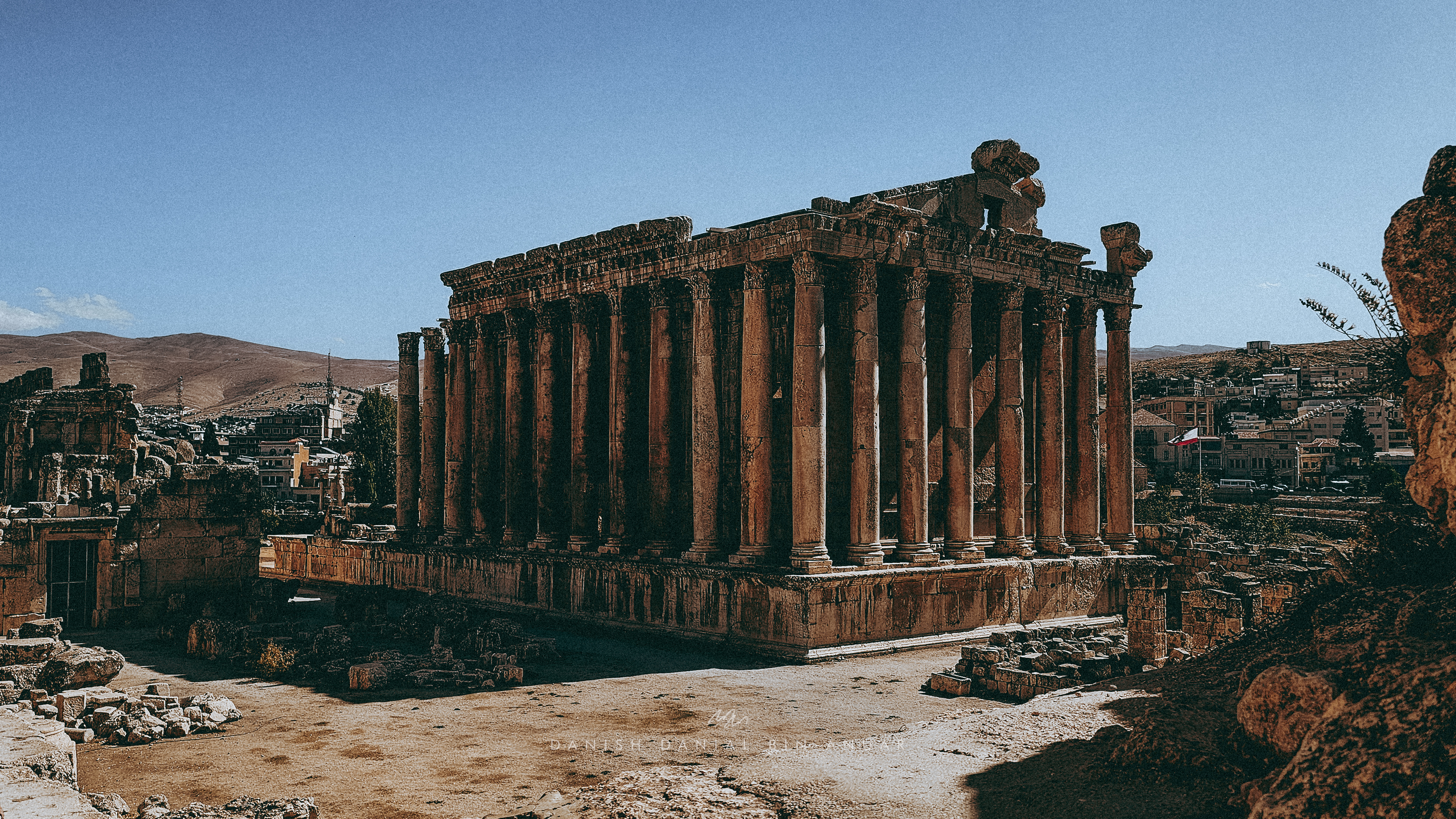
Our final stop was the most mind-blowing site I’ve ever been to (next to Machu Picchu)—the Baalbek Temple complex. A sacred site dedicated to Jupiter, Bacchus, and Venus. The Mecca for the Romans, if you will. It is among the best preserved in the world—the temples are still very well intact. It was a huge complex, and we were absolutely stunned by the scale of it; standing beneath the towering columns of the Temple of Jupiter (the largest in the world), I felt microscopic. Again, there were only a handful of us there, so we had the whole site to ourselves.
Closeby, we stopped by a restaurant for lunch that served probably the best thing I’ve ever had on this trip – Sfeehas. I would describe them as sort of like mini pizzas topped with meat in traditional levantine spices. It’s left such an impact that I still think about it today.
The South
Now, a tour of the south. Jihad, our driver, hailed from the region so he was able to give a little bit more context. We asked about the drones that were flying overhead and he replied, “Oh that one? That’s the big one!” The humor masked a grim reality; in fact, just a few days prior, Israel had launched an airstrike in a town close to where we were.
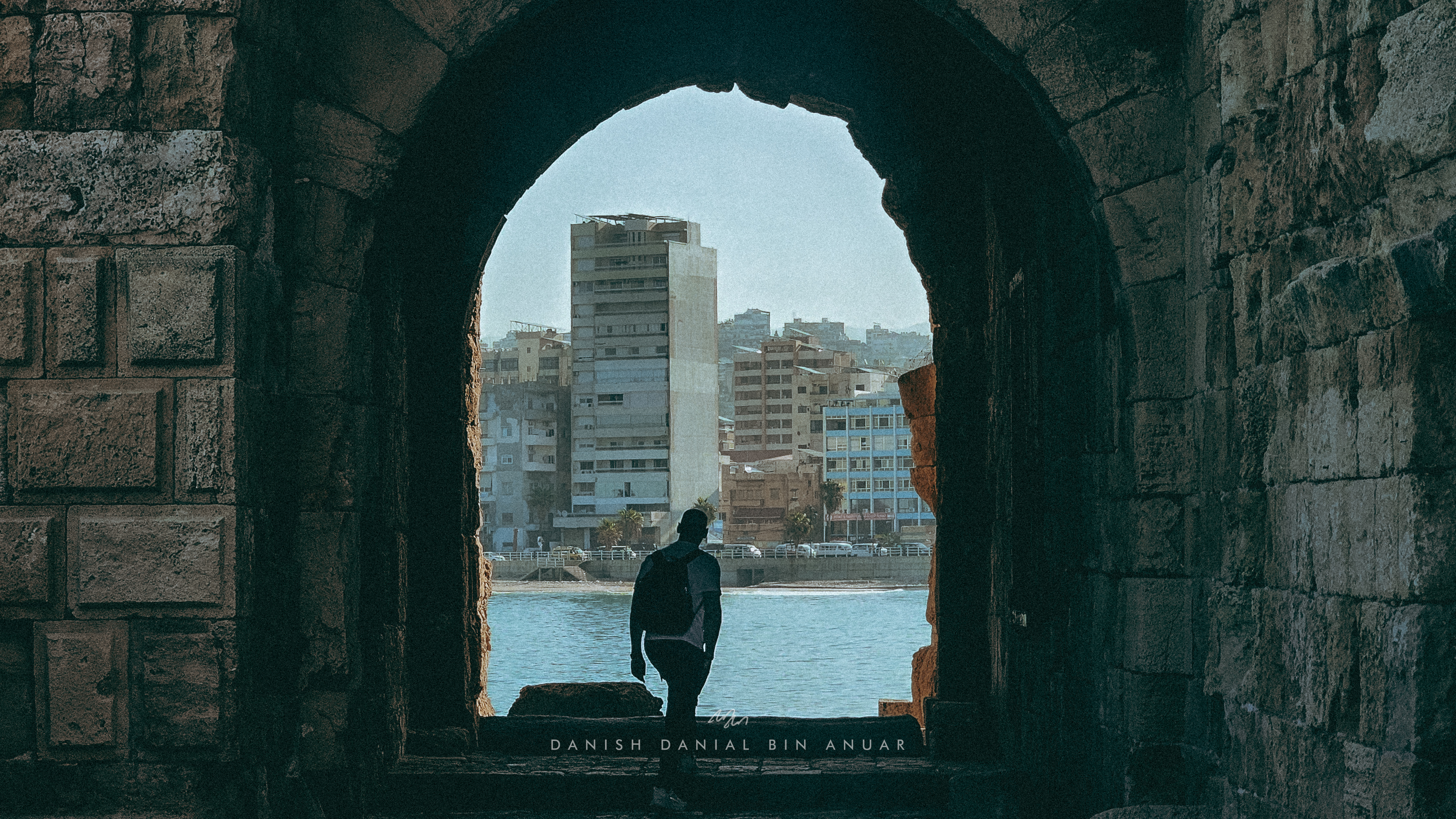
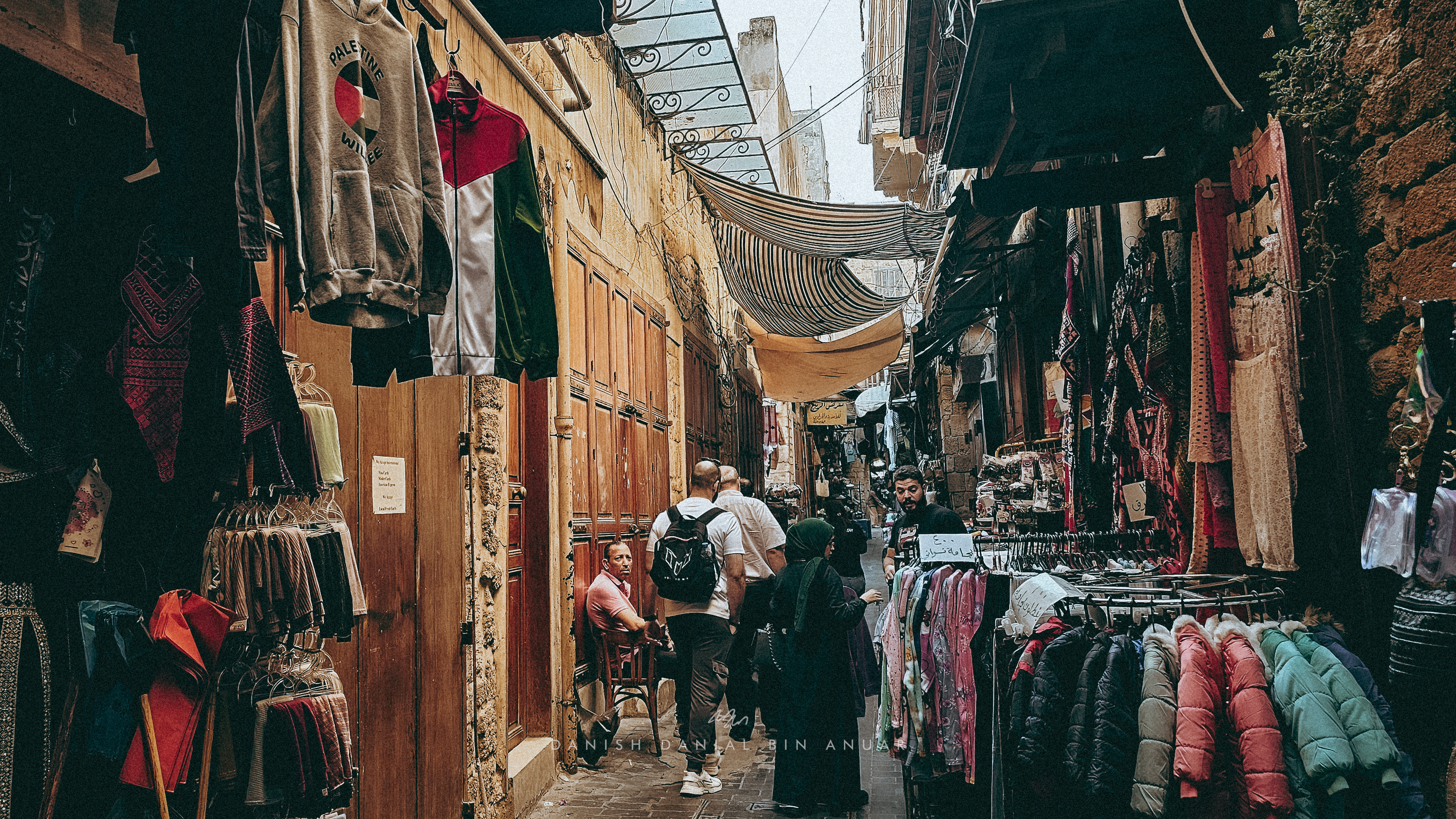
Our first stop was Sidon, where we explored a Crusader-era Sea Fort and wandered the old city. The old souk was exactly what you’d expect a traditional souk to be: tight corners and bustling with life. We paid a visit to the Church of St. Nicholas, where Christians believe that Saints Paul and Peter met. As we entered the prayer chamber, Jihad asked, “What do you think stands out about this?” We then realised it was split down the middle between Catholic and Orthodox traditions.
We then visited a traditional soap museum dating from the 17th century. As soon as we walked in, the air was thick with the scent of laurel and olive oil. We got an overview of how the soaps were made and the different types produced. My travelling partner, Osama, seemed extremely excited—I’ve never seen anyone so excited over soap. He mentioned that he was of Palestinian descent from Nablus, a city well-known for traditional olive soaps, and this was the closest he has ever been in his life to his heritage.
We drove up to a nearby mountain which housed the Church of the Waiting Lady. There was a cave where Christians believe Mary waited for Jesus to finish preaching in Sidon. Once again, there were magnificent views all around, with the sea to the west and the mountains to the east.

We then travelled further towards the south. The deeper we drove, the more the atmosphere shifted; the chaotic energy of Beirut was replaced by a watchful tension. Yellow Hezbollah banners were more and more visible at the side of the roads. We passed through multiple checkpoints, including a memorable one where a soldier glanced at me for a good five seconds, wondering what this foreigner was up to. Tyre is known as one of the oldest continuously inhabited cities in the world. It’s also known as a Hezbollah stronghold and remains an active conflict zone. There was quite a bit of UN presence to ensure both Israel and Lebanon maintain their treaty obligations, and all around, there were buildings damaged by fresh airstrikes. In fact, as of writing, UNIFIL had just shot down an Israeli drone.

It’s also home to the world’s second-largest Roman hippodrome. It was massive, with stone arches stretching out as far as the eye could see, and completely empty of tourists—we had the ancient stands entirely to ourselves. Osama and I explored the site, identifying the seating galleries and imagining the routes the chariots would take around the arena. We even joked that this could be an ancient F1 venue.
We also explored Tyre’s old town which had winding alleys and colorful buildings, lined with all sorts of potted plants.
There were beaches as well—the most pristine I’ve seen so far. The water was typical of the Mediterranean—turquoise blue and water so clear you could see all the fish swimming below. The coast stretched uninterrupted for miles, accompanied by a range of hills and mountains. In the distance, Jihad pointed out and smiled. “You see that? That’s Palestine.”
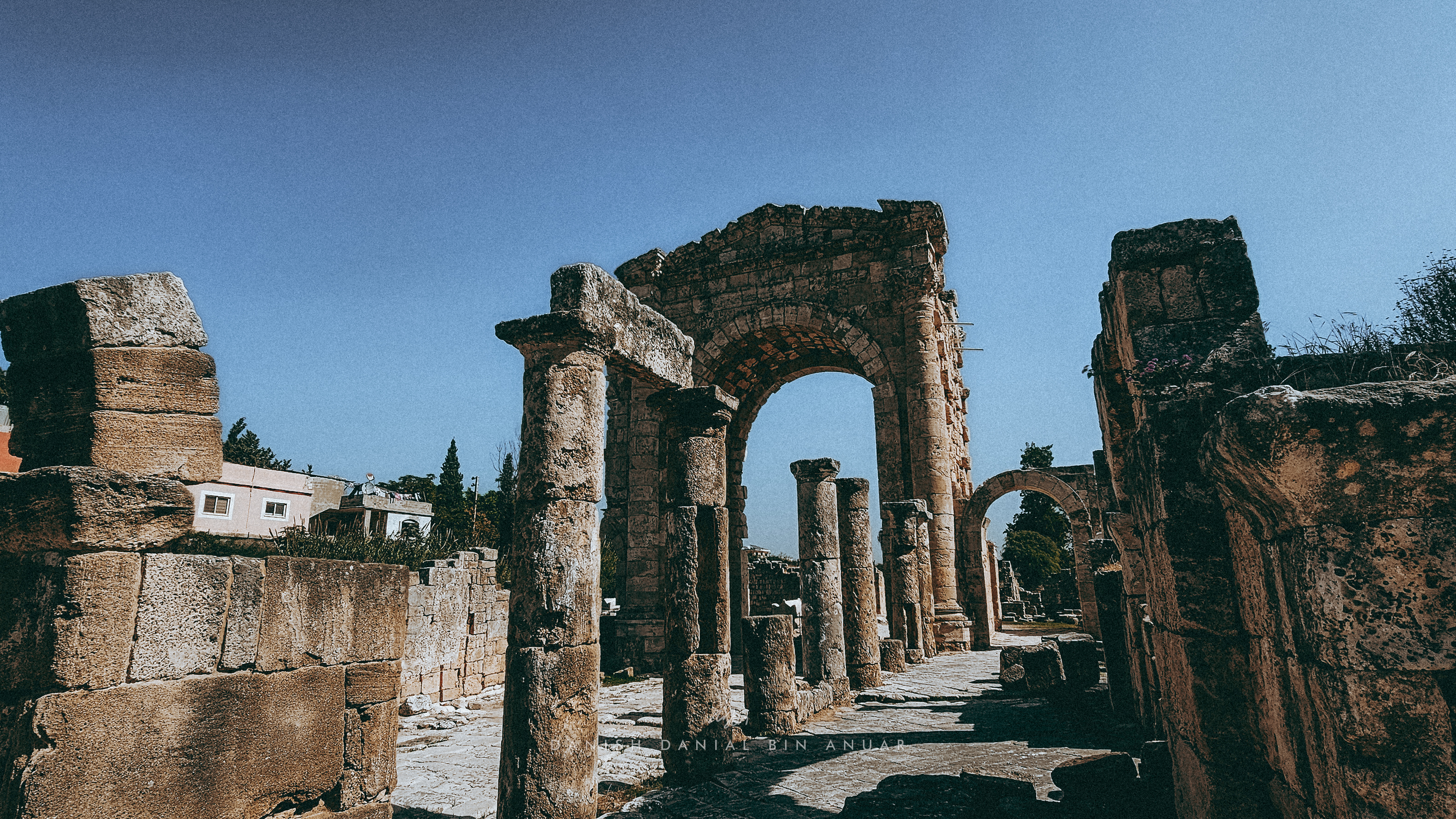
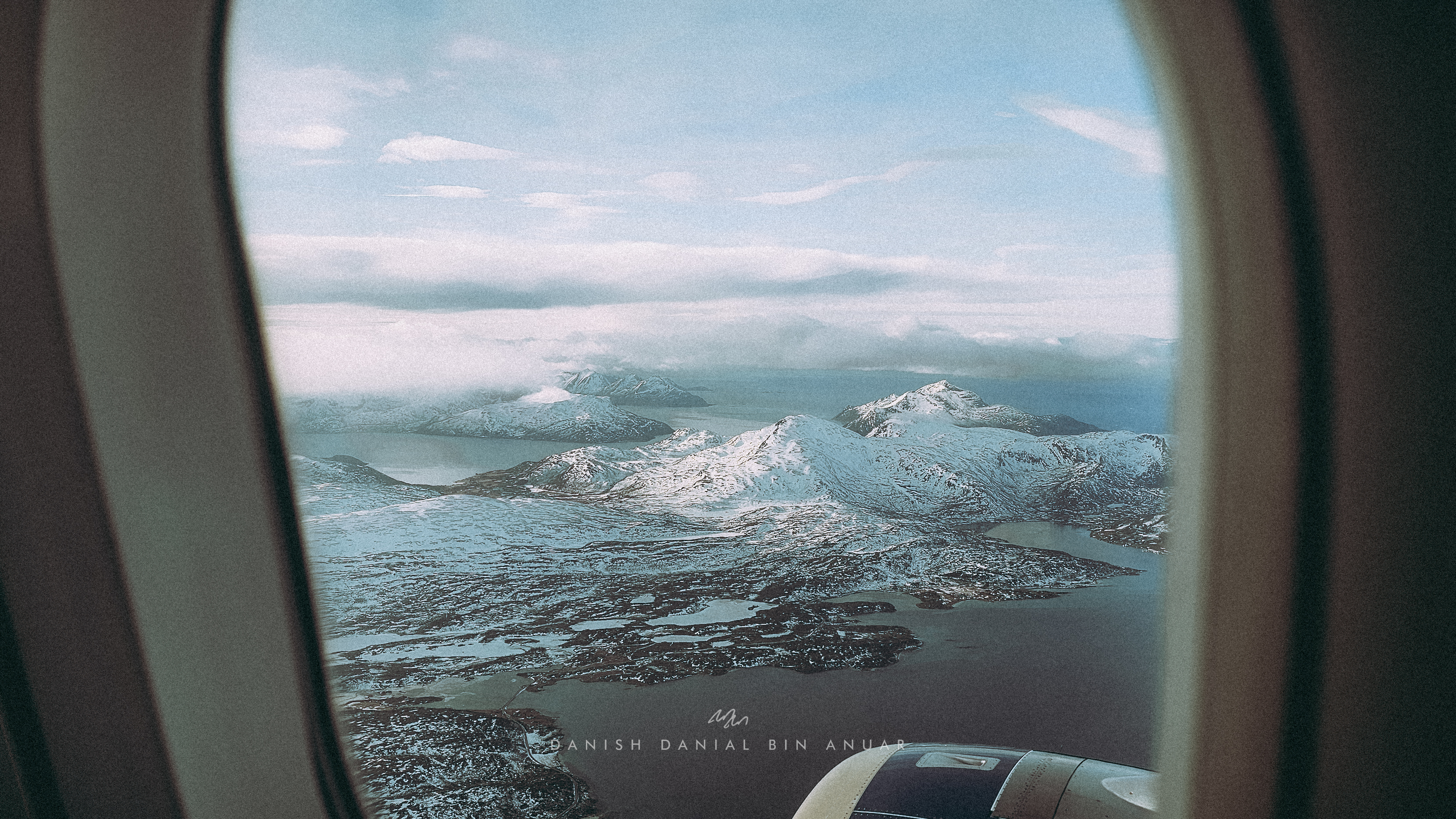
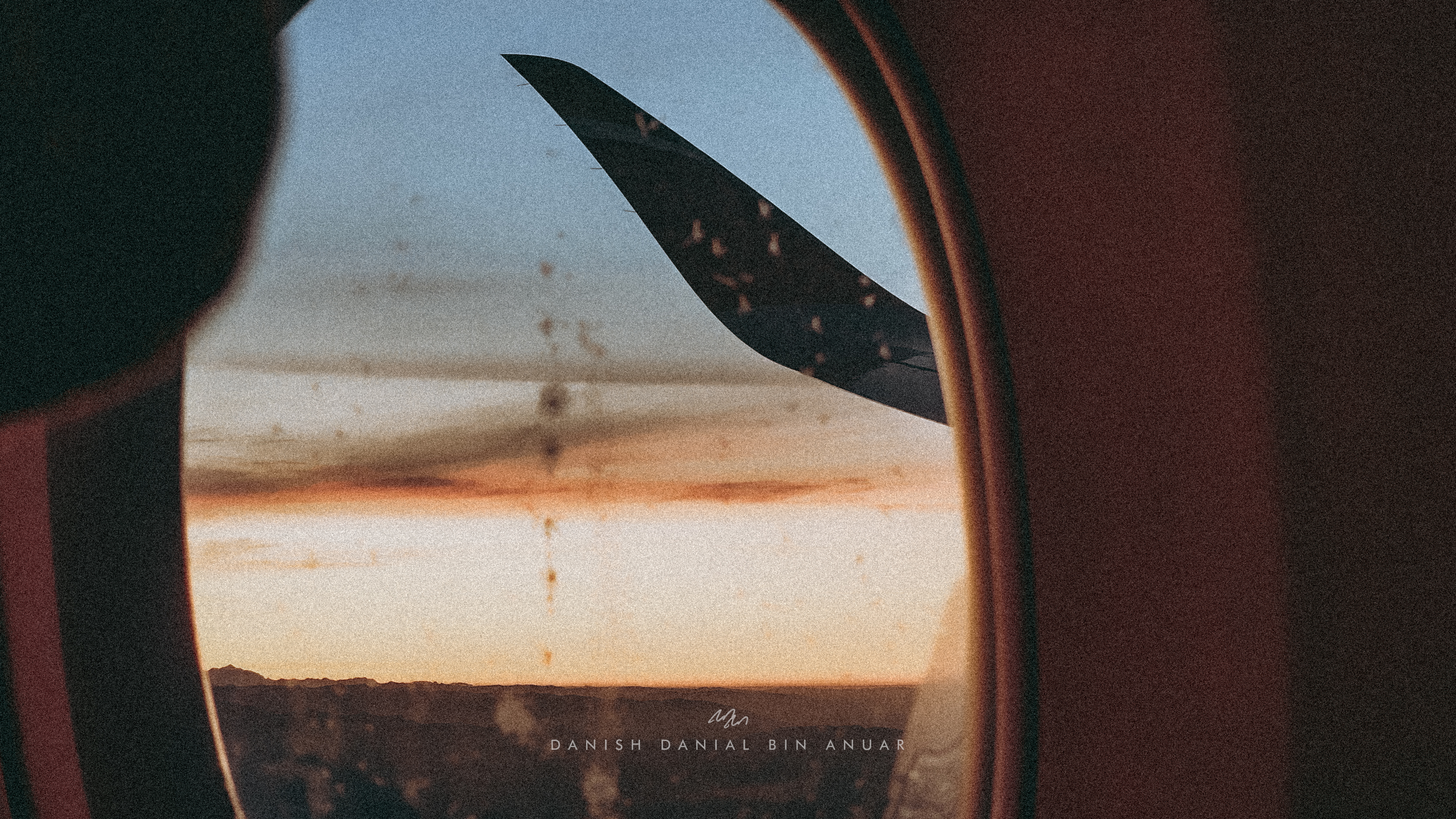
The drive back to the airport was far less dramatic than my arrival—no fake taxi drivers, no makeshift karambits, just a quiet reflection on the whirlwind of the last few days. As my plane took off, banking over the Mediterranean, I looked down at the coastline one last time. I thought about the “red zones” on the travel advisory map. They were still there, of course, and the drones were likely still buzzing somewhere below. But the map didn’t show the smell of olive soap, the laughter of a bookshop owner in Hamra, or the sheer scale of Jupiter’s columns. Lebanon is a country that seems to exist in a permanent state of precarious balance, teetering between destruction and beauty. I’m just glad I finally turned that green marker on my map into a reality.
For more photos of Lebanon, head over to https://www.behance.net/itsdadanial/






























































































 Danish Danial Bin Anuar