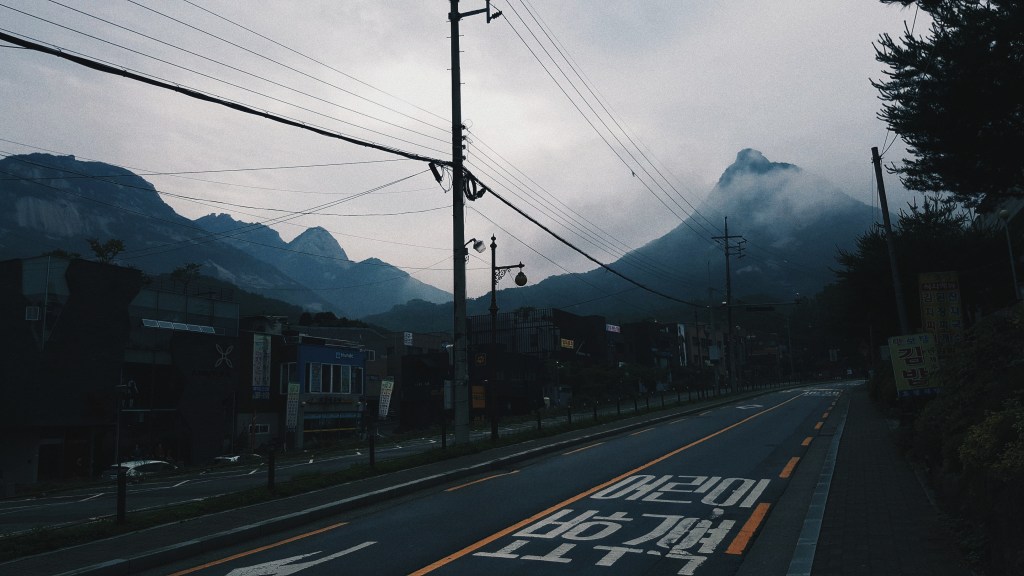
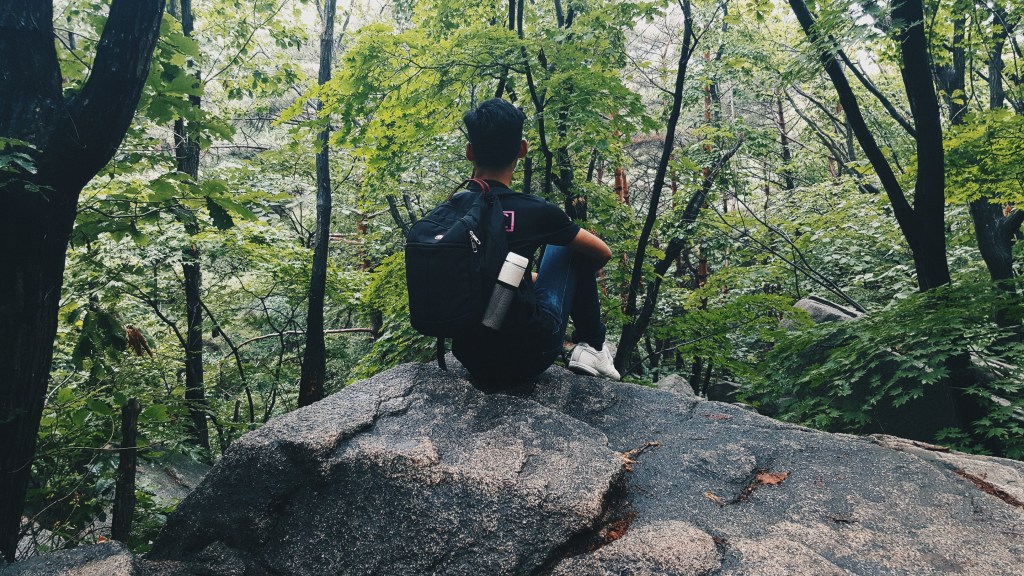
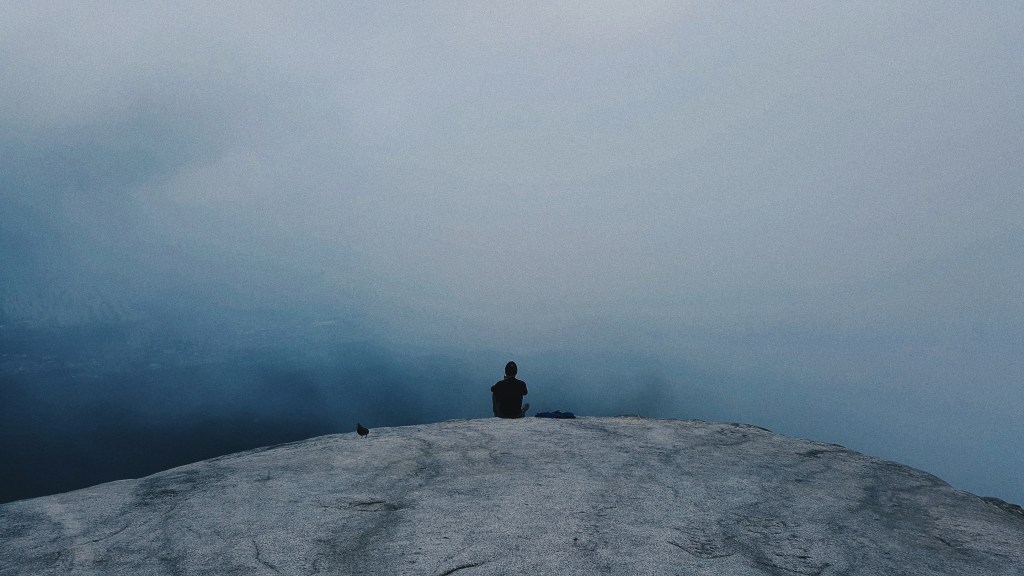
On my second day in Seoul, South Korea, I decided to climb up Bukhansan. My goal was to reach the highest peak, also known as Baegundae Peak, which was at 836m. This was my first time ever climbing any mountain, and I’m doing it solo so I was slightly nervous but excited at the same time. I set out from my hotel earlier that morning, at about 7 in the morning.
To get there, I took the subway to Gupabal train station and took bus 34 that took me close to the base of the mountain. I actually missed my bus stop since the entrance was not so obvious, so I actually walked all the way back. At the base, there was a street with a number of shops, but all of them were closed.
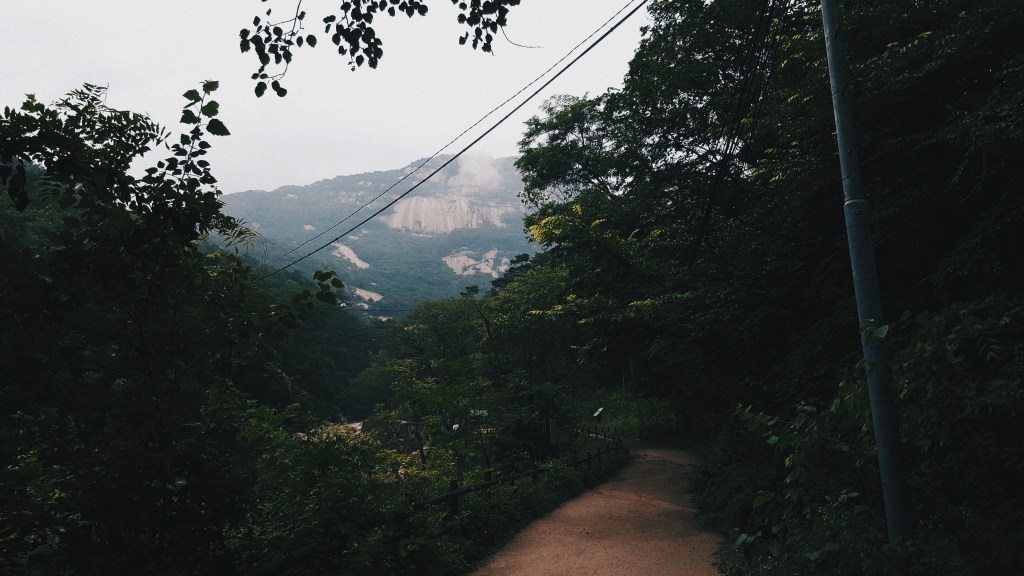
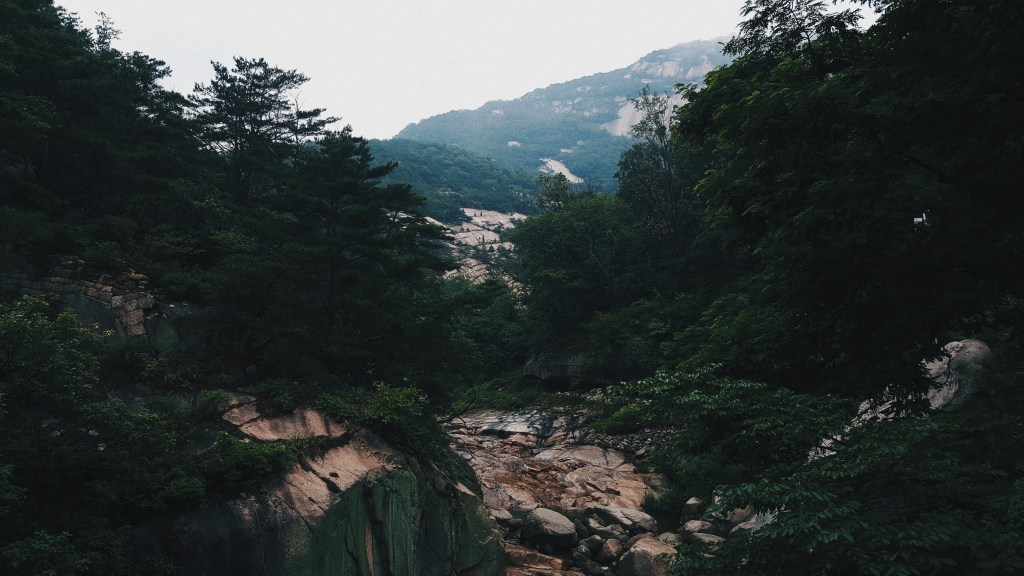
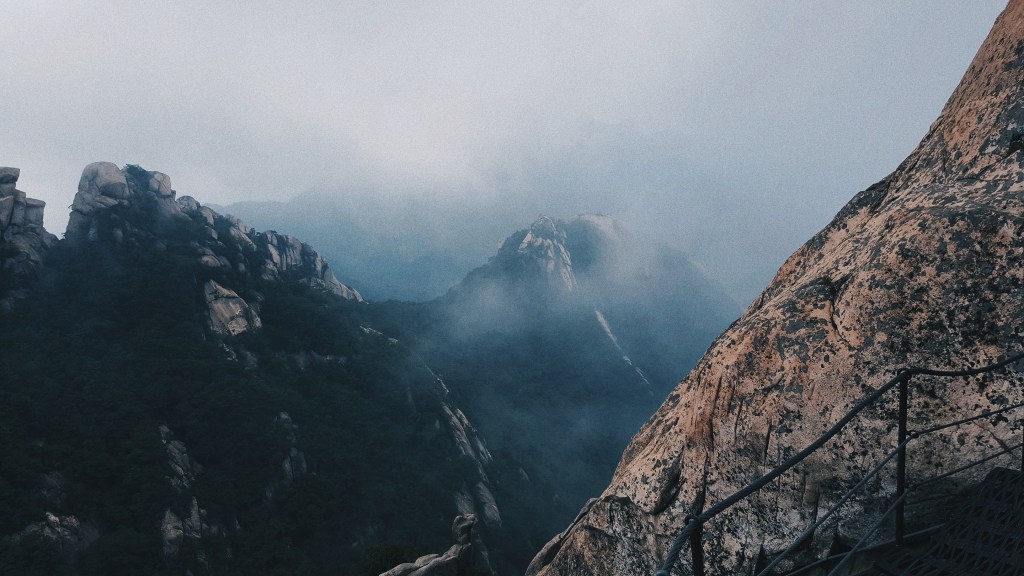
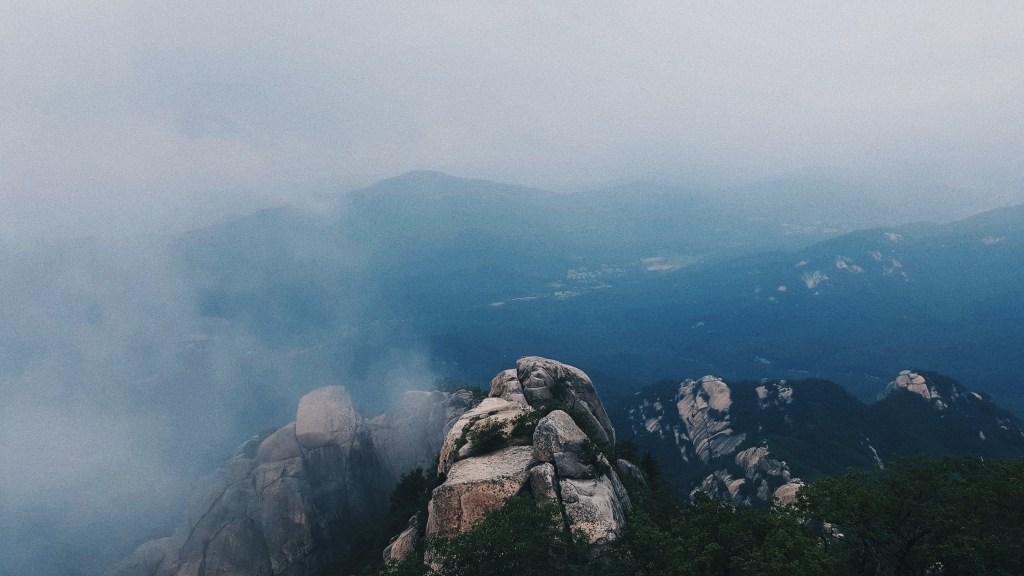
On my climb up, there were some amazing views of the mountain ranges as well as Seoul itself. I also bumped into some structures and temples along the way, and the temples, were active by the way.
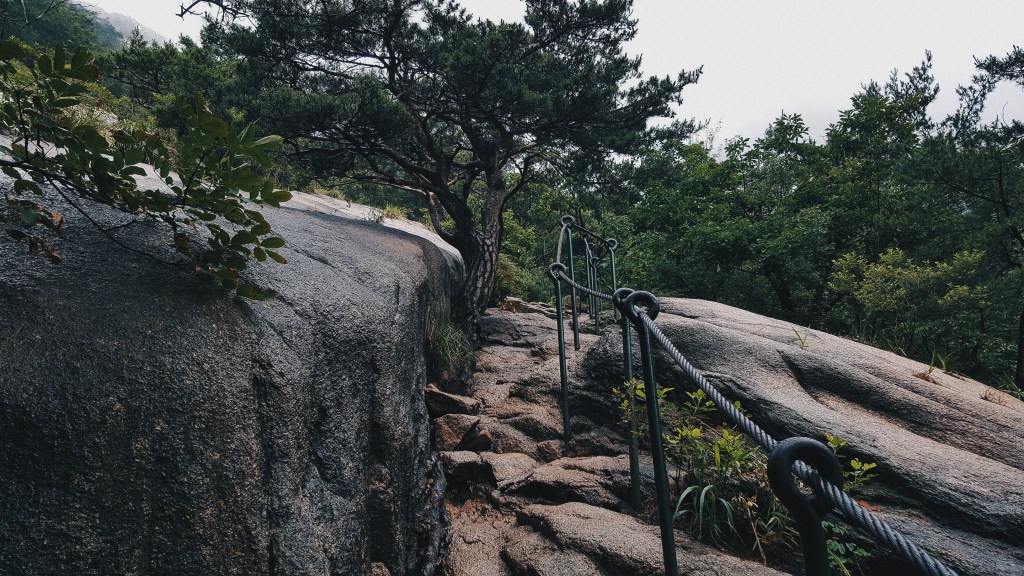
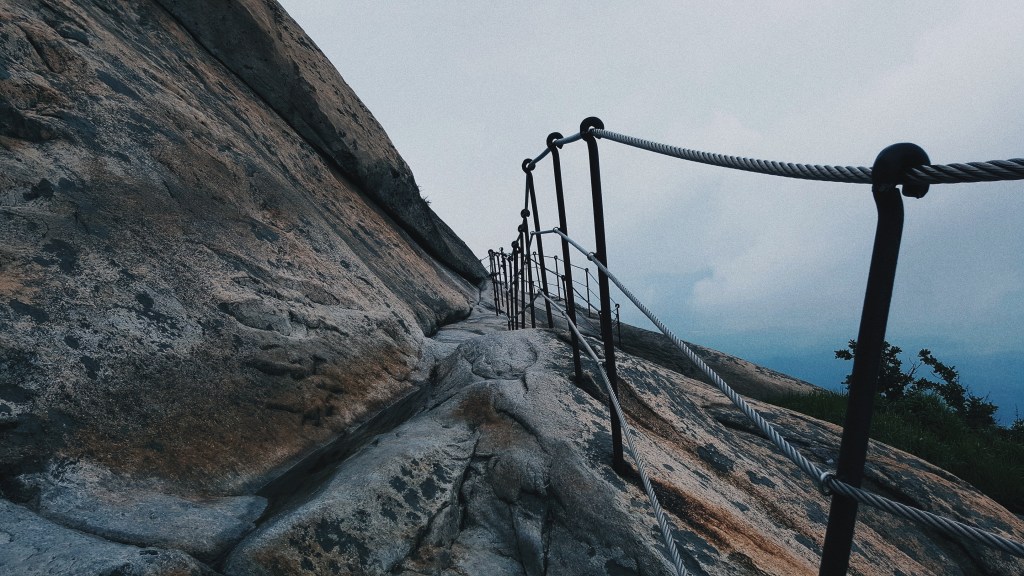
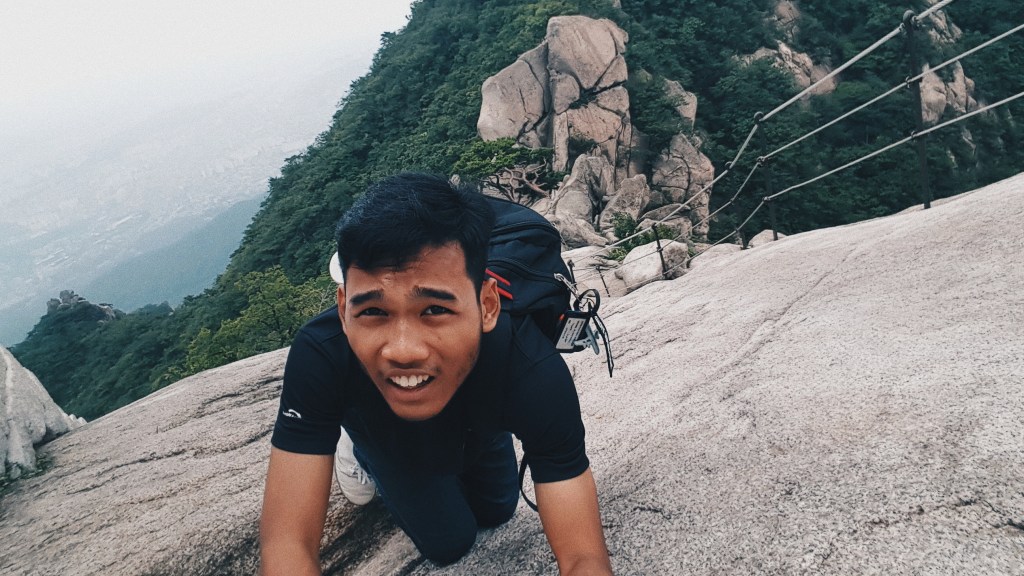
As I got closer to the top, paths got a little more narrower, and there were railings that you would have to hold on to (so that you wouldn’t fall down the steep cliffs).
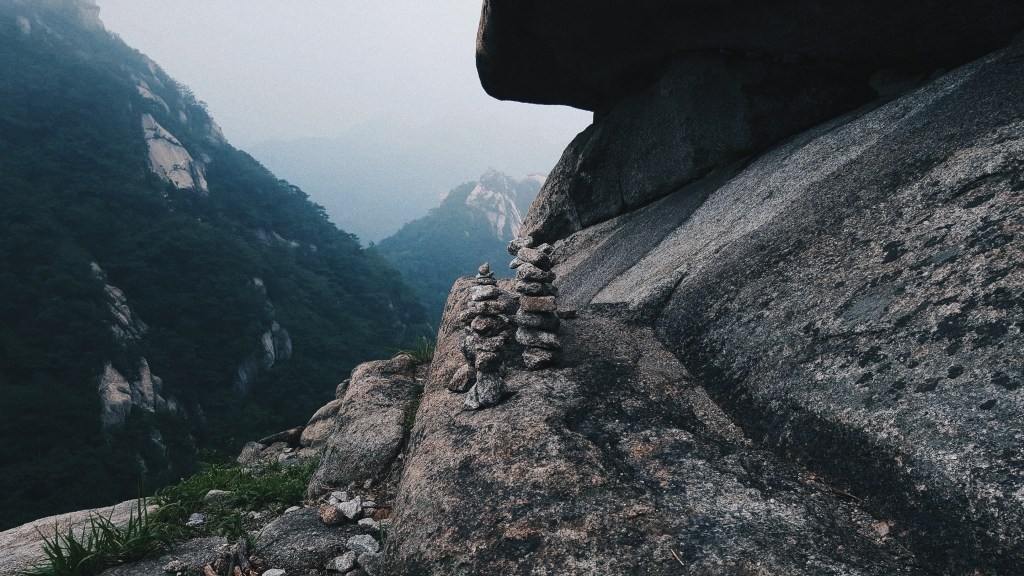
After 3.5 hours of climbing, I was rewarded with awesome views at the top.
Overall, it was quite the experience, and it was worth it! I spent about an hour or so at the peak appreciating the scenery and rested in the cooling environment.
After 3 years with my phone, it died of the cold here in Seoul. All of my work, projects and photos went with it. However, I looked at this more of an eye-opener rather than a… erm… loss. I mean from what I learnt in Busan, not having a phone actually made me realise the importance of disconnecting with the virtual world and re-connecting with the real world. I was able to appreciate every moment and every second of my time here in this vibrant city.
Anyways, like I said, I lost most of the pictures I took here (coincidentally, ALL of them were pictures of food) in Seoul, and as a substitute for my phone, I brought along my MacBook Pro and used the front facing camera to take photos. So, I’m sorry if the quality of the photos degrade as you scroll down this post.
THROWN INTO THE POT
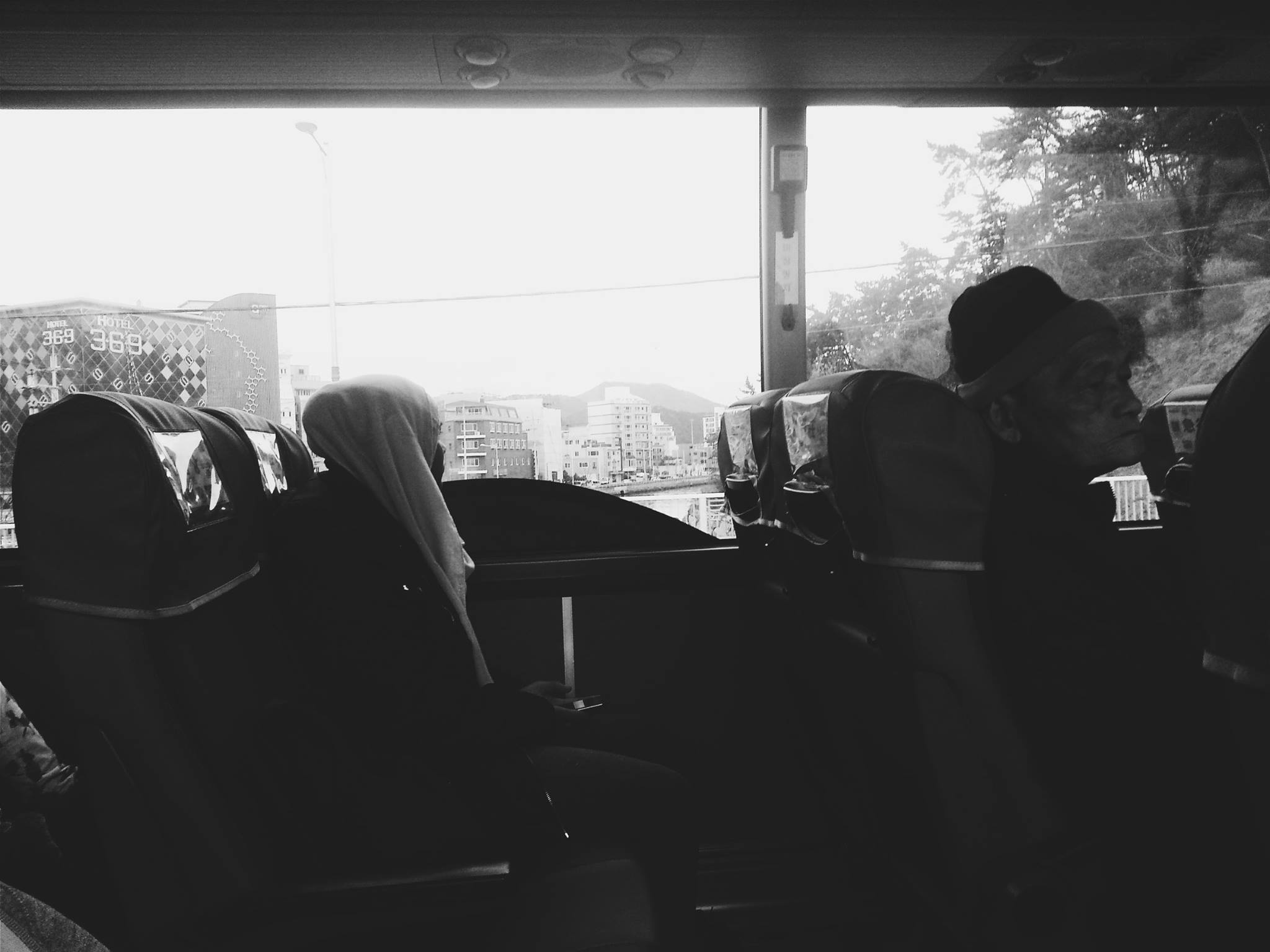
It was about a 2-hour bus ride from Pyeongchang to Dong-Seoul Bus Station where we rode a taxi to our little motel in Hyehwa. The long journey was painful but the sights and views as we went along actually helped alleviate the strenuosity of sitting in a tight, confined seat for a long time.
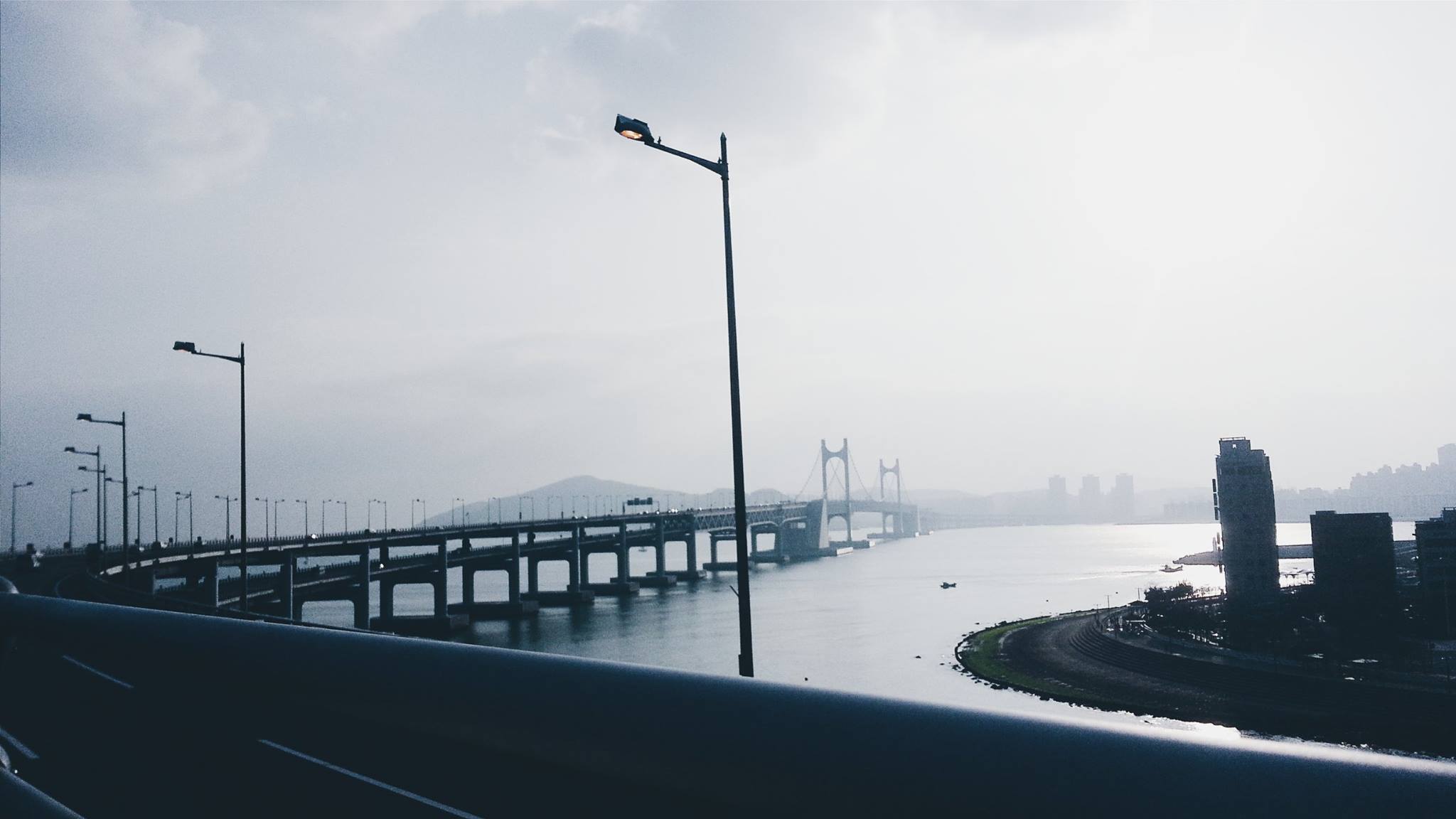
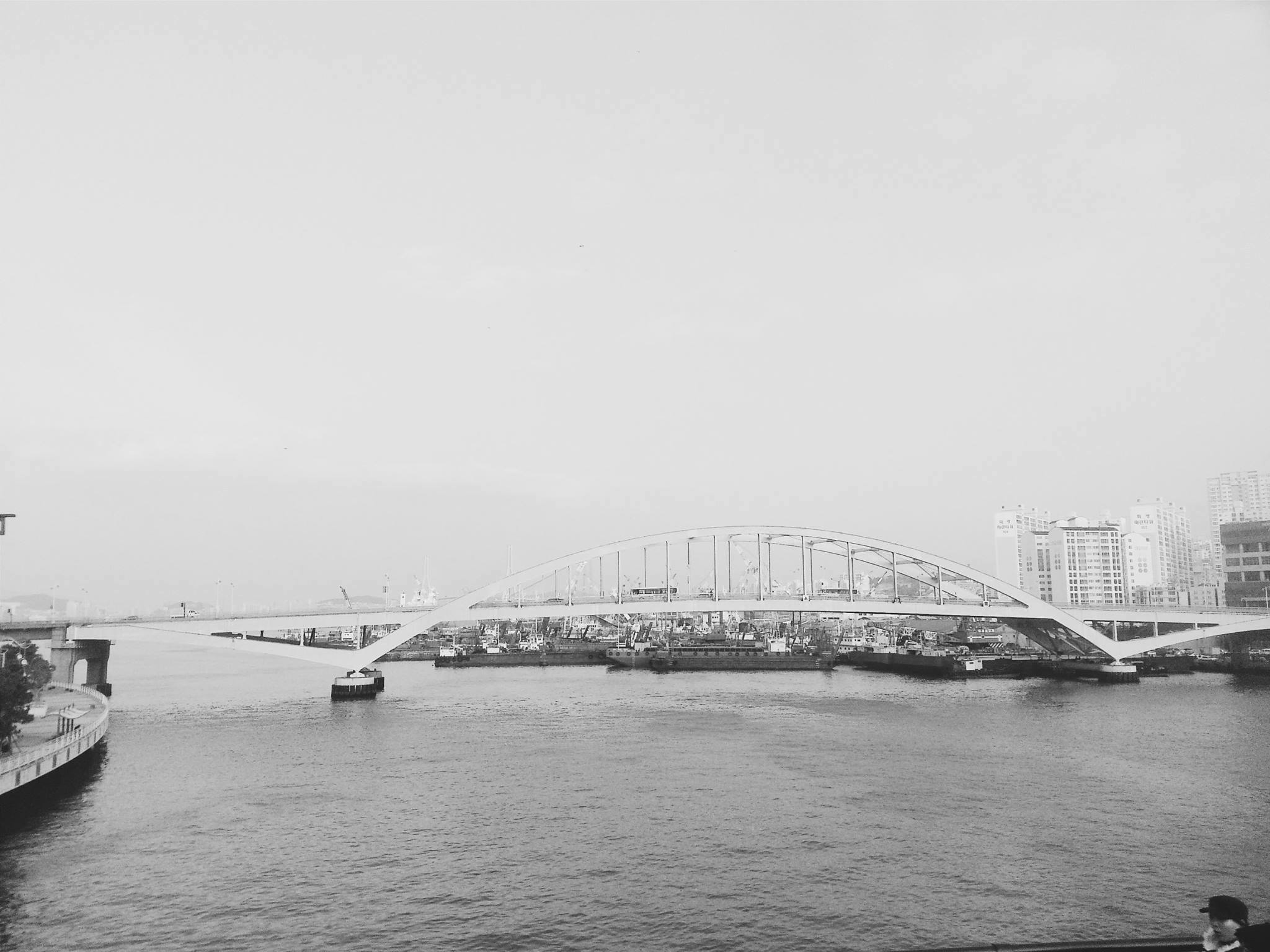
My first impression of Seoul was that it was a City of Bridges. I mean… it’s kinda hard to miss a bridge here. Well, they have to build the bridges to link up both sides of the Han river that cuts through the city core. There are bridges of all kinds ranging from suspension bridges, to regular beam ones. Most of them have eye-popping architectural features that make them stand out in the city skyline.
PUBLIC TRANSPORTATION
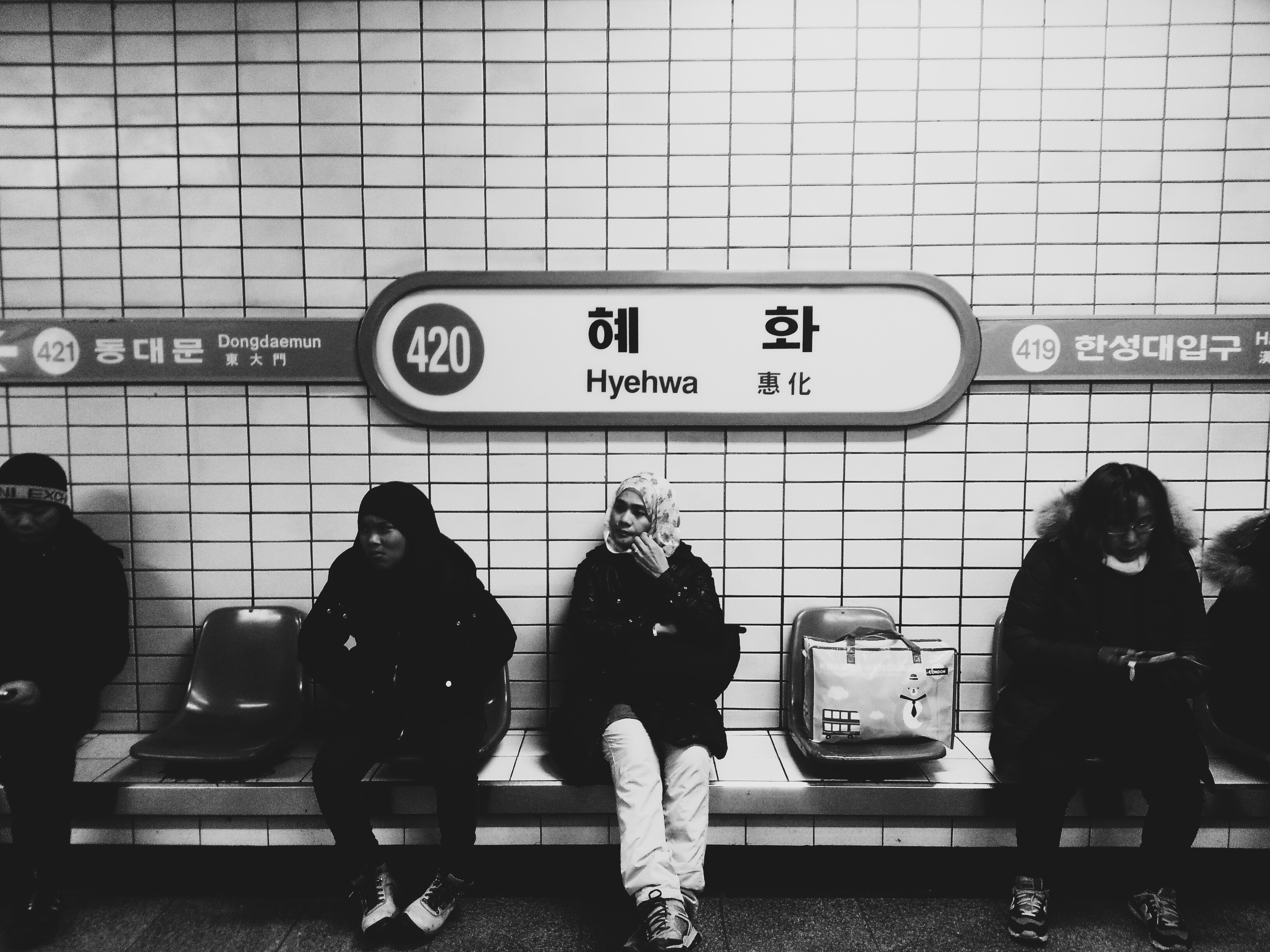
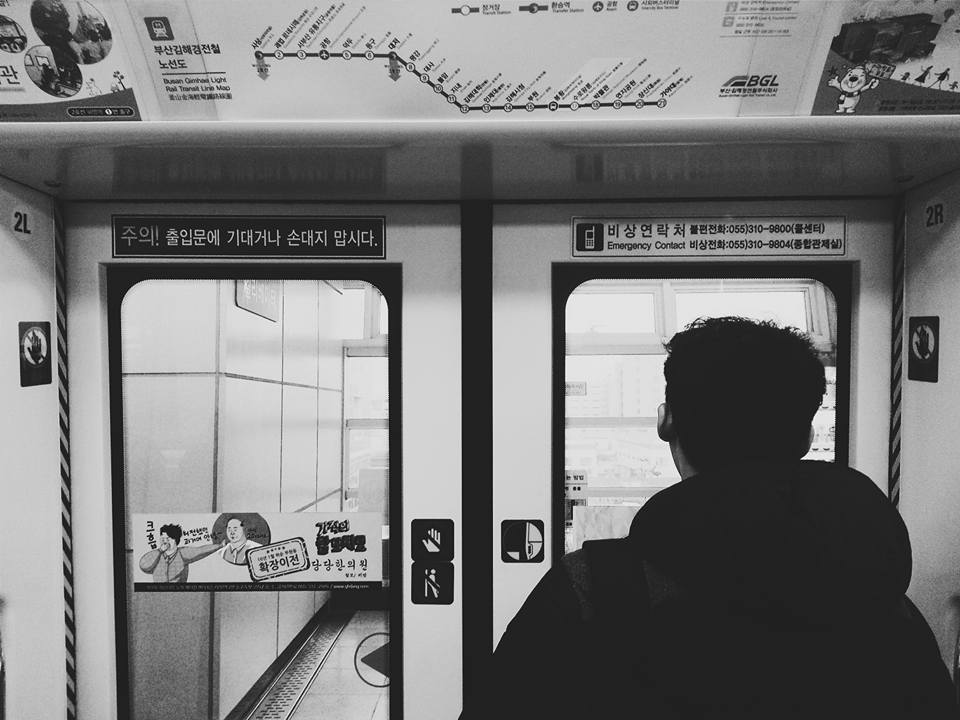
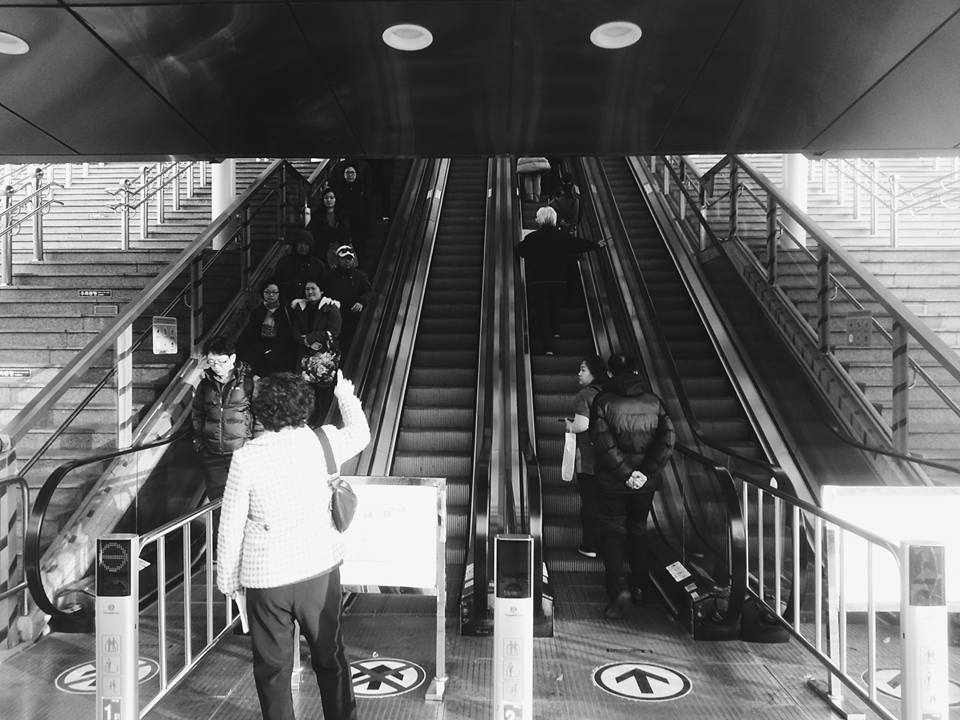
As always, the subway is a popular choice of public transportation for tourists. Like we did in Busan, we did face some complications using the subway system for the first time. I’ll just list some tips here in case you want to know how to get around some of those problems.
When entering the gates, tap once and enter immediately. I was confused the first time because when I first saw the gates fully opened the first time, I thought the gate was faulty.
If you were rejected entry after tapping (like me the first time), go over to the wheelchair gate, and press the “HELP” button (or a huge button there).
Make sure you take note of our destination station, and take note of the next station after your station of departure that is in the direction towards your destination station. This is so that you enter the right platform when you tap in the gates since the most of the platforms are separated.
If you happen to enter the wrong platform, tap out, and proceed to point number 2.
Remember to get your refunds for your single use cards.
…and here’s a remix of Seoul’s Subway announcements I did when I was bored.
Alright. Now that’s out of the way…
I feel that there is a huge different in environment and culture here in Seoul’s Subway as compared to Busan’s. Like I said in my blog post about my experience in Busan, smartphones seem to disconnect people from the real world which takes away opportunities to socialise with people and getting to know one another. In a developed and hectic city like Seoul, of course people have to be stuck to their phones to keep up with… “important” matters.
Once again, it’s a developed and hectic city. So, I expected a lot of traffic going through the system which means that peak hours were a “blast.” Like really. I pulled my hair out looking at the crowds that swarmed through the stations.
Did I have to stand for long periods of time? Surprisingly not! There were actually many kind citizens that gave up their seats to us tourists!
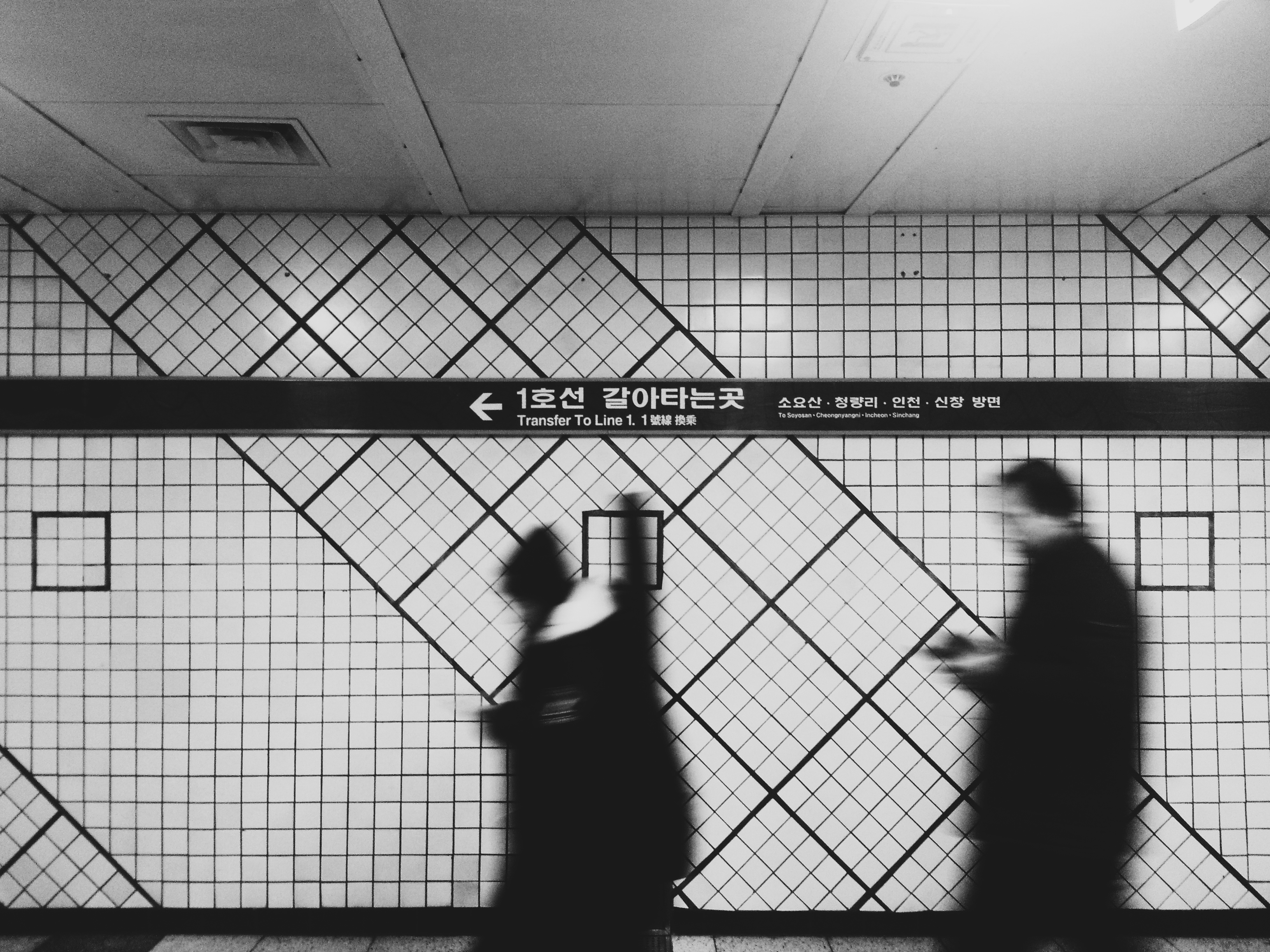
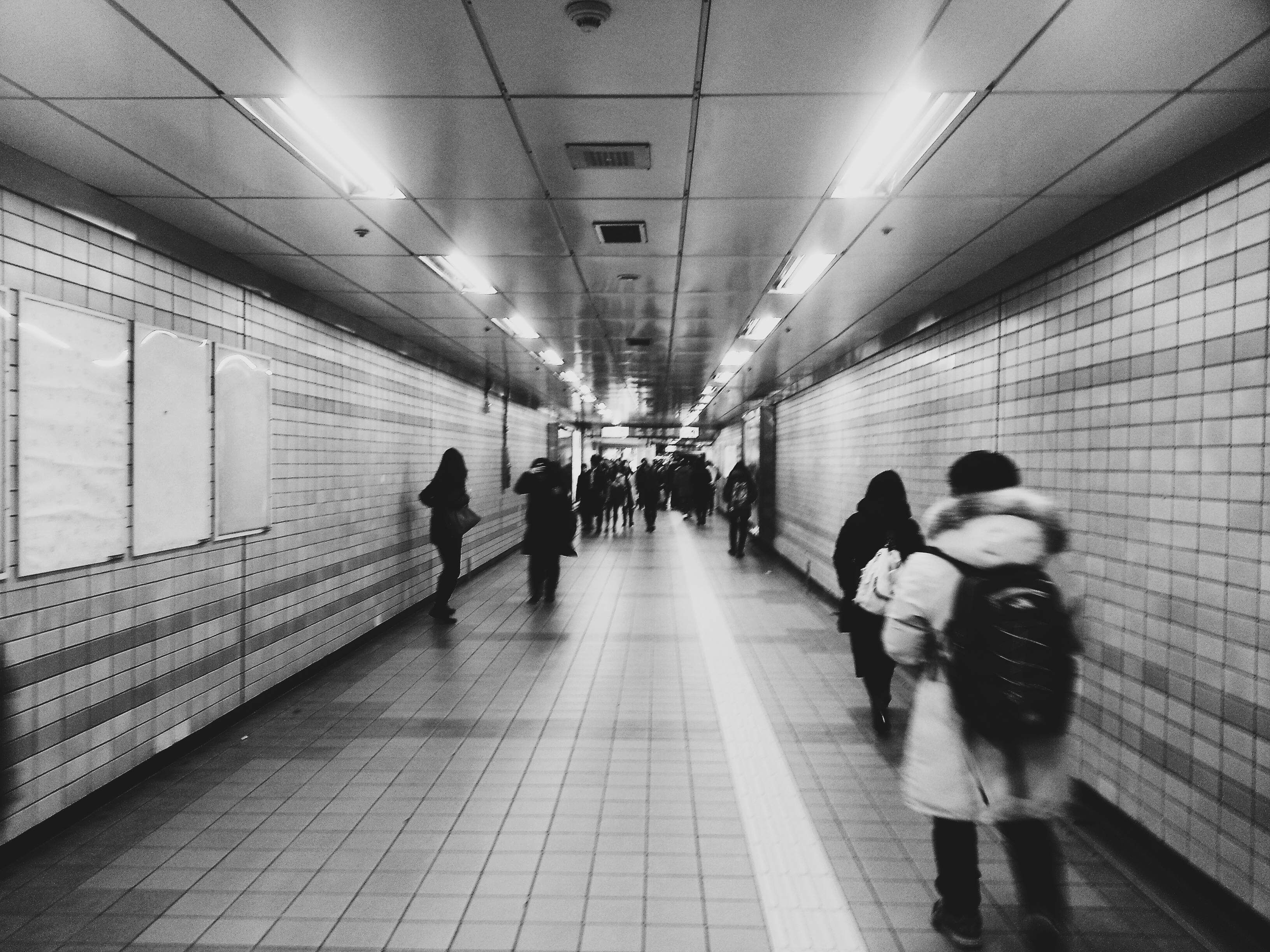
Oh yeah. We had to walk quite a bit in the underground link-ways that connected the different lines in interchanges.
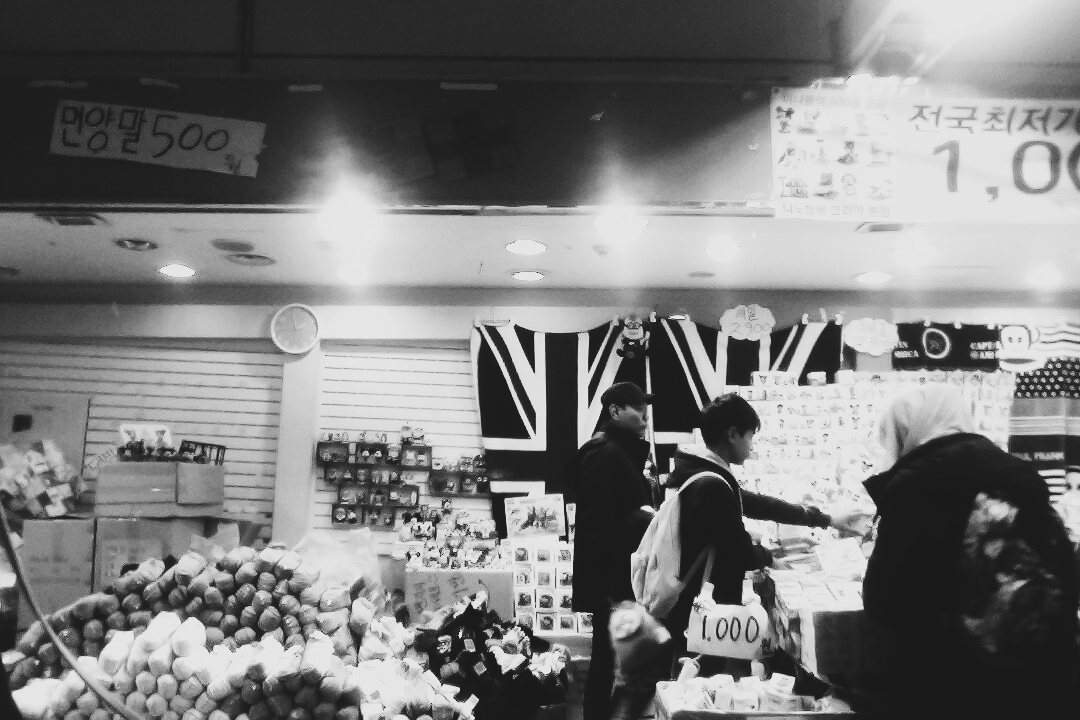
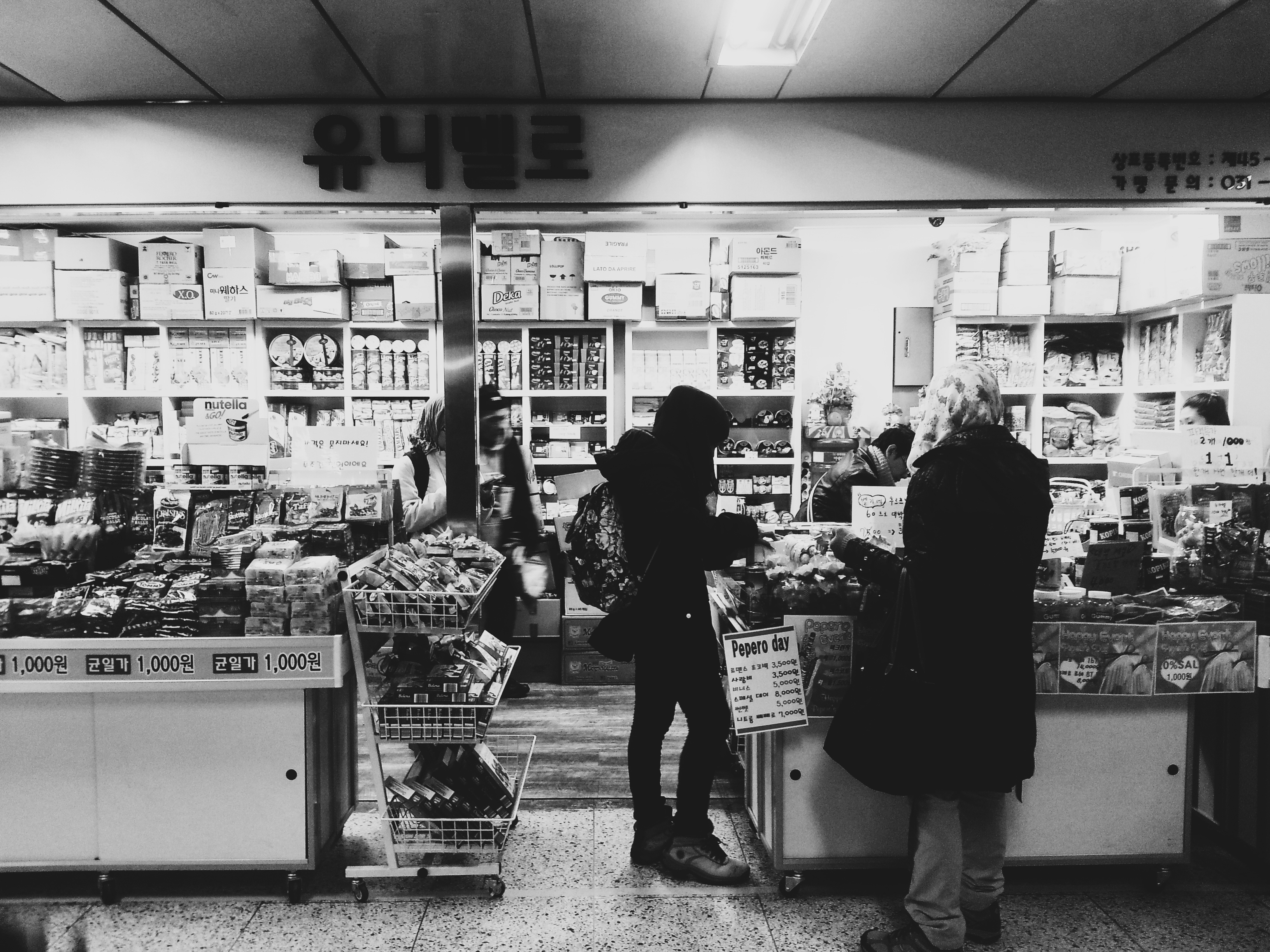
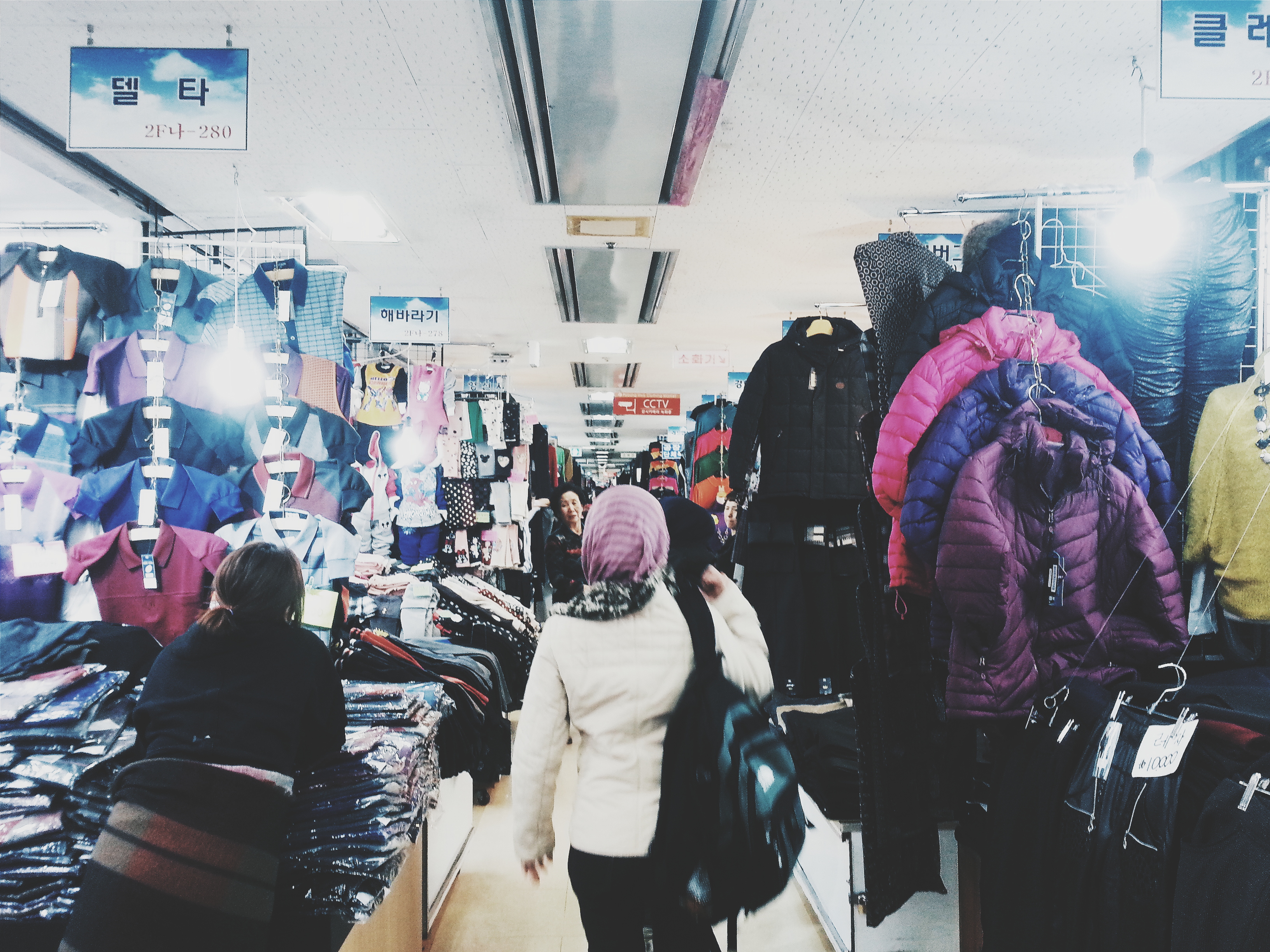
Surprisingly, there little shops that actually sell food are common along those link-ways. It came as a shock to me because in Singapore, food and drinks are not allowed to be consumed in the subway. Other than food, goods that are sold include apparel, toys, and even fruits!
COMMIES IN SIGHT
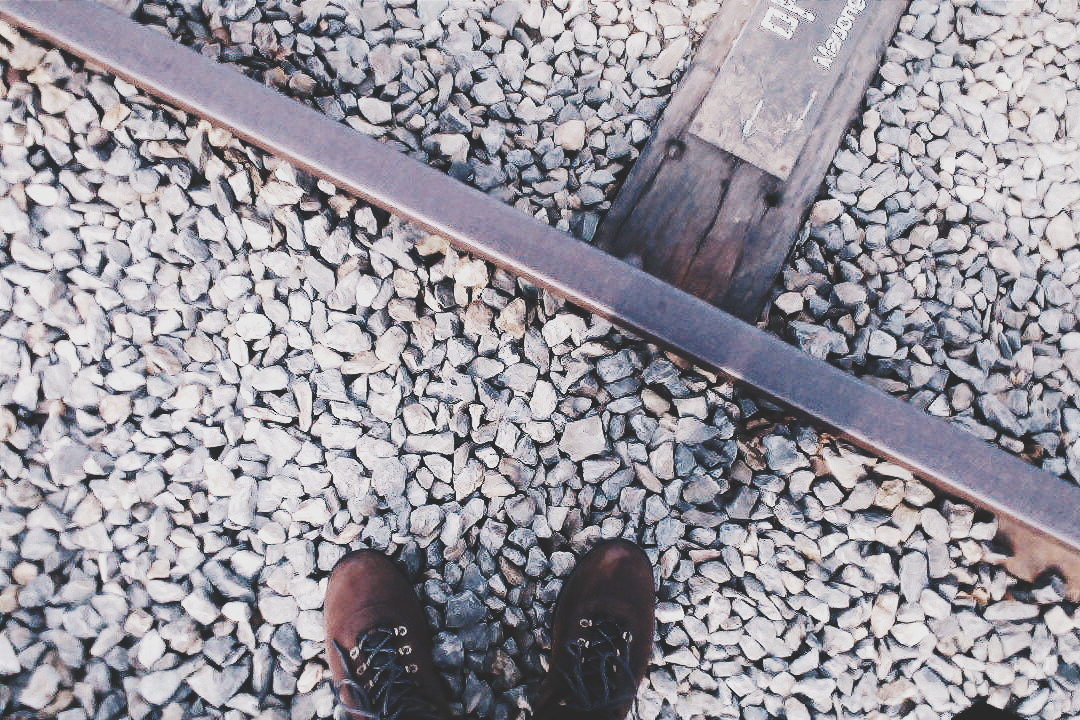
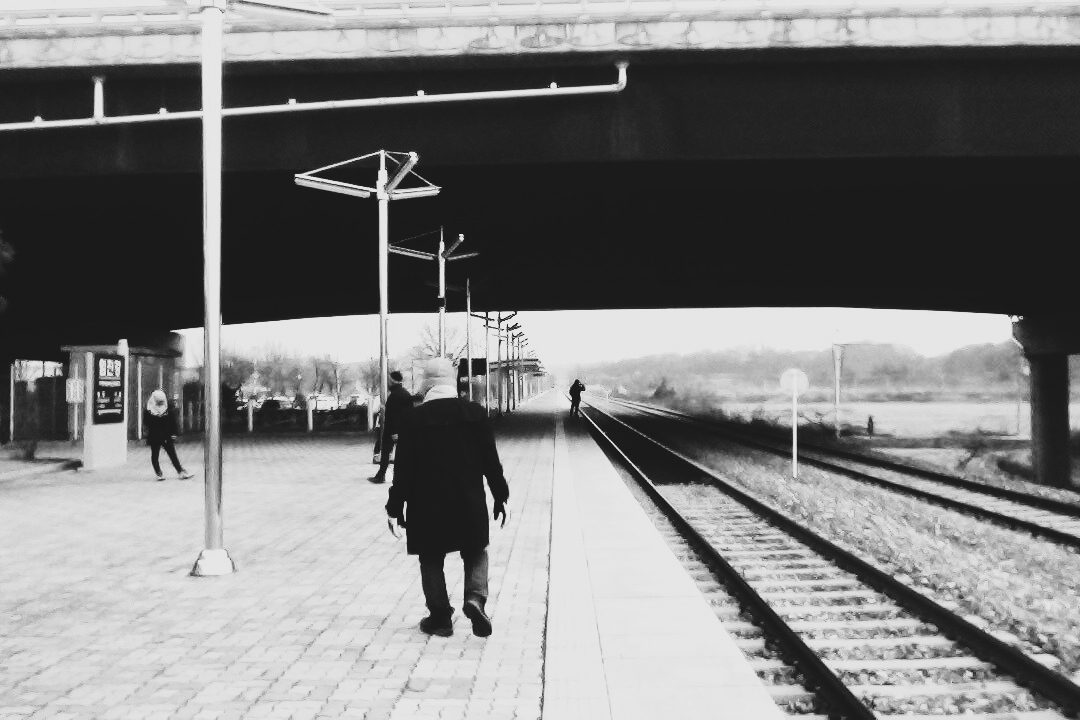
On our third day here, we got DMZ (The Korean Demilitarized Zone) train tickets to take us towards Dorusan, which is the northern-most station in Seoul. We simply got the tickets at the main ticket counter at Seoul Station. It takes about 2 hours to get there.
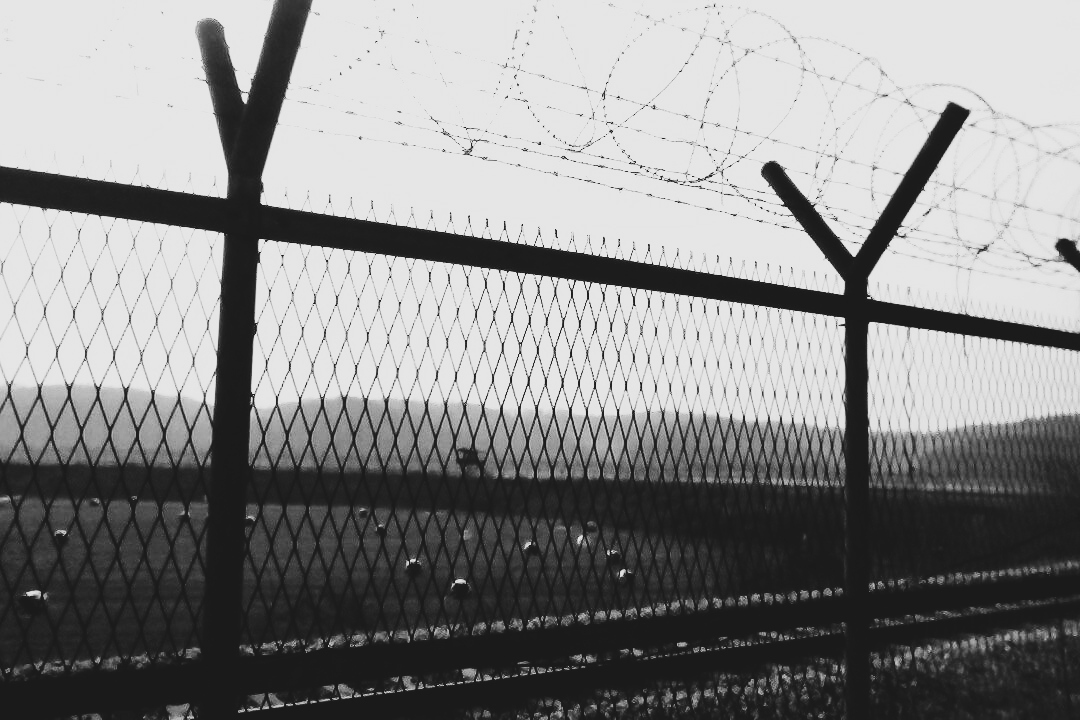
Dorusan is located in the DMZ Zone, which is a buffer zone that separates North and South Korea. It was created in an agreement in 1953 during the Cold War. It is considered to be one of the most dangerous places on Earth since both the North and the South have never signed a peace treaty. So basically, while you’re on tour there, bombs and rockets can start to fly and bombard out of the blue.
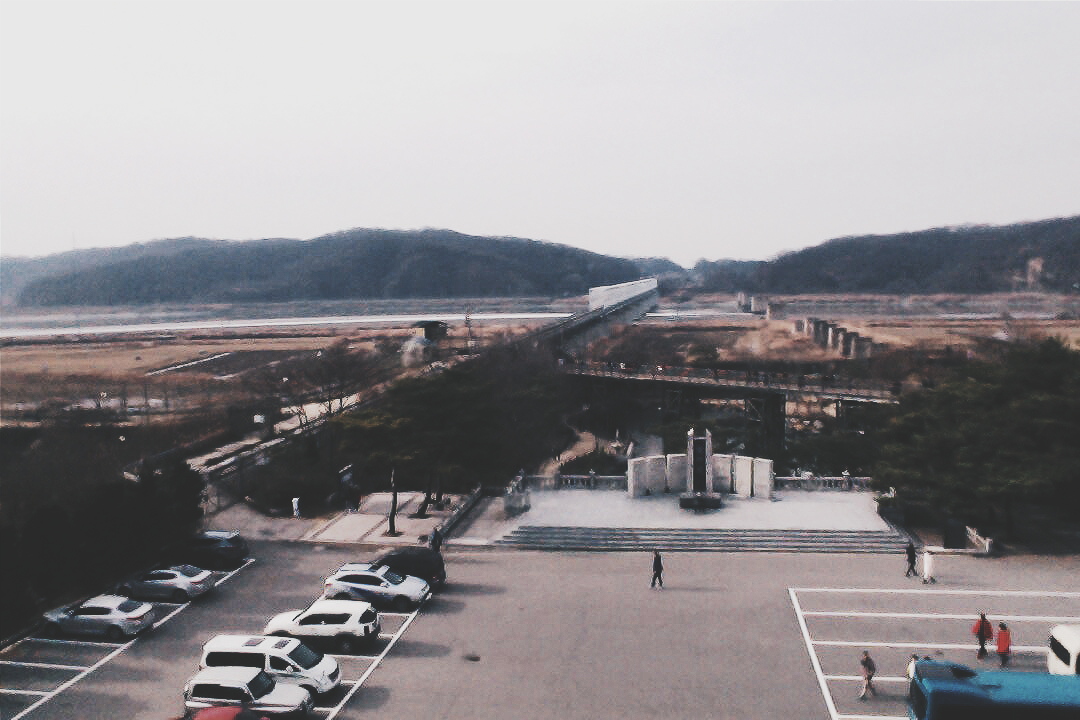
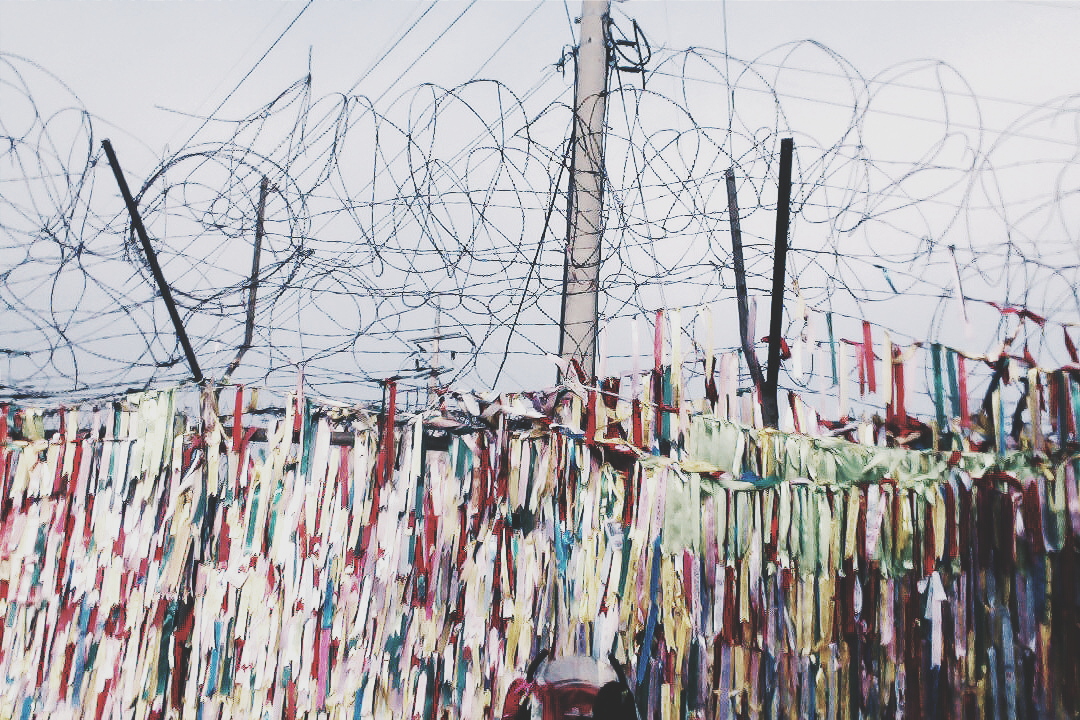
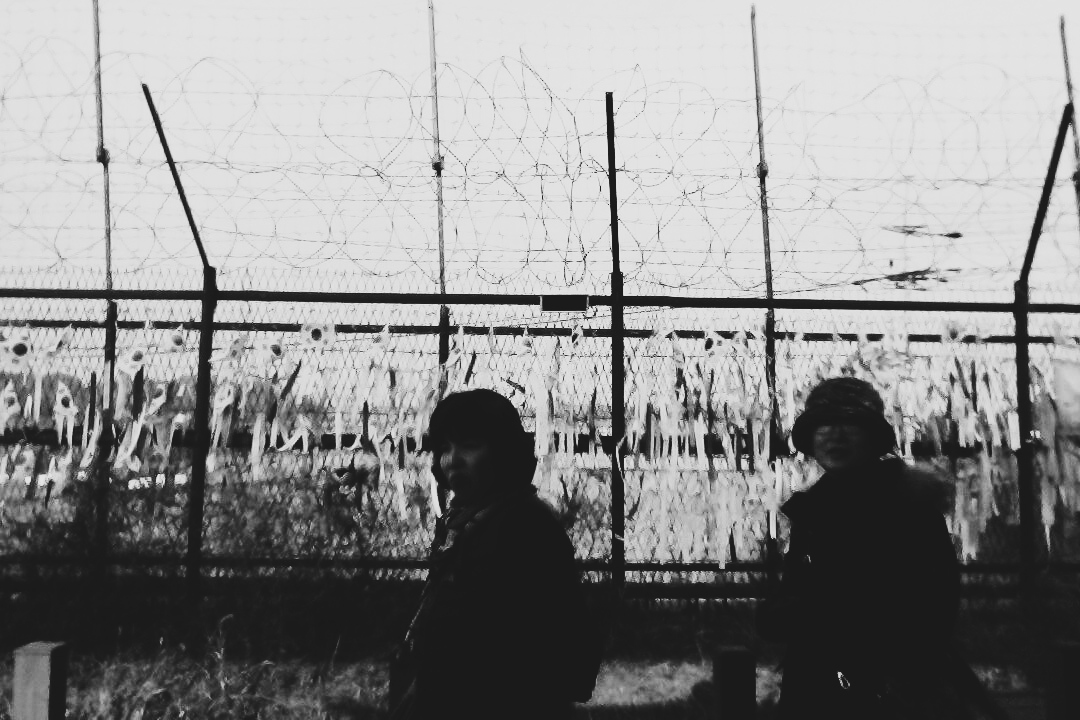
Sadly, we only stayed around Imjingak, which was the station before Dorusan. At Imjingak, there was a carnival (I thought it’s kind of weird) and a couple of tourist attractions which include a bunker that showcased art from the Korean War, and an observatory that allows you to peek into the opposite side of the border.
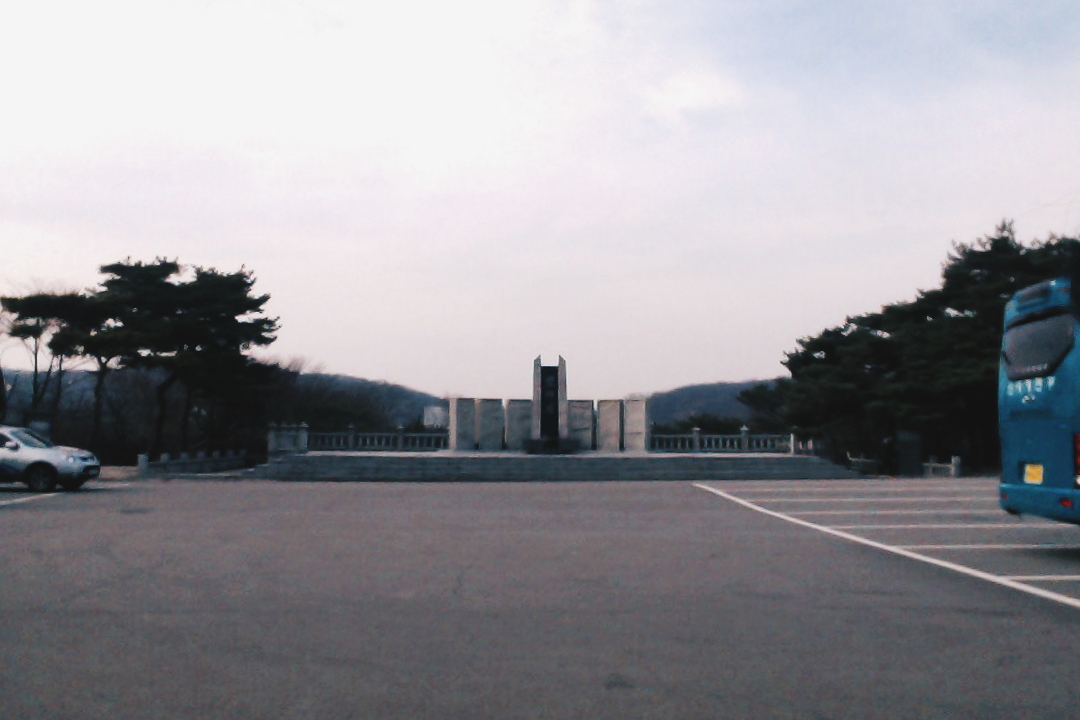
There were also a couple of monuments to honour those that died protecting South Korea against the communists from the North.
I think what I learnt from my trip to the DMZ was that actually, behind all of the “aggression”, the Koreans one day long to re-unite the two Koreas under one flag.
And actually… I made this post on Facebook…
Interestingly… if you walk around the souvenir shops, if you look closely at the maps and the globes that they sell, especially the ones that are made in Korea, the entire Korean Peninsula is combined into a single nation, with Pyongyang and Seoul as twin capitals. One day, the people hope that someday… Korea will be united under a single flag
THE OUTSKIRTS
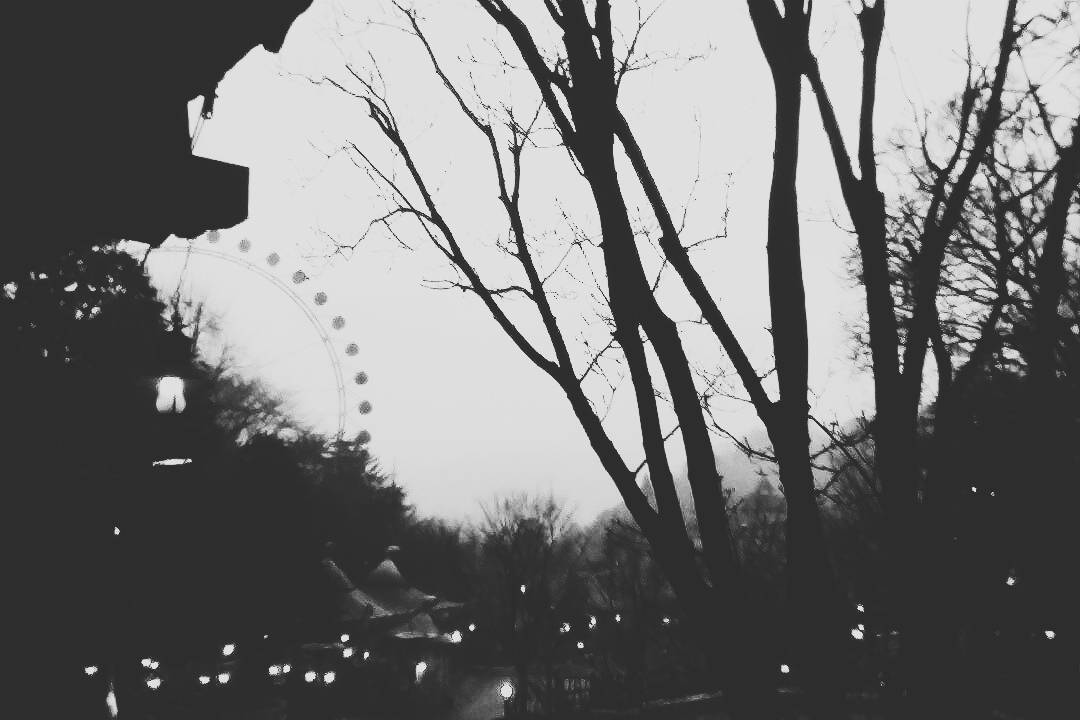
So… to Everland we go… It was quite a distance actually. We had to book a taxi to get here. Everland is basically a theme park with loads of attractions which were unfortunately closed due to the bad weather. …and the weather literally turned Everland into EVERLAND. I mean it takes you to a different place when the heavy fog kicked in.
Of course we wouldn’t end the day without fireworks!
STREETS
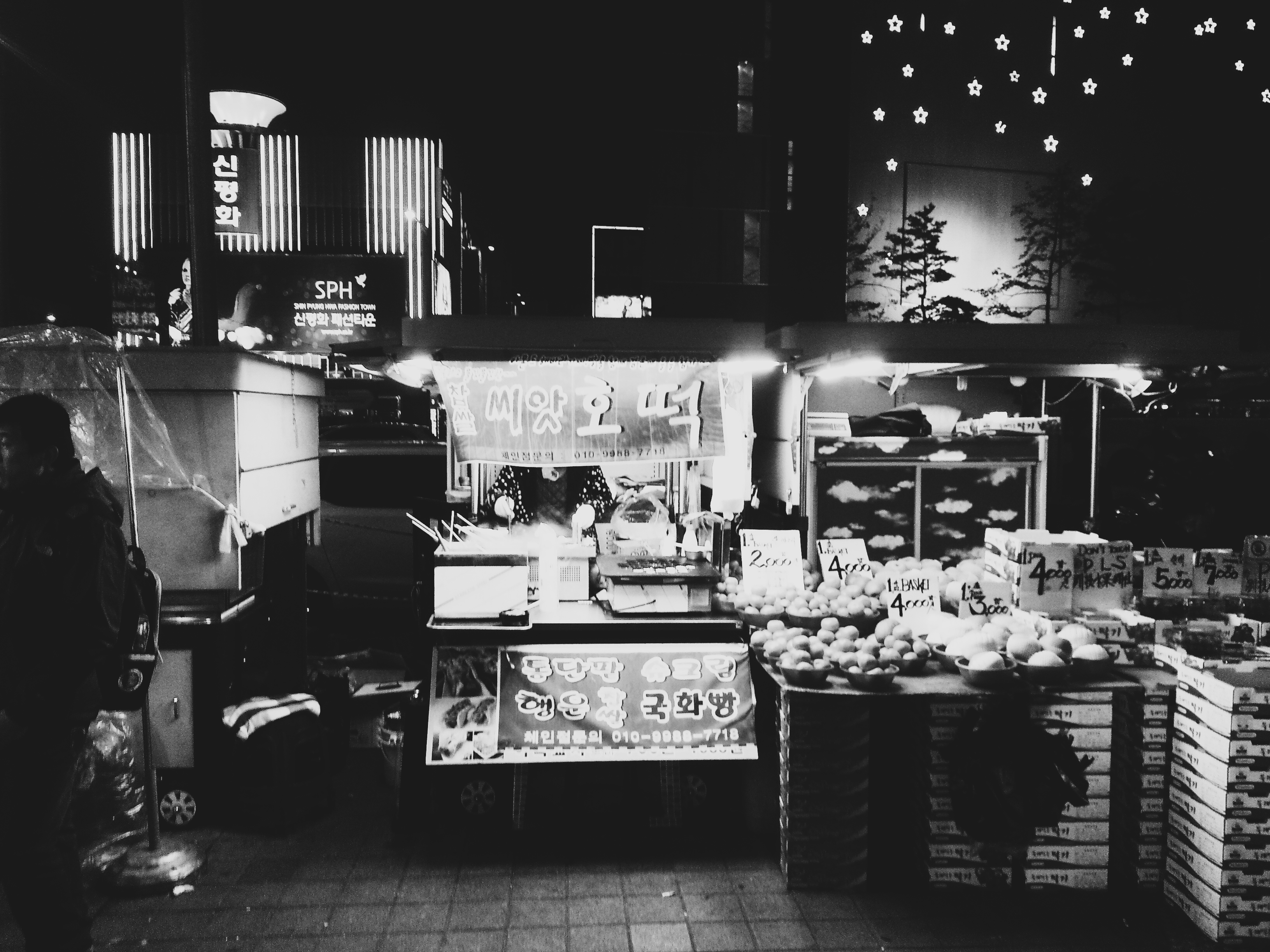
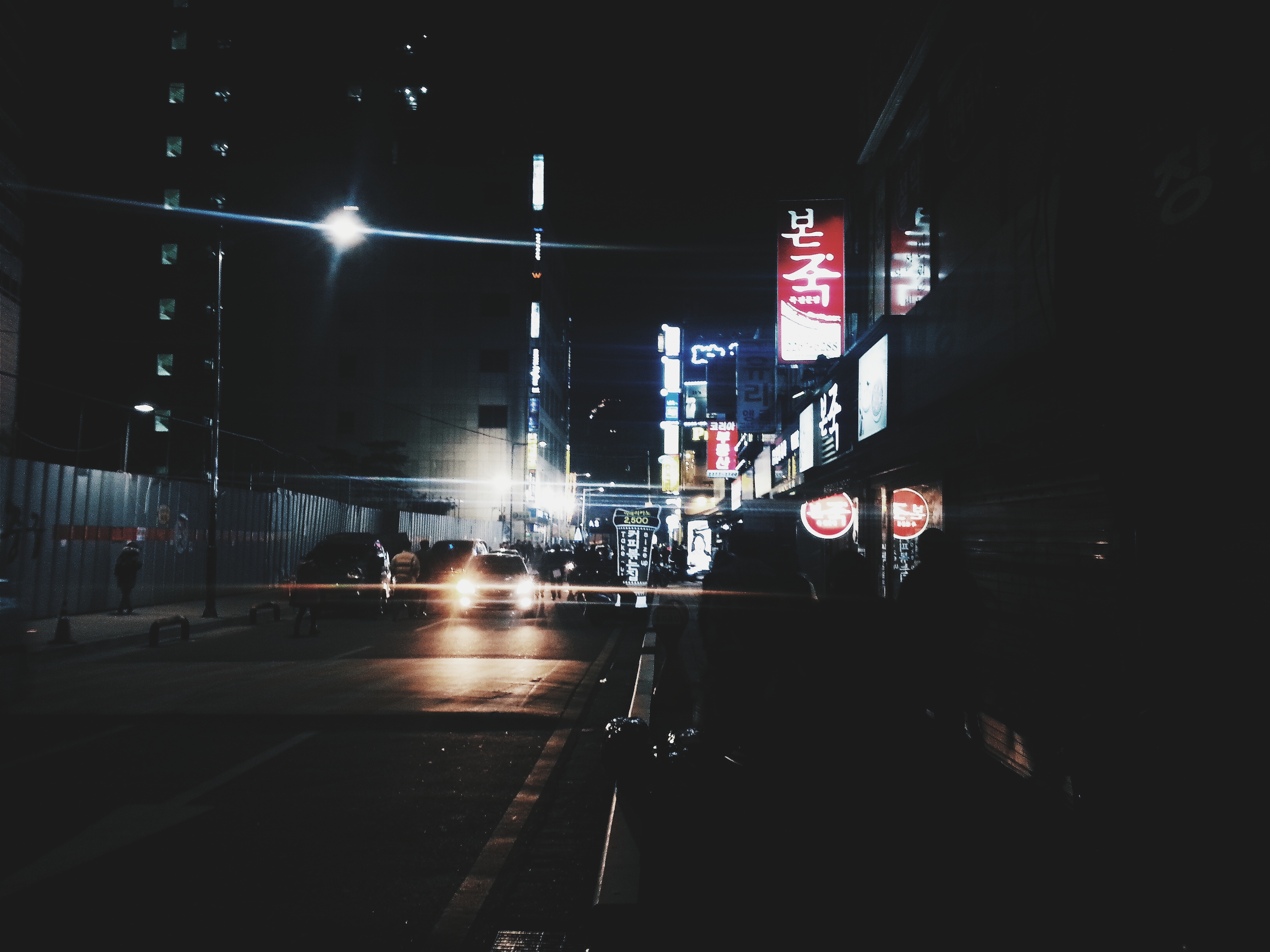
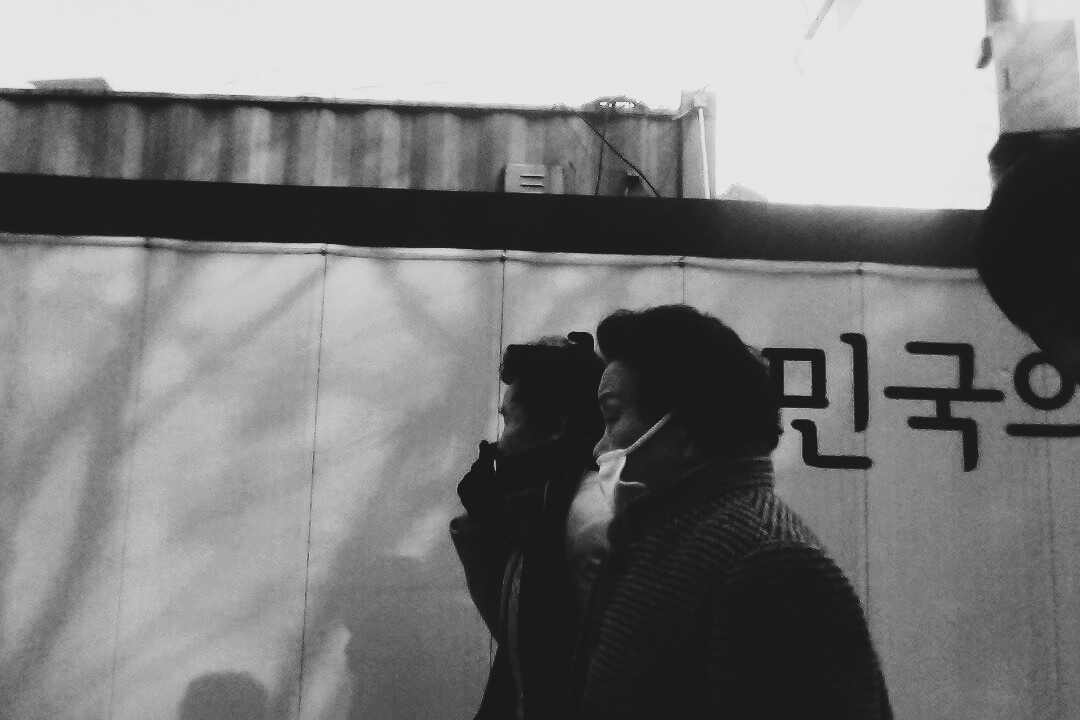
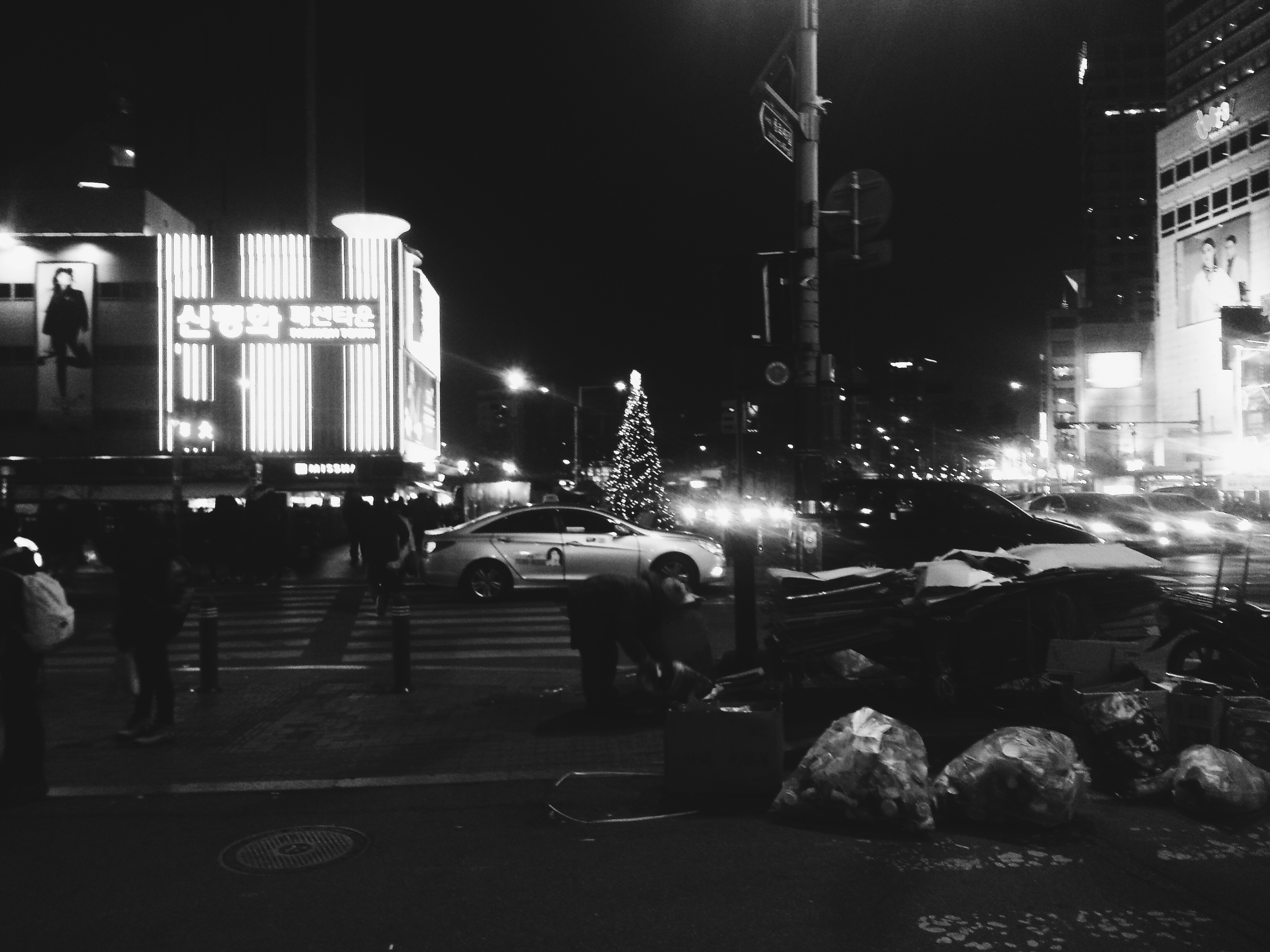
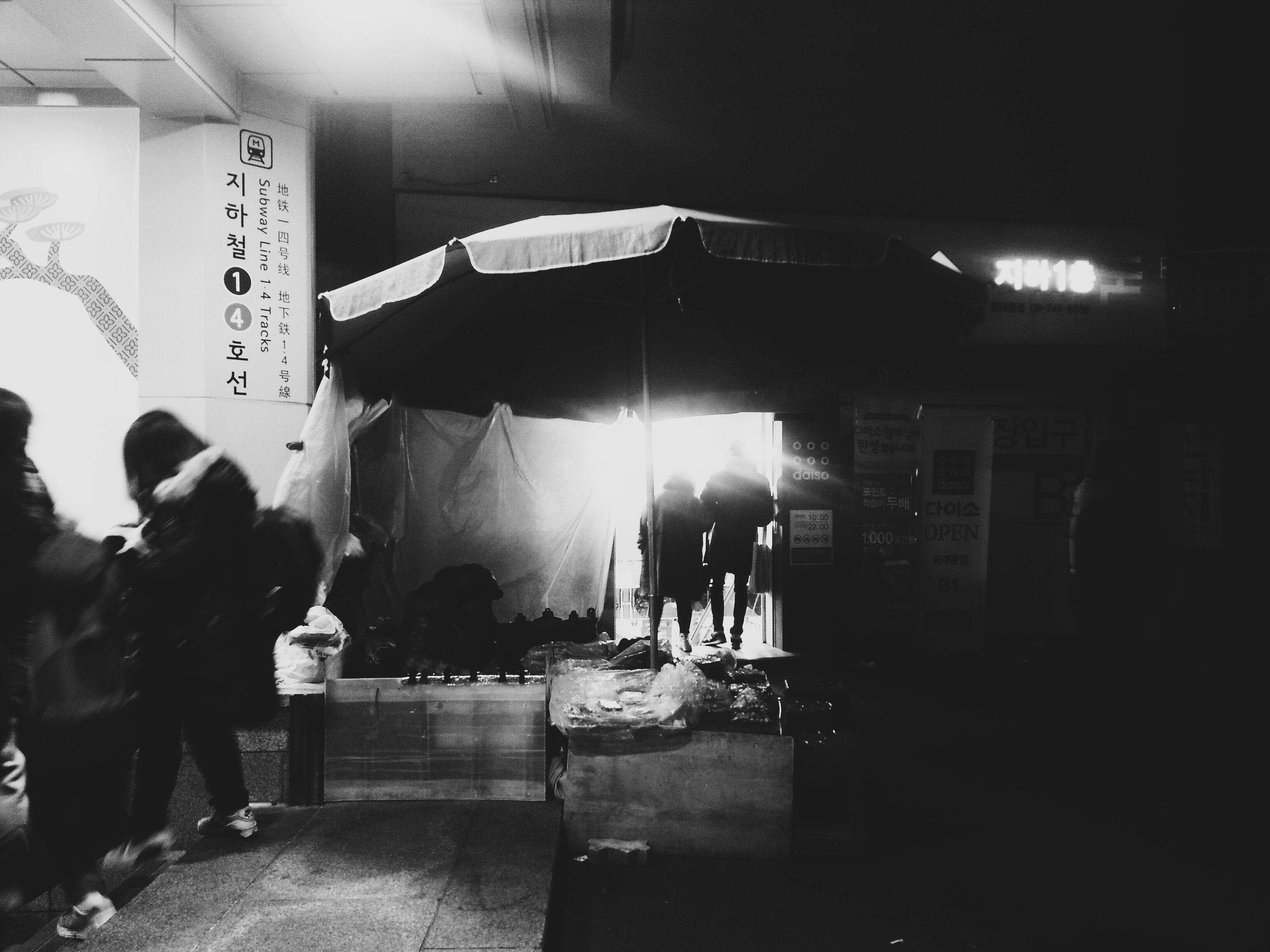
Like I always say, my favourite part of the trip is to sit by the side and watch how people carry out their normal lives, and you can pretty much find all of these in the streets. It can be a really fascinating place to understand better one’s culture.
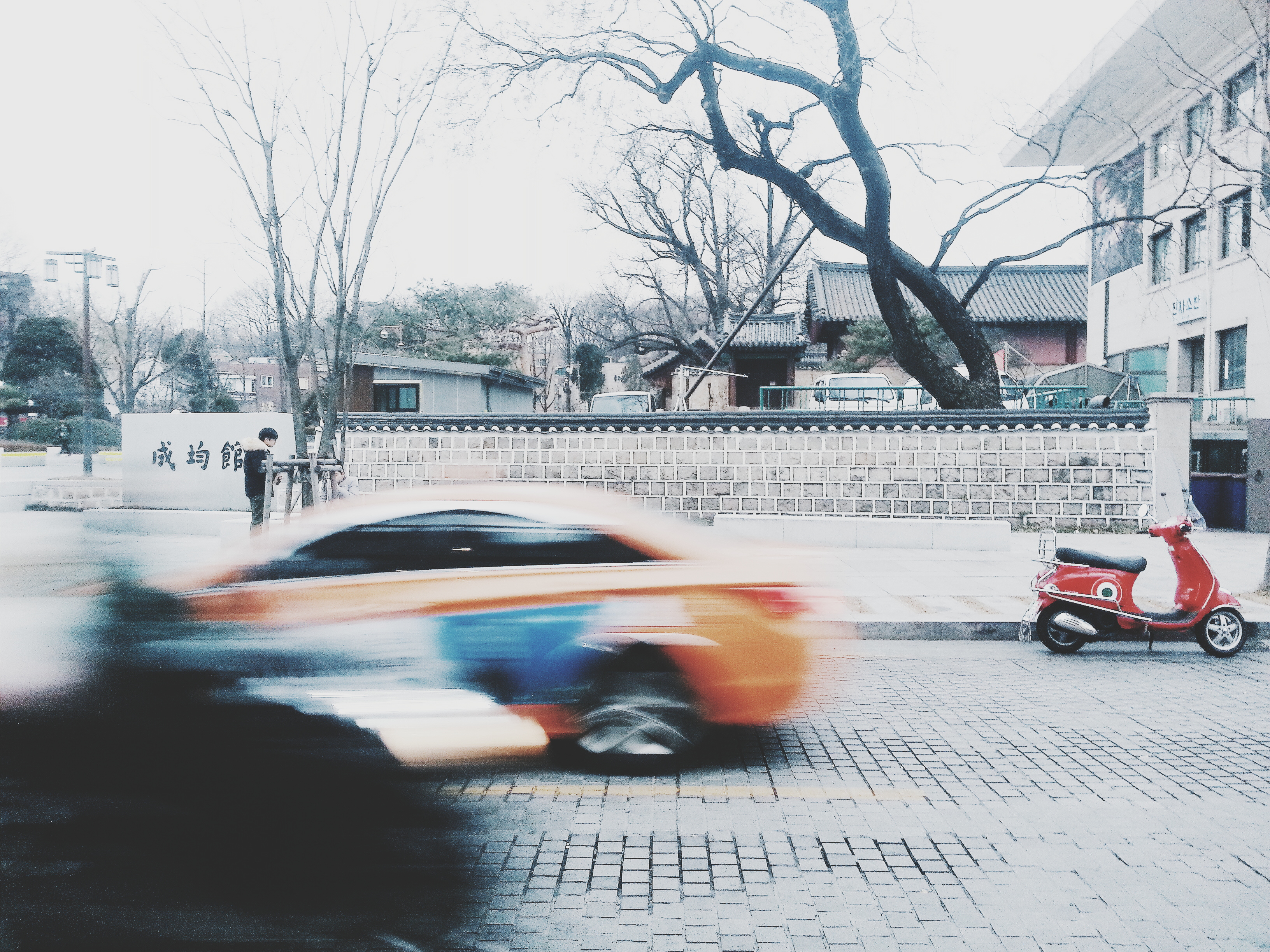
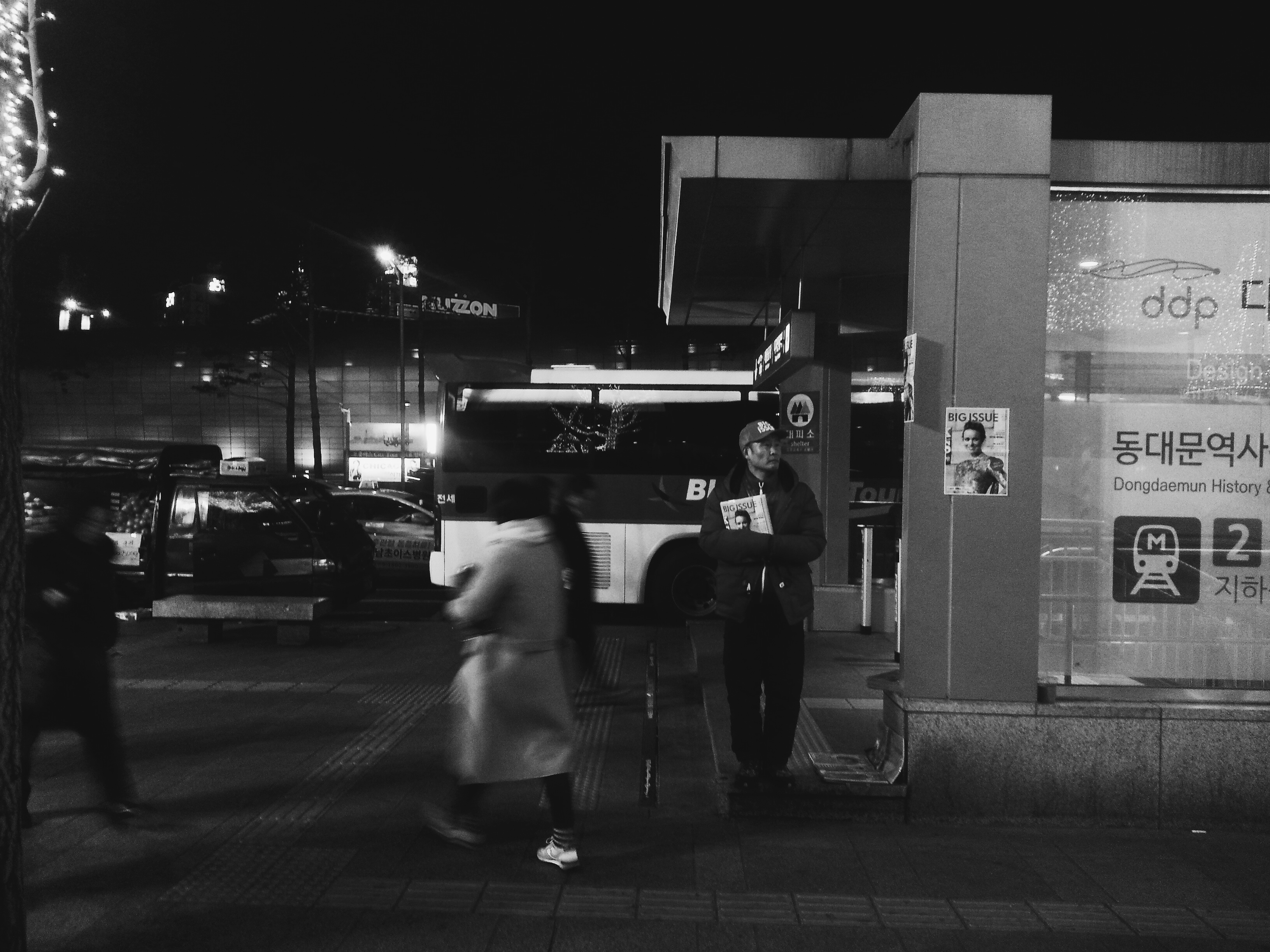
For me, I understand culture not only from the “people”, but also from studying architectural structures. You can find this wall entrance at Dongdaemun.
…and this is the Lotte Tower which is under construction.
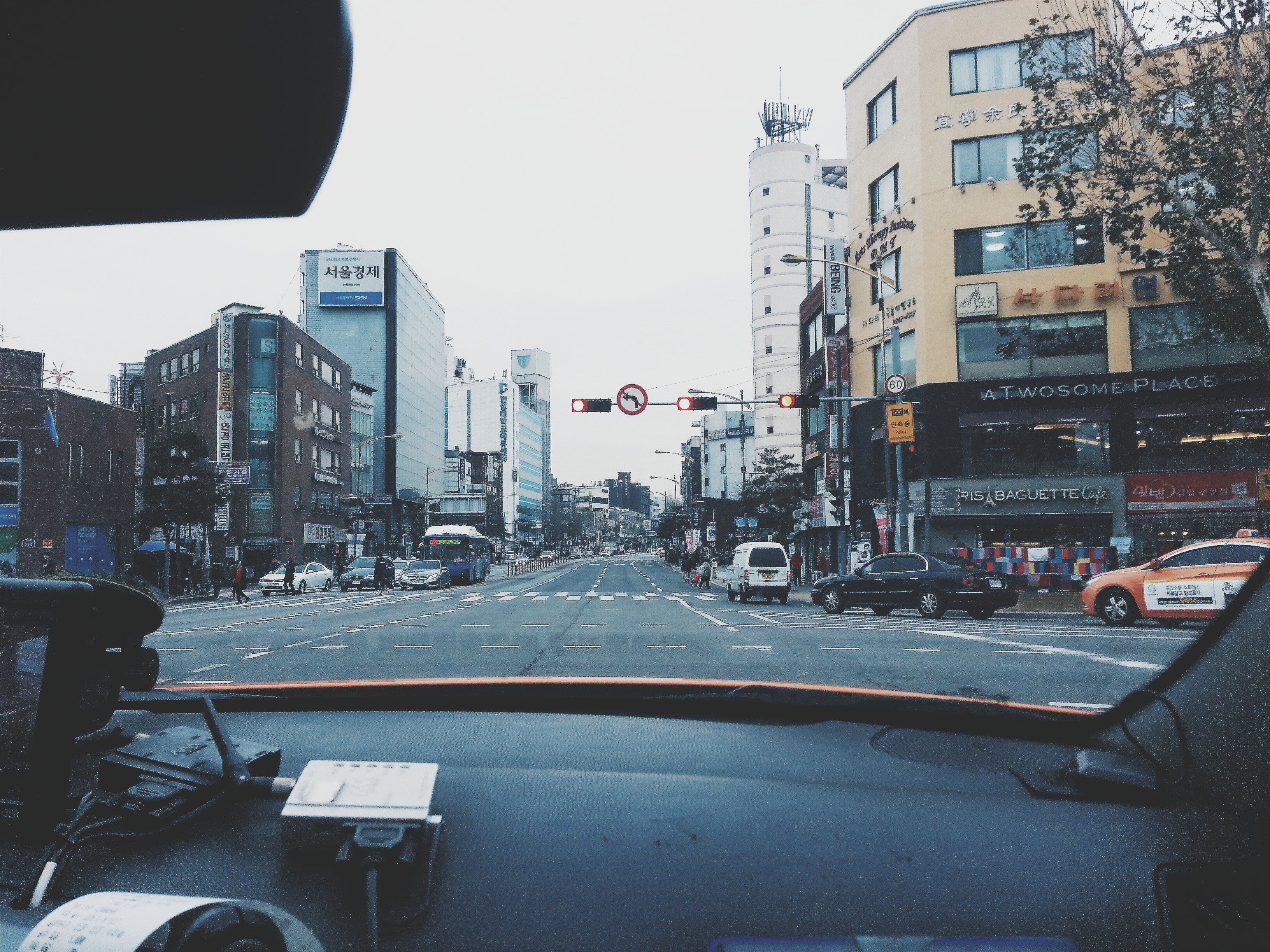
…and some other buildings…
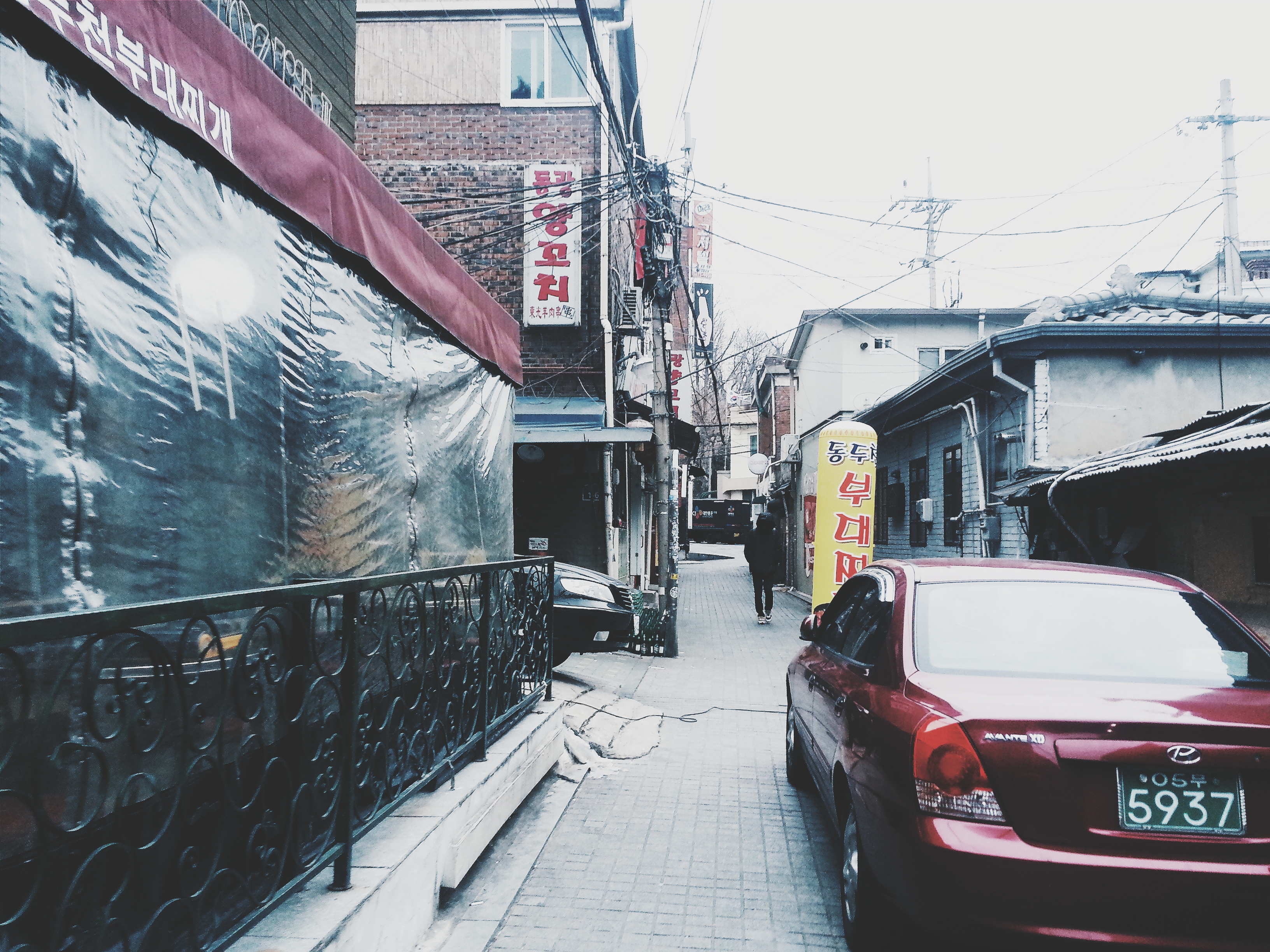
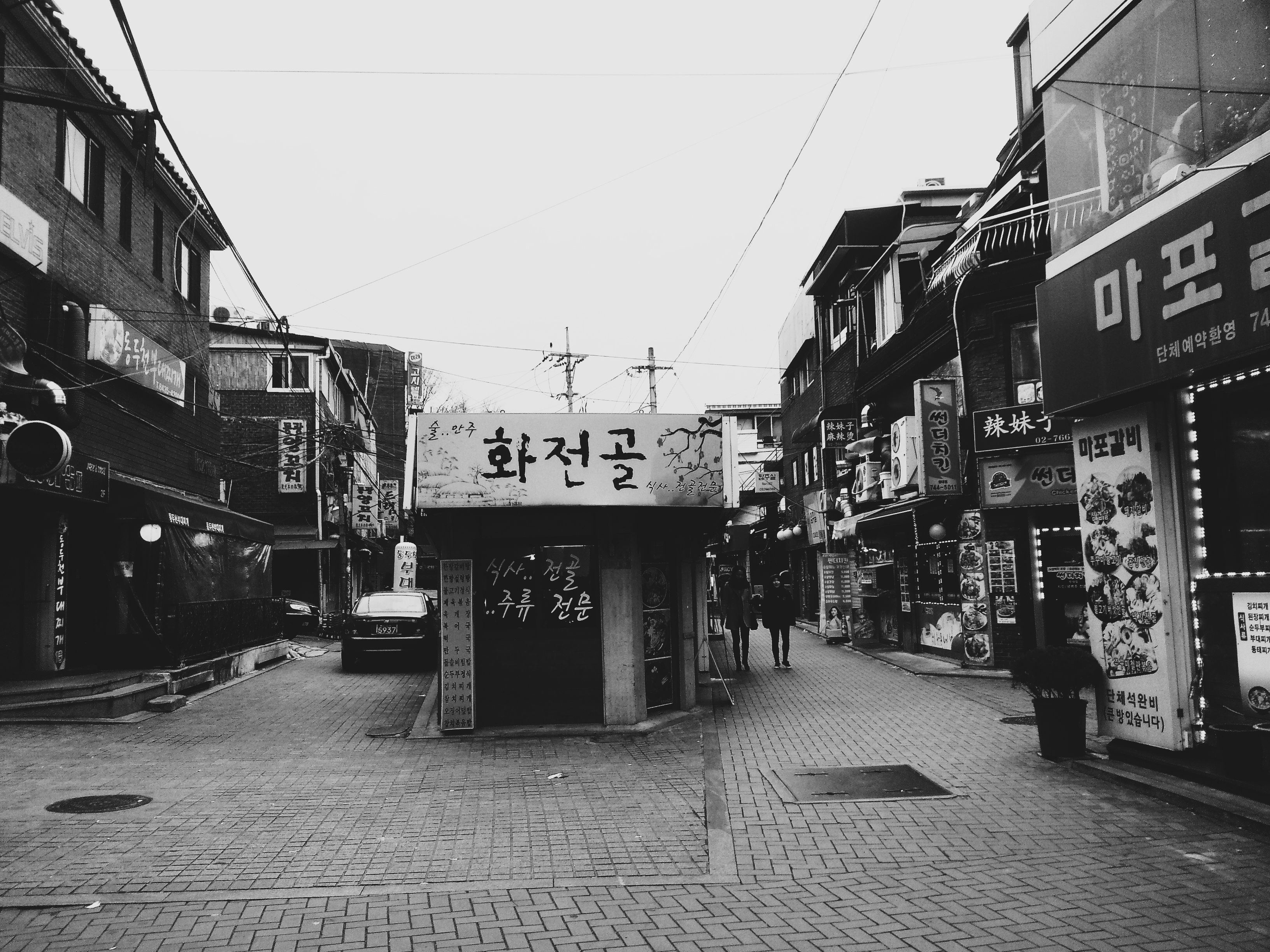
Here… we explore deeper into the minor lanes and streets…
Like in Busan, cardboard collectors were a common sight.
Well, after 10 days in Korea, I can say it was an exhilarating experience. For more pictures from Seoul, you can head over to my VSCO Grid!
Busan, located at the South-Eastern tip of the Korean Peninsula, is widely known by historians as the city that bore the brunt of the Communist Invasion by North Koreans in August of 1950. While the rest of Korea was subdued under Communist control, the tide of the Korean war depended on the defence of this last remaining city. Of course, the UN was successful in pushing back North Korean forces in the September of 1950. Well, considering the fact that this only happened 65 years ago, which is relatively not too long ago, I was excited to see for myself the scars left behind by the Korean War since I’m a history junkie.
PUBLIC TRANSPORT
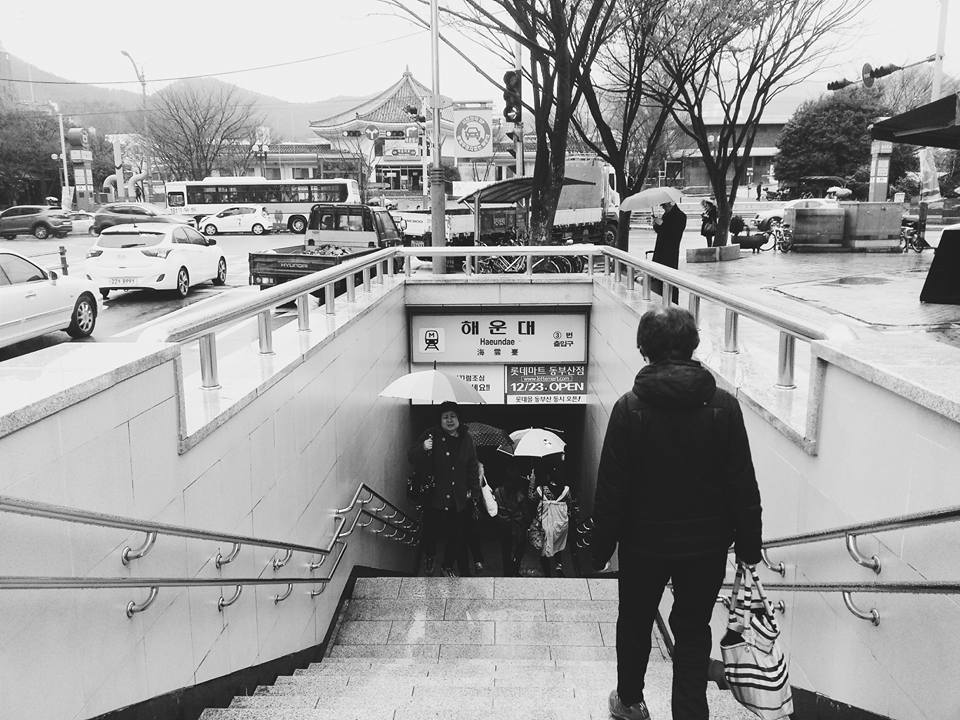
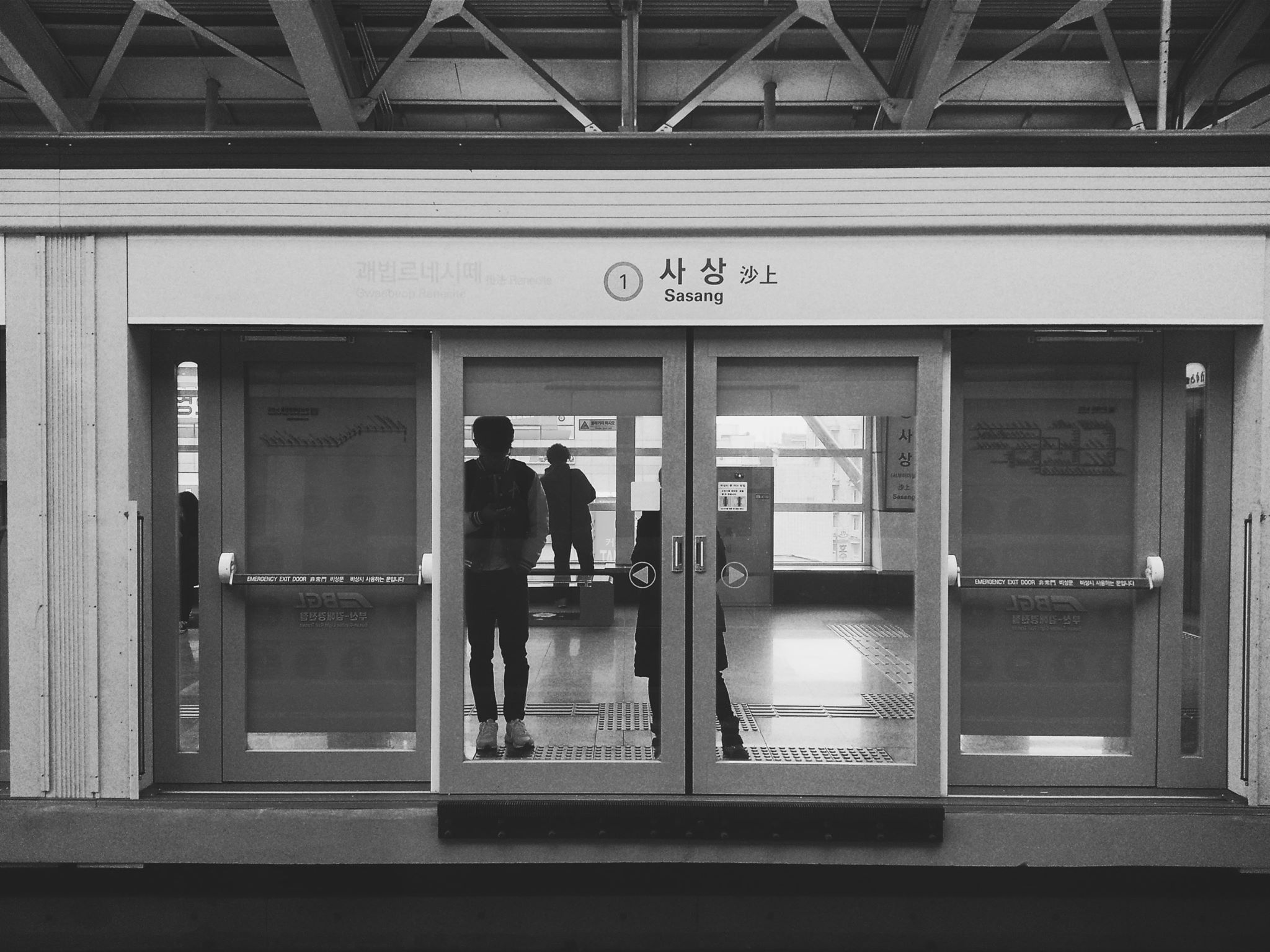
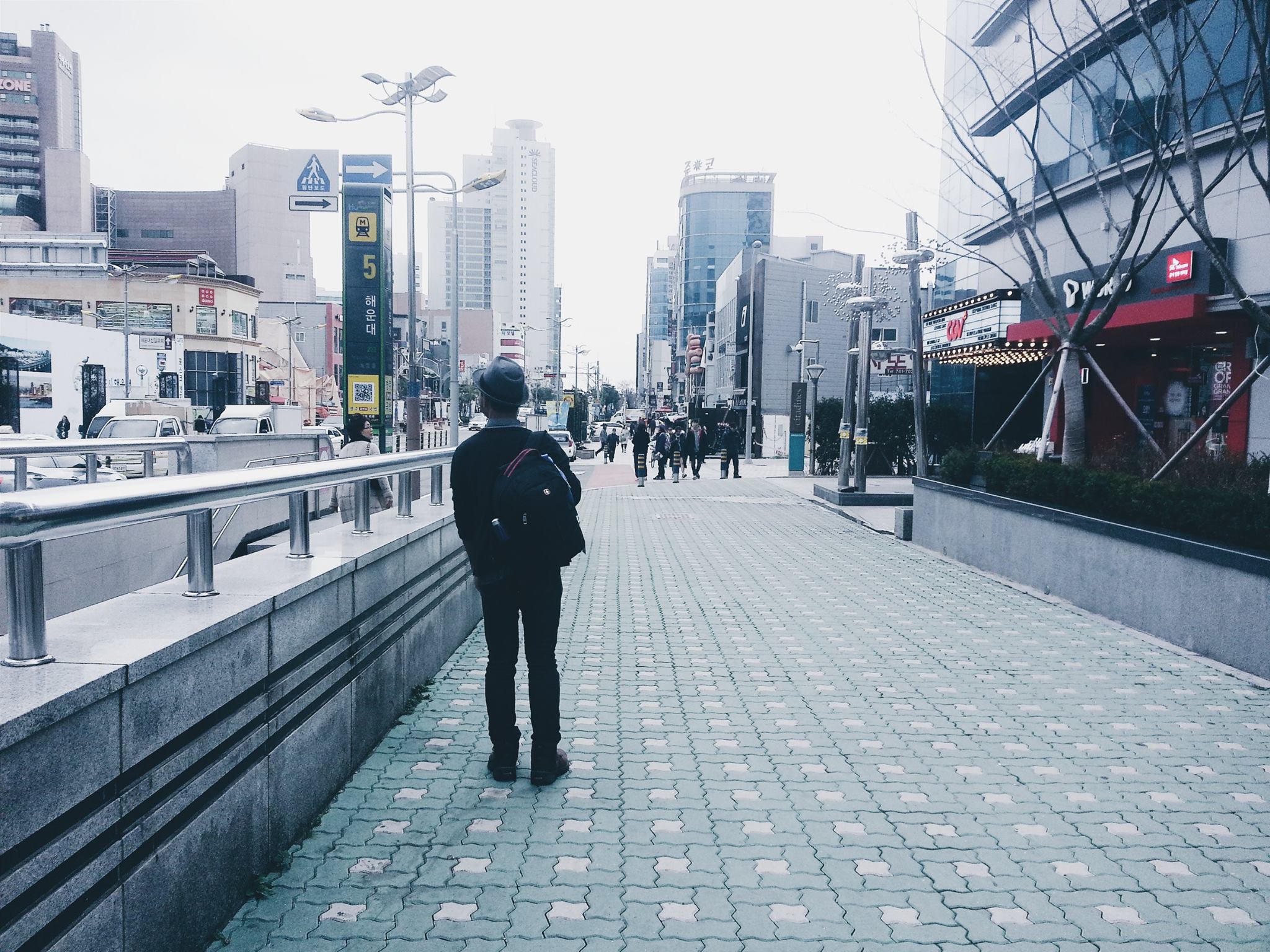
It was about a 7 hour plane ride after a few-hour transit in Kuala Lumpur. From the airport, we took the subway to our little motel in Haeundae, where we stayed for the next 3 days. For the most part of our trip in Busan, we used the subway to get to places, and this is probably a much better option than taxi or bus if you really wanna get to know more about the culture and the people here.
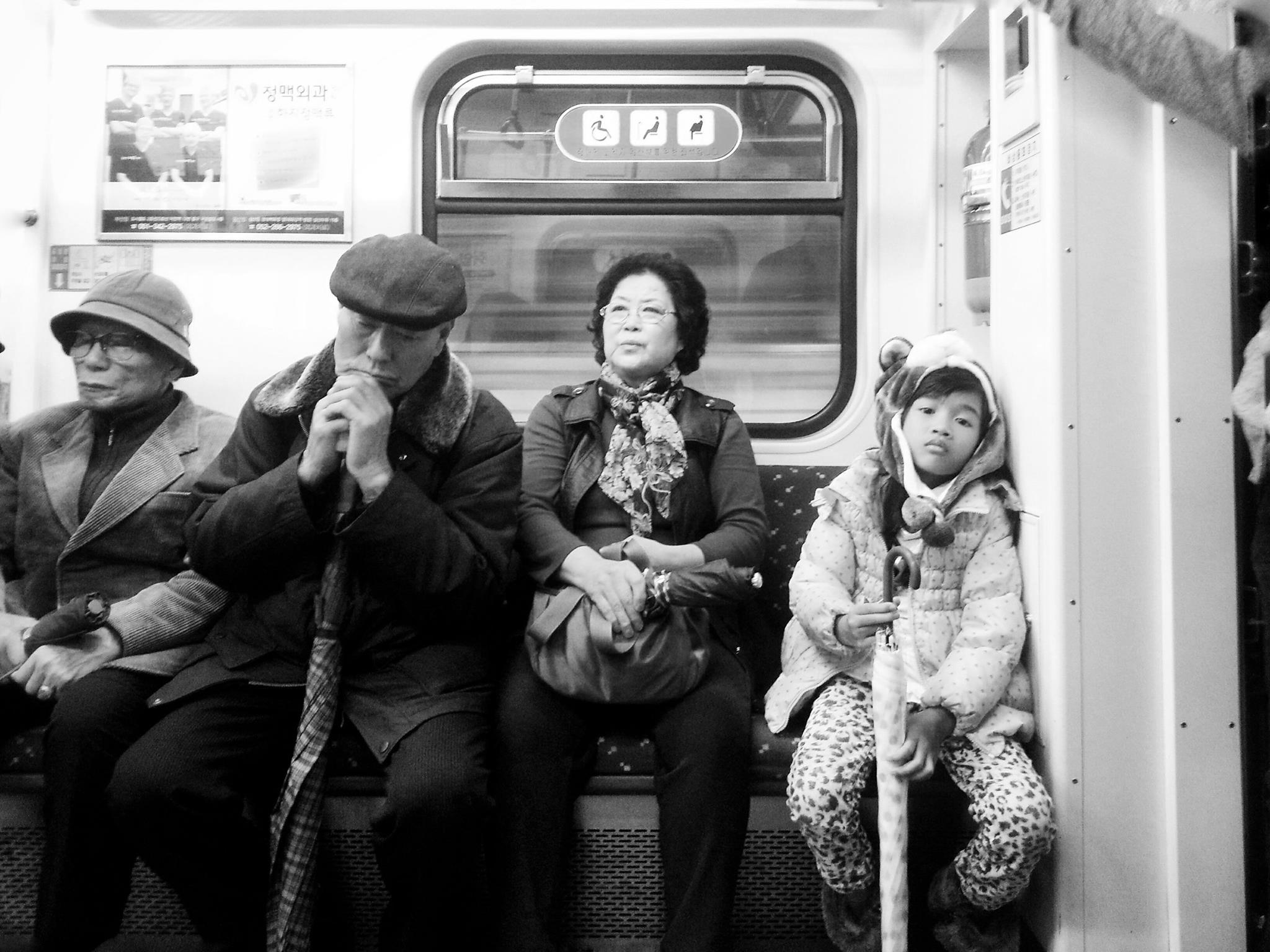
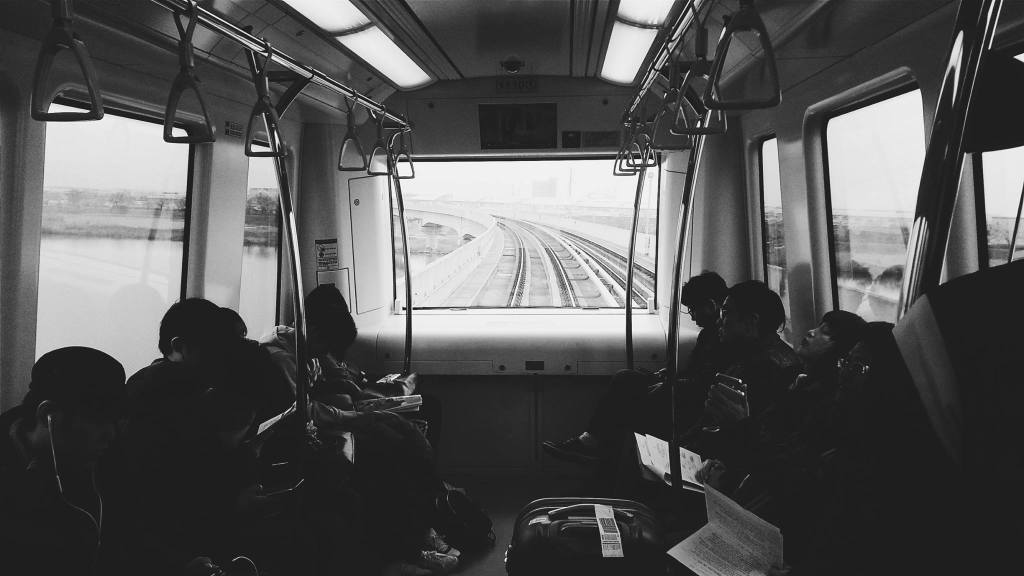
In this city, it seems that a high percentage of the demography go to the elderly since I pretty much see a lot of old people everywhere. Well, my first impressions of the people here are great! Especially the elderly. From what I observe, they must really love children since on almost every train ride they go, they would invite my 6 year old younger sister to sit on their laps, and they would play with her, or give her a treat or two.
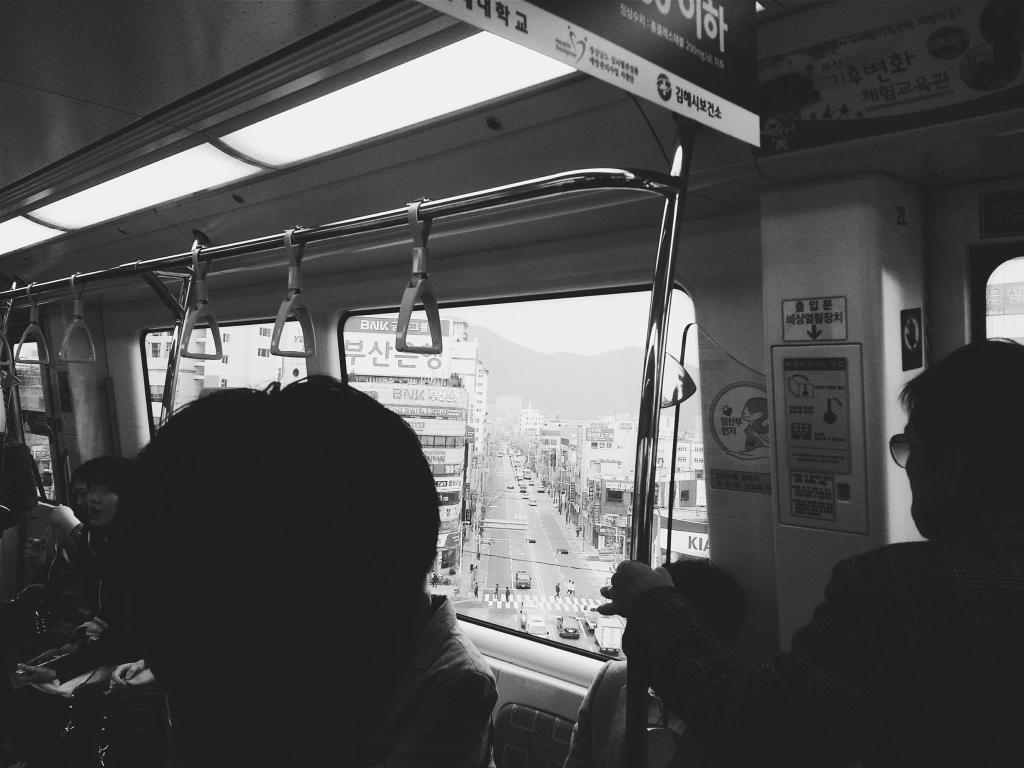
To be honest, subway rides can be a little boring and strenuous. Especially when you have to travel long distances or you have to transfer train lines a couple of times (which means that you can’t sleep for the entire duration of the journey). However, my experience in the subway here is way different than what I normally have in the MRT back in Singapore. Keep in mind that most of the people are the elderly, and of course, they are not the tech-savvy group of people who would stick their faces to their smartphones (which I highly doubt they own) playing Candy Crush or fishing likes over at Instagram. Instead, train rides are opportunities for them to socialise, get to know others, and share stories.
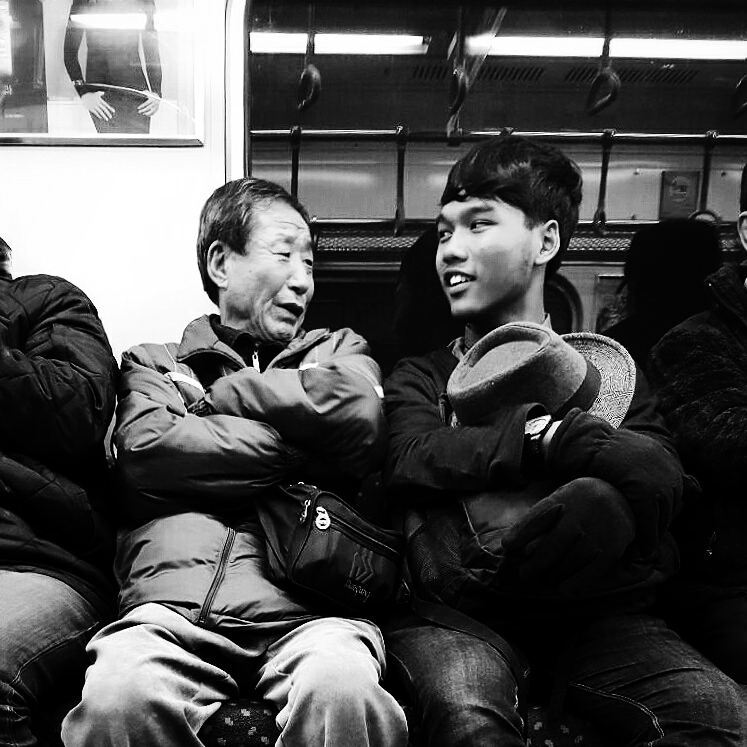
I remember finally getting a seat next to this elderly man after standing for a long period of time. Well, minding my own business staring blankly towards the floor when he started gently tugging my black glove that I was wearing on my left hand. In my head I was thinking, “What is this guy trying to do?”
I mean it was out of nowhere and I didn’t know the man at all. So I turned my head towards him with the “confused-stare” look and he immediately asked me with a smile in a soft, frail voice, “Cold?”
I replied with a simple nod of the head.
He went on to ask, “Where you are from?”
“Singapore,” I acknowledged.
With a heart-warming grin on his face, “Welcome in Busan.”
He continued by asking for my age and he started talking about the things that he did when he was my age. He also shared about his work life and stories when he was transitioning into his work life. It was evident he was not proficient in English but he did make the effort to form coherent sentences for me to understand. I went ahead to ask for his age and to my surprise, for such a fit looking person, he claimed that he was 72 years of age. For me the fact that he was 72 is surprising for me since there is a high possibility that he saw the war happened when he was a kid.
After a little bit of story sharing, the train finally reached his intended stop. He gave a small bow, stepped outside of the train onto the platform, and waited for the train to leave. Only when the train left, he gave a small bow and waved at me with the same heart-warming grin on his face.
Who knew the subway can be an interesting place!
I notice that here, there are quite a number of Christian Missionaries too, preaching at entrances.
MARKETS
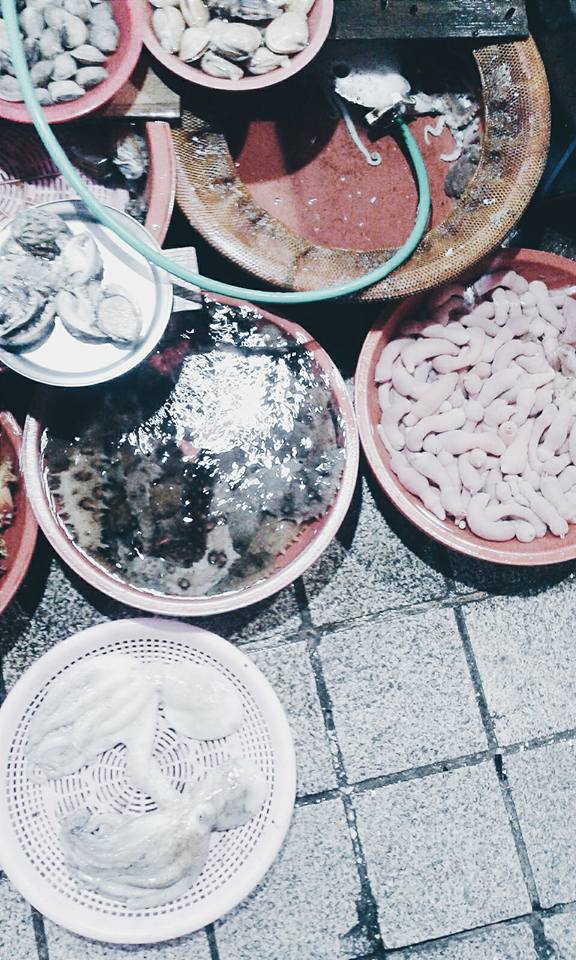
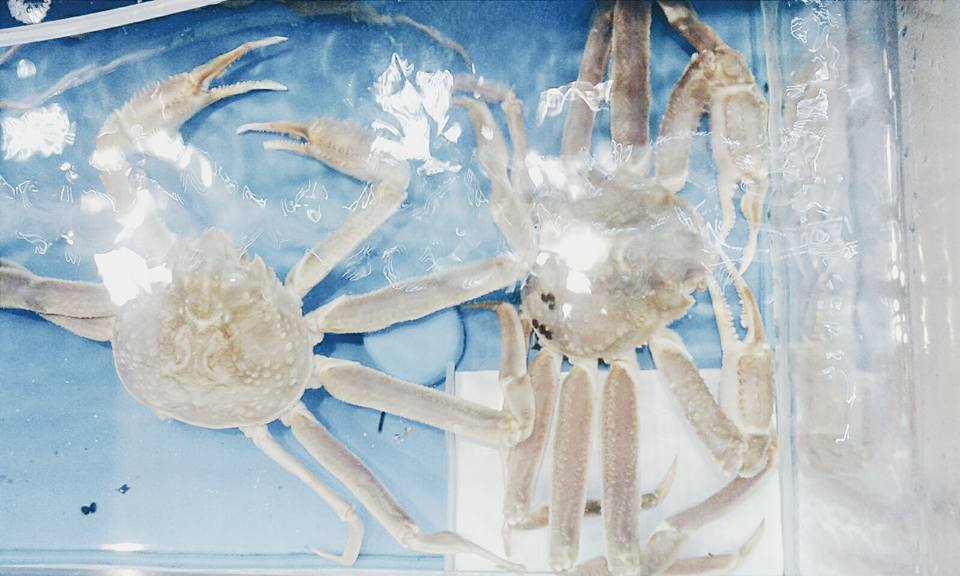
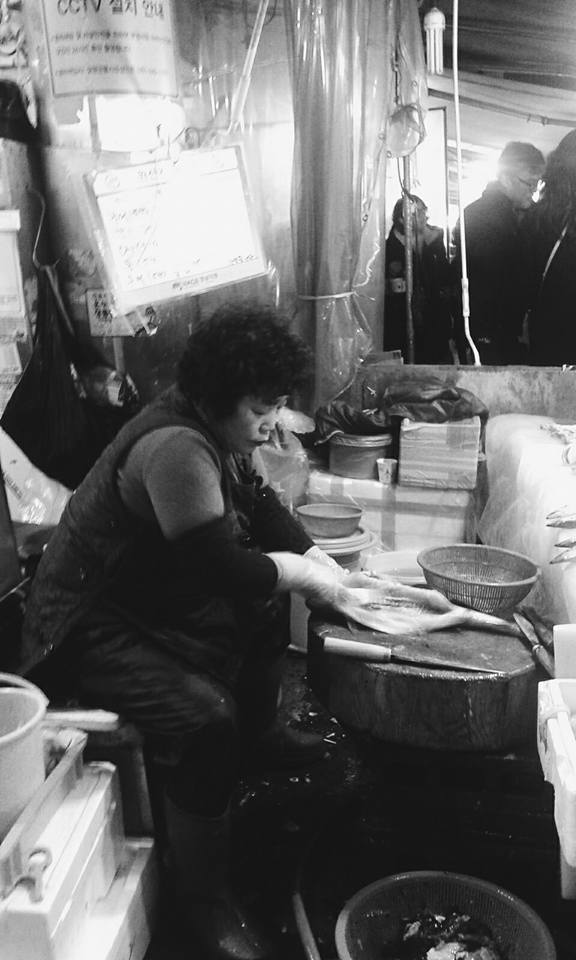
In Busan, the best place to try seafood would be at the World-Famous Jagalchi Market at Nampo. It offers a wide variety of seafood that you can take away or that can be cooked on the spot by the stalls there. However, Winter isn’t the best time to look for seafood since most of the seafood isn’t available during the season. Due to the limited selection, I didn’t actually try the seafood since (fun fact) I don’t like to eat Crustaceans; but my other family members seemed to enjoy it.
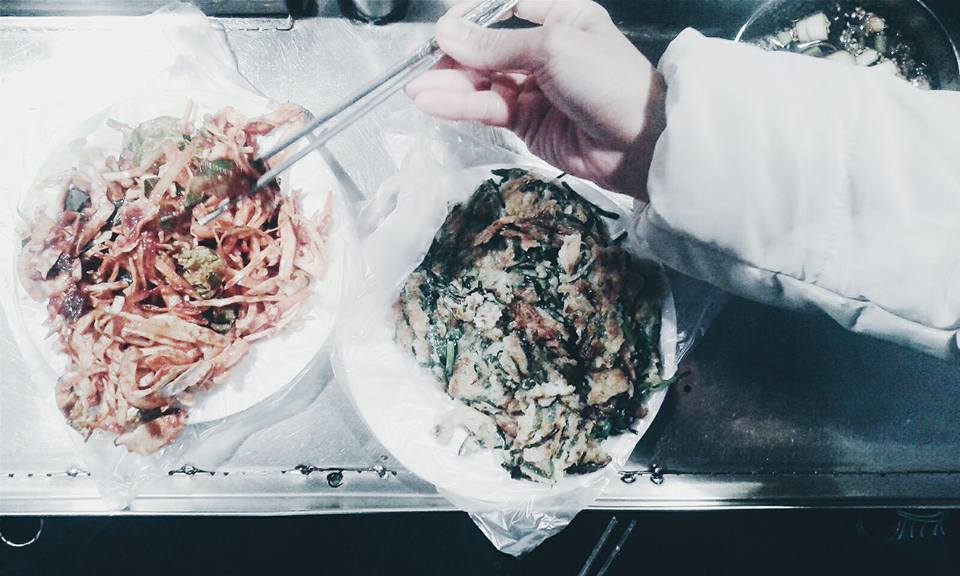
We visited a couple of different markets selling all sorts of things from clothes, to food. I think the most interesting thing I noticed was the street food. Usually, you would buy the food at the stall, and then walk away with the food, or there are tables for you to actually enjoy the food; but here, they prepare the food for you, and then you consume the food on the same table while standing. I have no idea what I tried that day (it was good though) but it seemed to be some form of “vegetable pancake” sort of thing (I’m not a foodie so yeah). And of course who would forget the Kimchi. To be honest, I wasn’t a big fan of Kimchi before I visited Korea; this absolutely changed my perception of this dish.
For some reason, I really do enjoy the being in the environment of a wet market. Seeing the hustle and bustle of it, people calling out to each other, neighbouring stall owners joking with one another, it feels like you’re in a vibrant and colourful place.
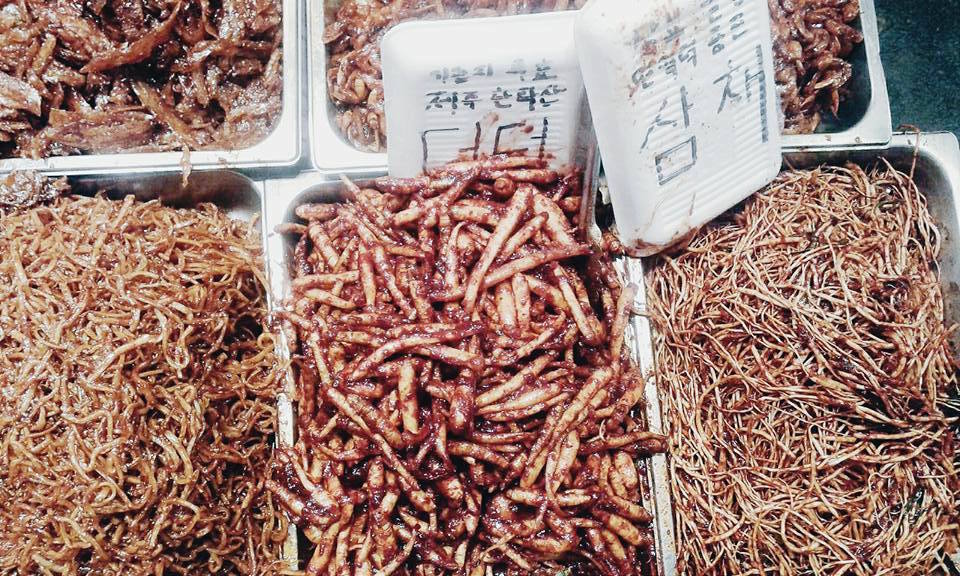
As I walked down into the corridors, I noticed that majority of the stalls sold Kimchi, and there were many different ways to prepare them. This whole time I thought Kimchi was like a single dish on its own (again not a foodie). There were some mixed in with fish or even crab.
Apparently the people here are like really hyped up about churros because you can really find them literally everywhere.
SIGHTSEEING
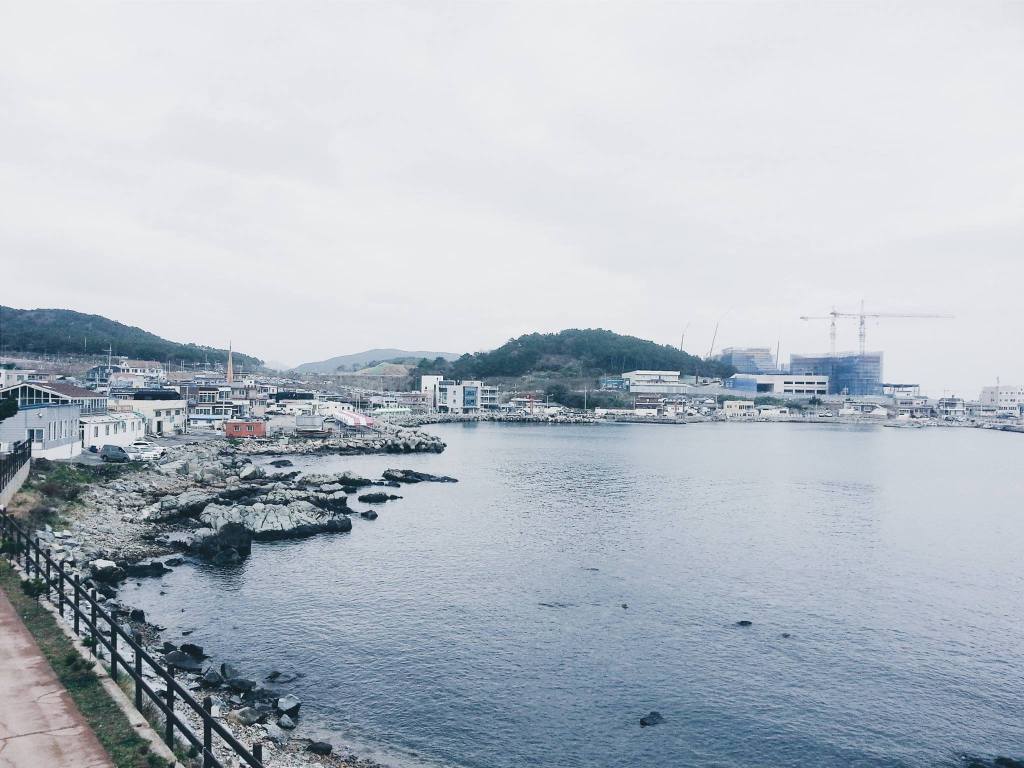
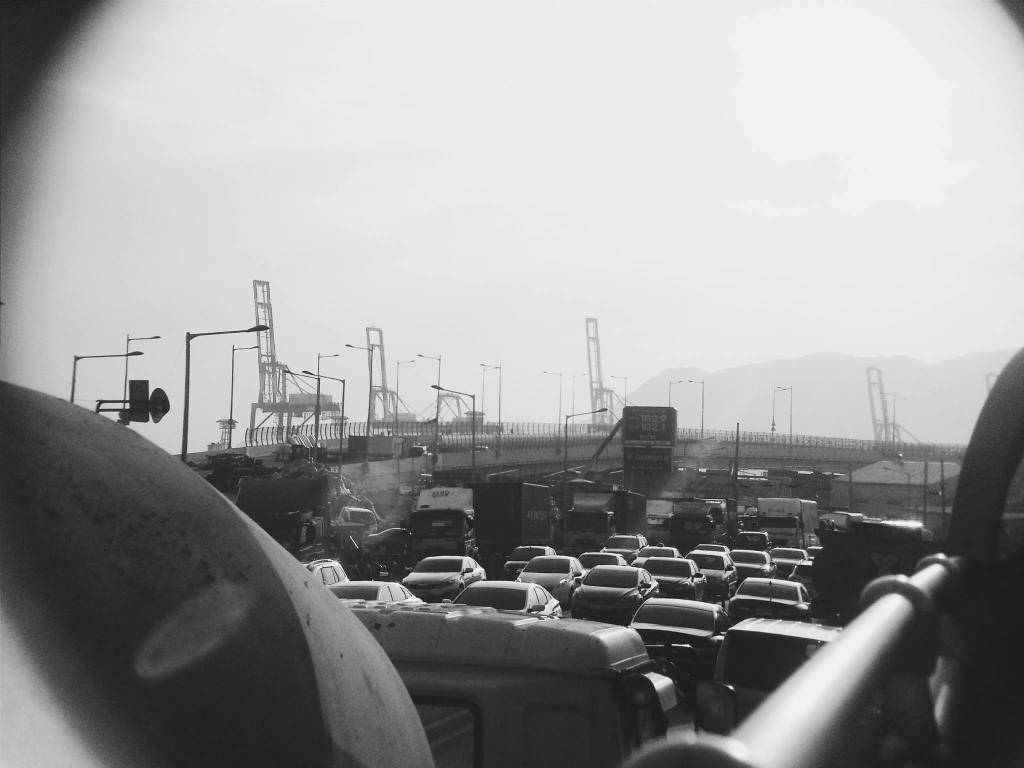
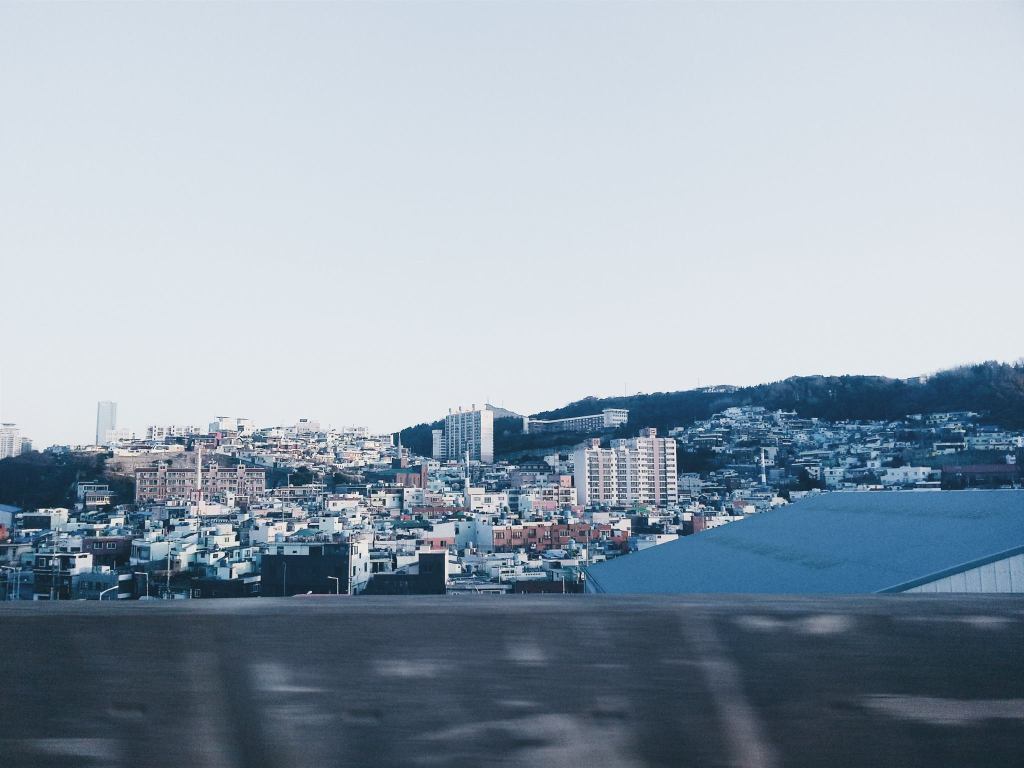
On our last day here, went sightseeing around town in a tour bus, and later on, in an open-top bus. The tour bus went through a couple of hills where we got sort of like a bird’s-eye view of the shores of Busan, and also a little bit of nature.
We unexpectedly stopped by an aquatic museum of some sort since the bus driver wanted to have his lunch. In the museum, were displays of preserved fish and live fish in little aquariums. There was also a small bay next to it where fishermen just do their thing.
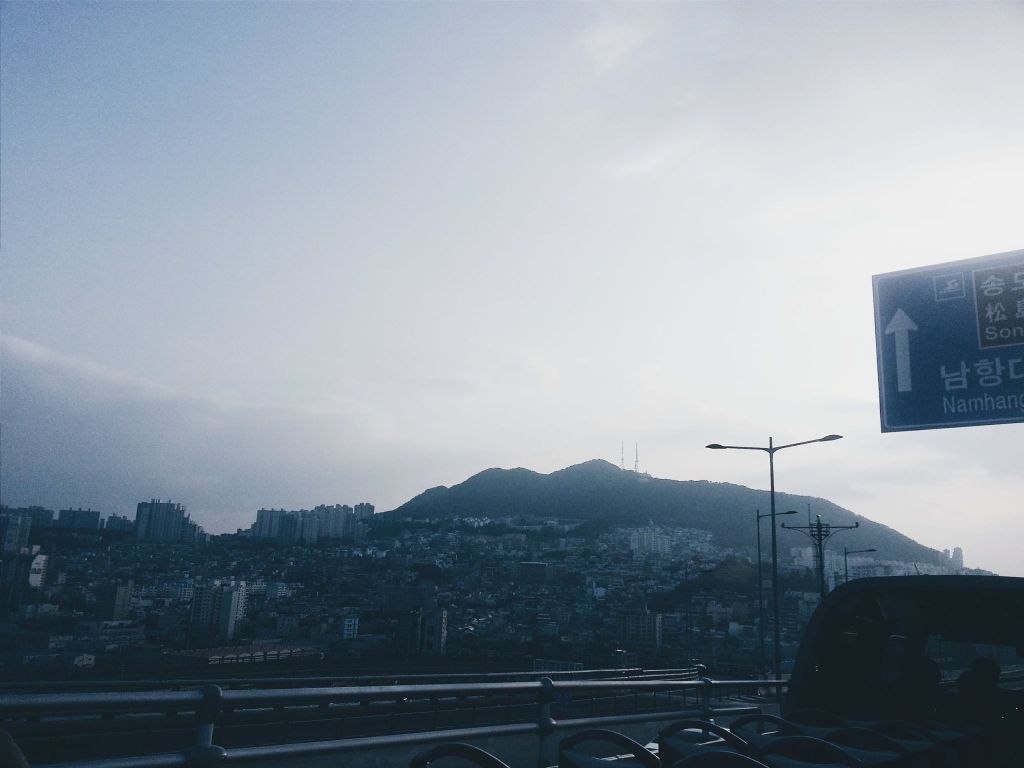
Later on, we transferred to an Open-Top bus at BEXCO to do some sightseeing. The temperatures was about 10 Degrees Celsius, and it sounded like a bad idea to sit in an open area when the bus is moving at such a high speed, but it was all worth the fun. Instead of being just a mundane bus ride, it somehow “transforms” into a roller coaster ride when cold wind gush into your face at high speeds. On top of that, there were breathtaking views too.
STREETS
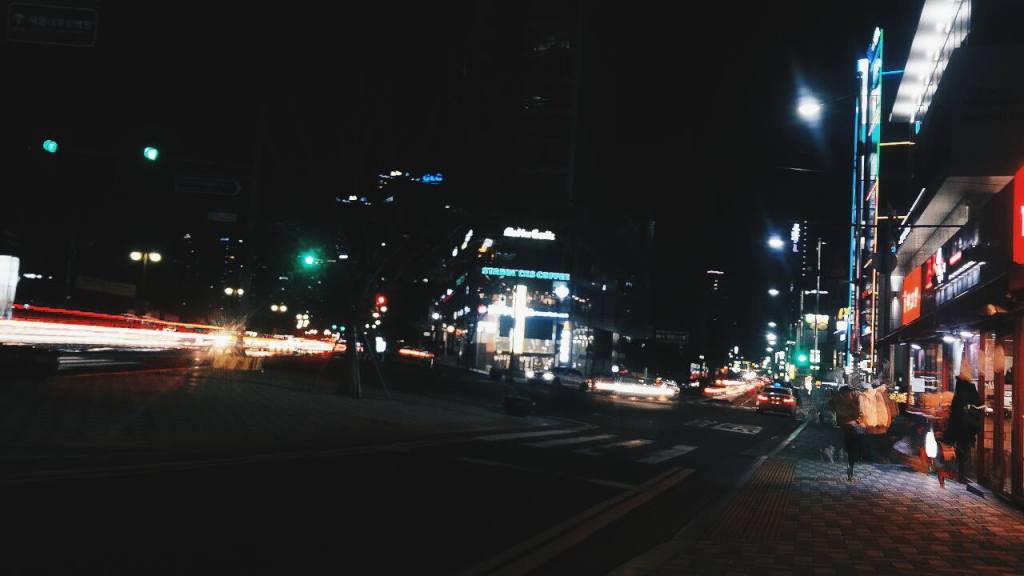
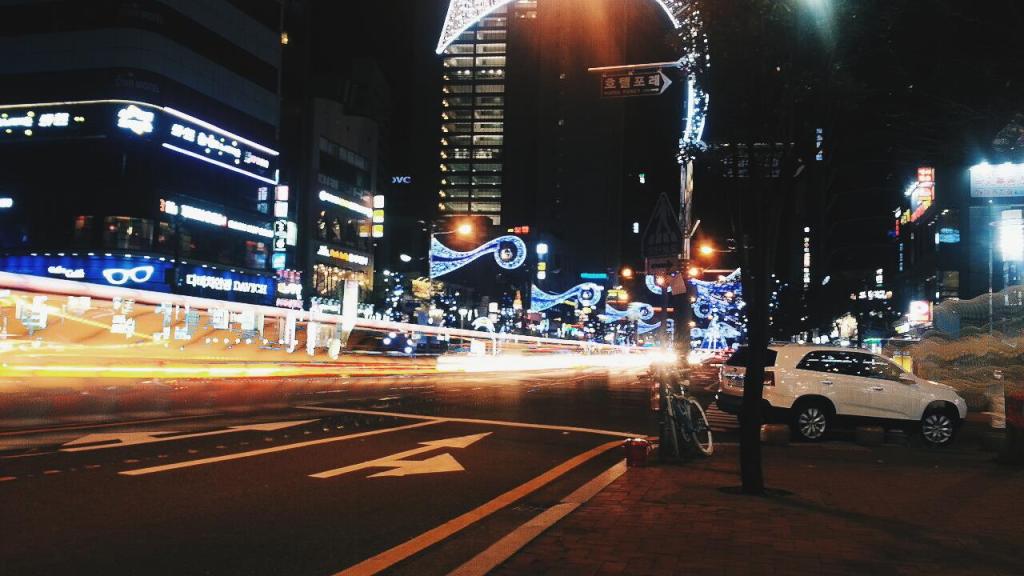
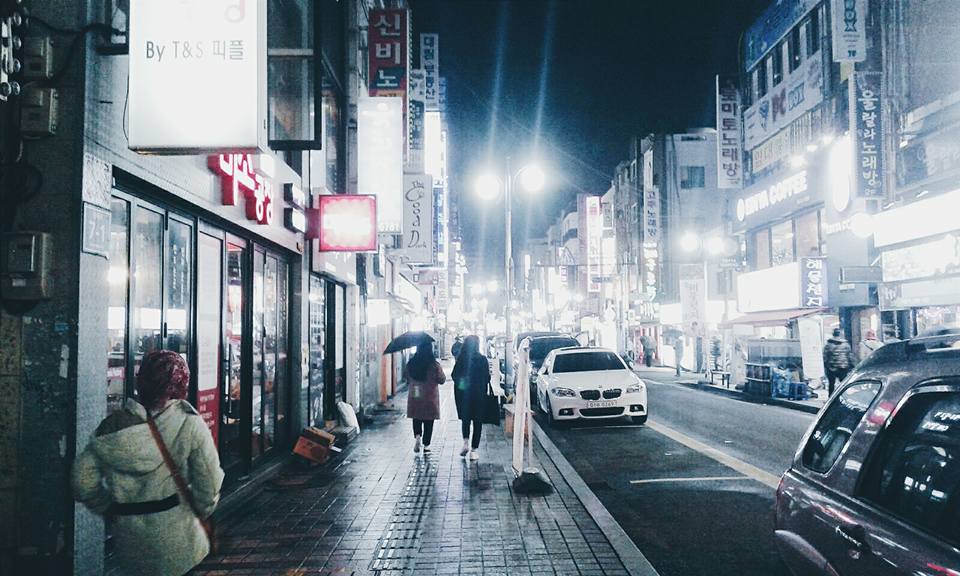
It gets dark like really early around say… 6:00pm, and so there isn’t really much to do at night except to just watch the people of Busan carry on with their normal lives. Well, I did a little bit of experiment with long exposure on my phone’s camera and it produced some spectacular results!
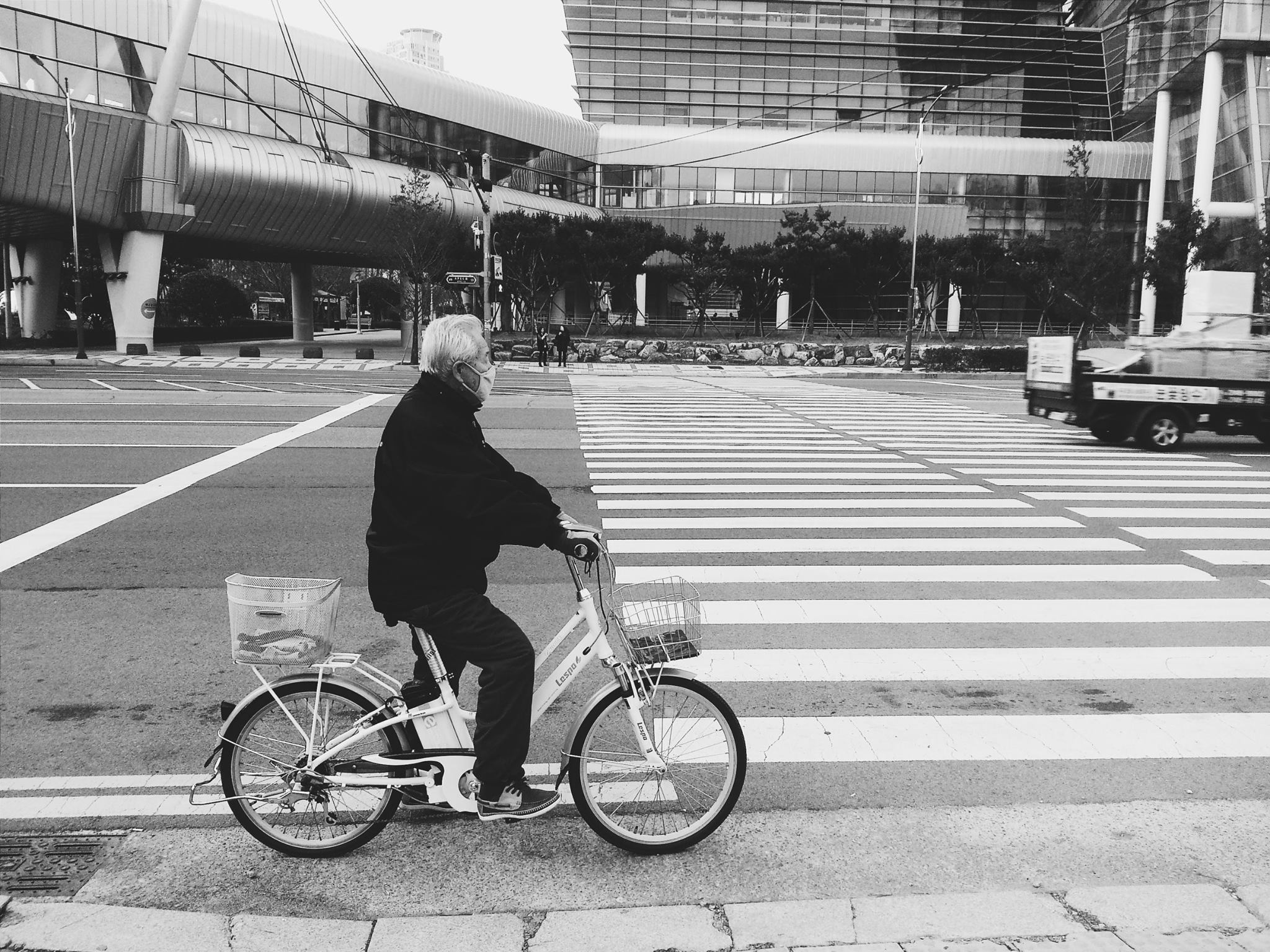
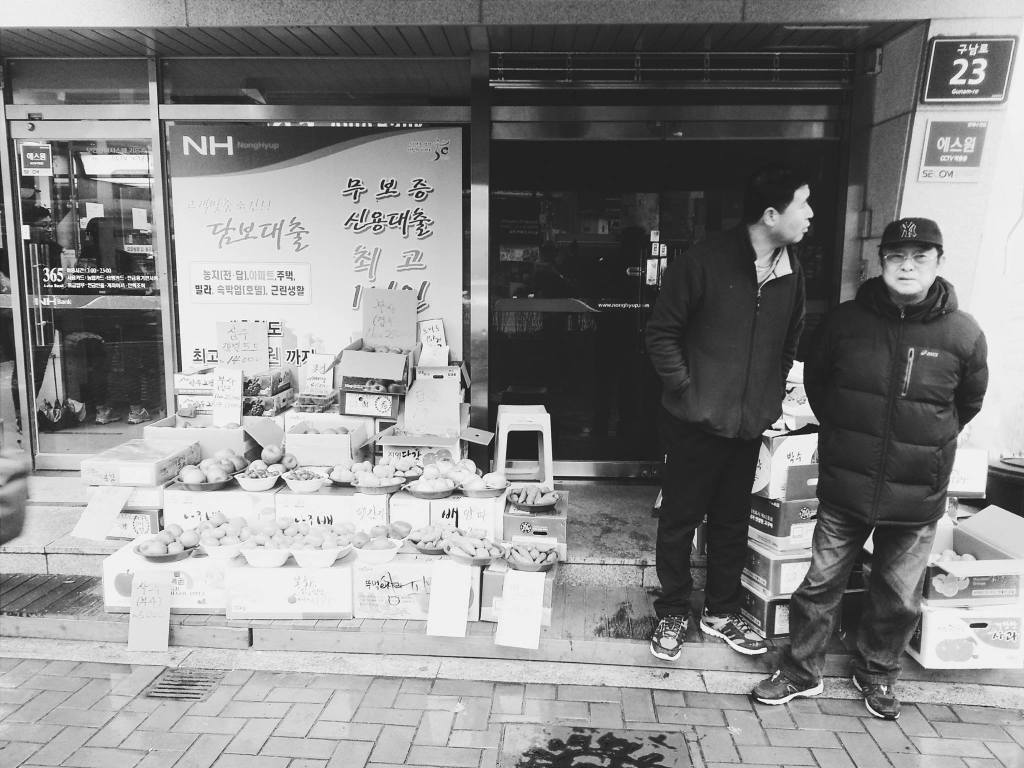
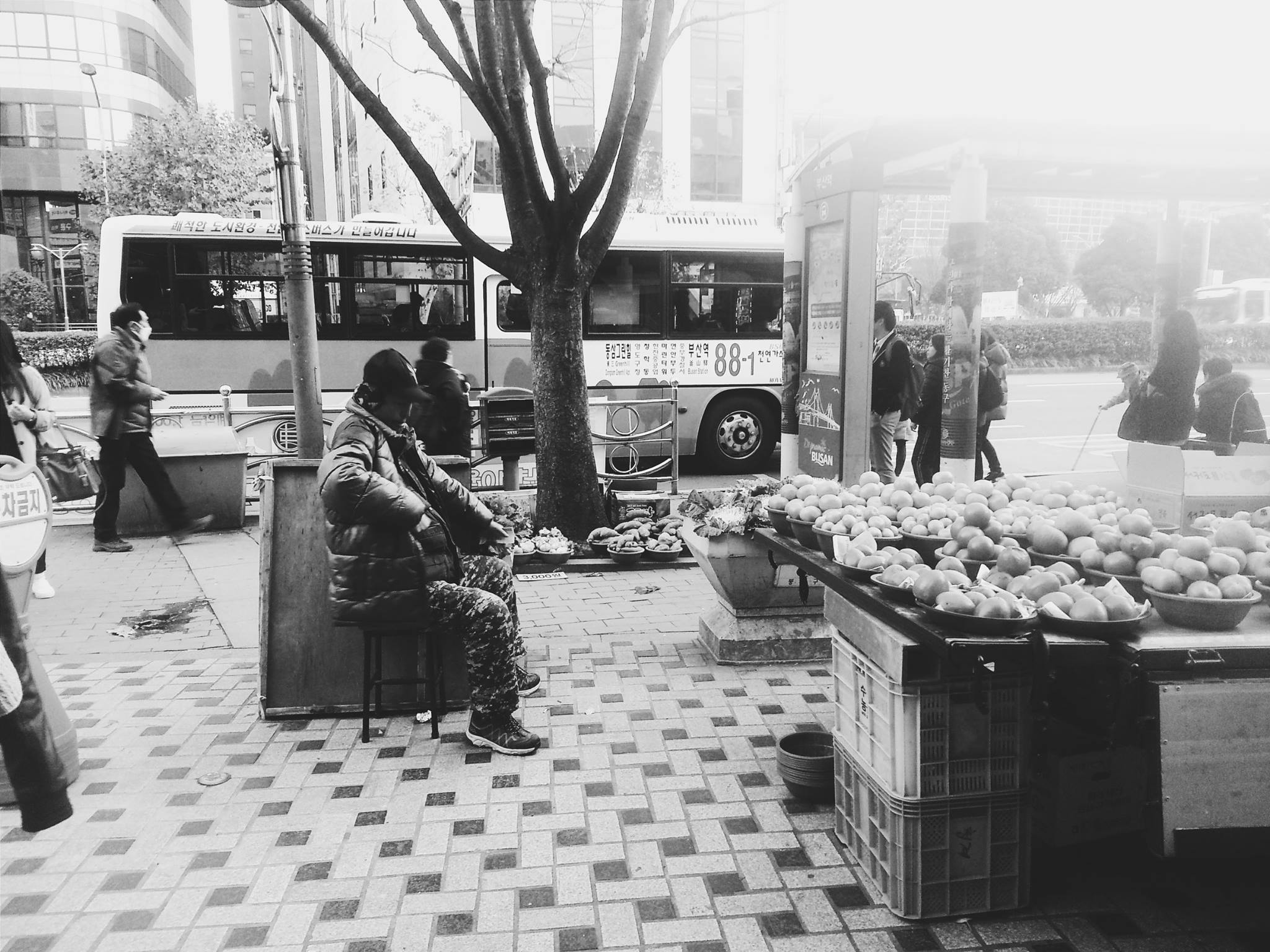
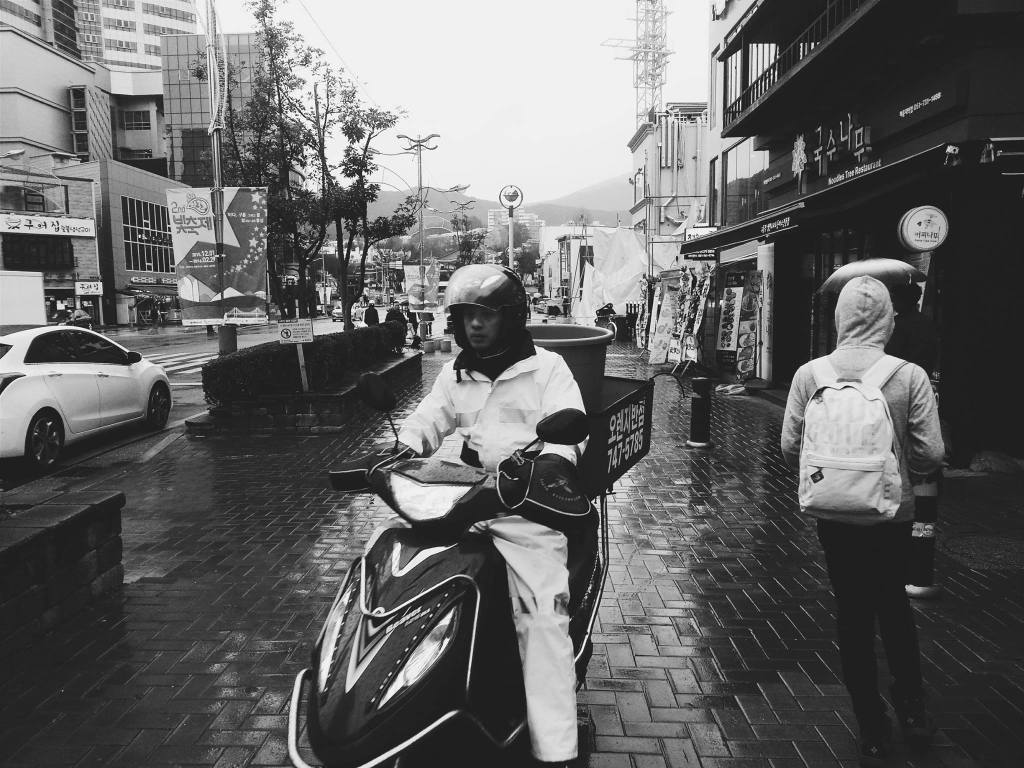
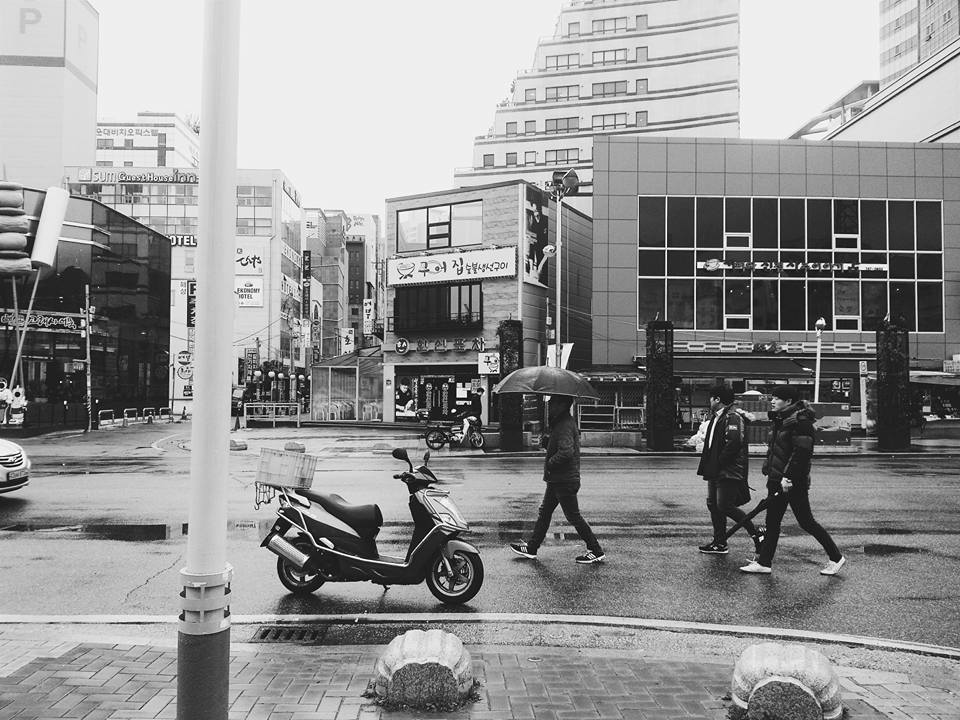
Anyway, the most interesting part of my stay here iswatching the people of Busan carry on with their normal lives. I mean it’s something I really do appreciate; seeing people load carts off carts, children playing “catching” with one another, couples teasing each other, and you can find all of these on the streets.
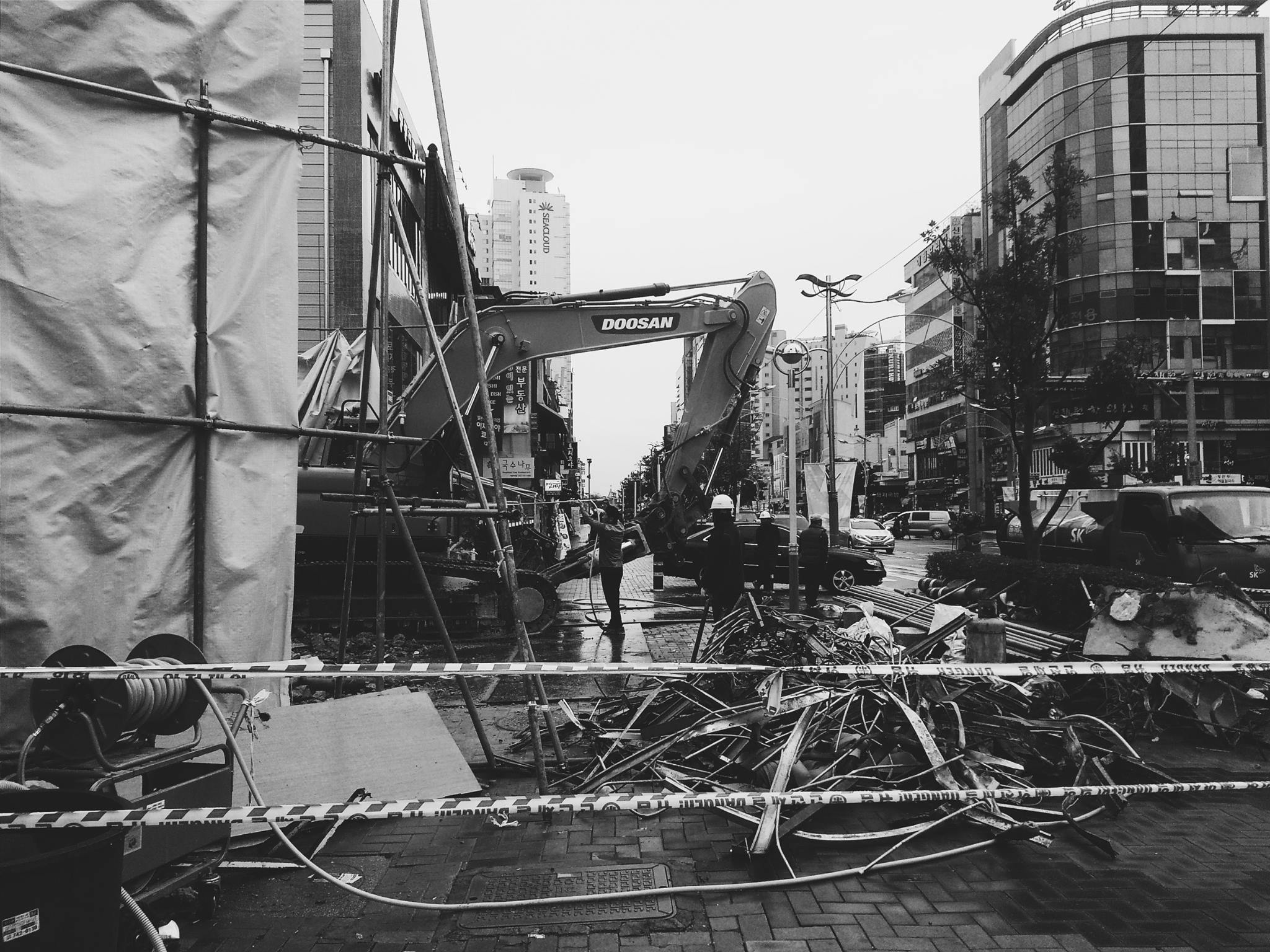
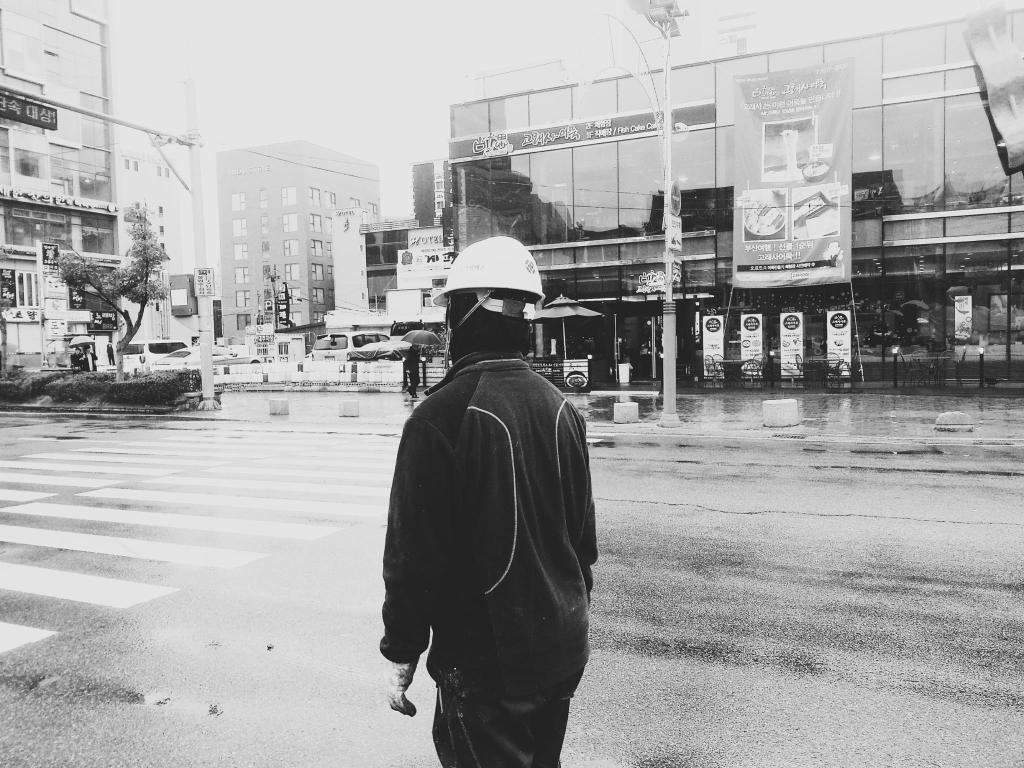
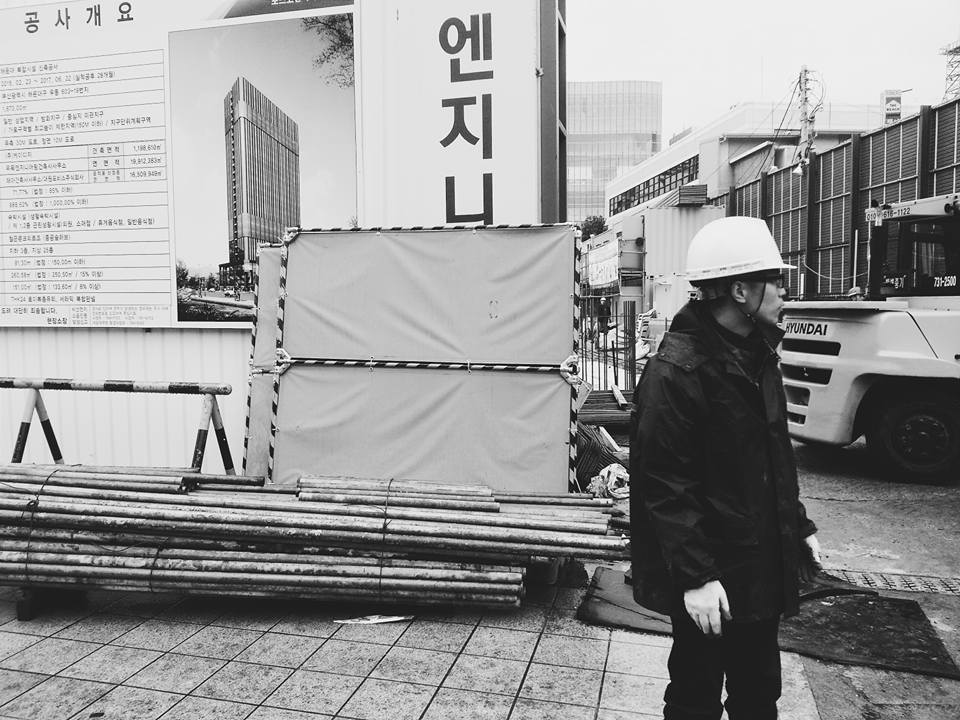
…and we have construction workers too.
…little children going on field trips.
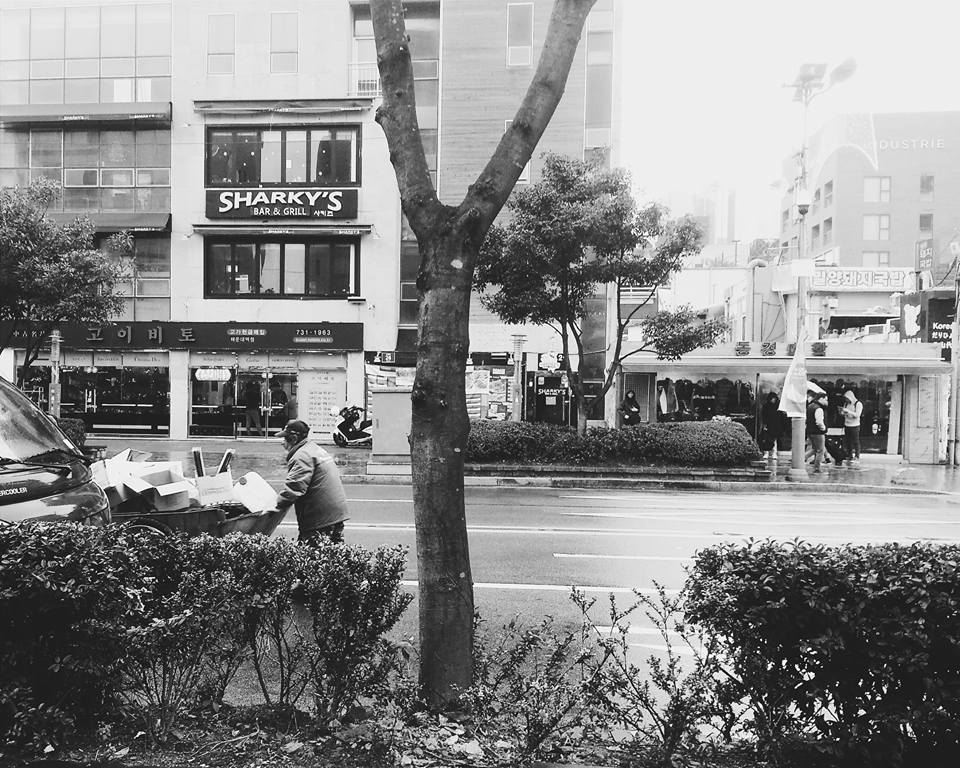
Apparently, here, cardboard collectors are a common sight too.
I guess I can say that what really made my trip here in Busan memorable was the people. Like how they made me feel like I’m no stranger here. I really do believe that the impact the people left on me here is really something that I will not forget for a long time.
For more pictures from Busan, do head over to my VSCO Grid!
It was the night before polling day, which was a public holiday, when all of a sudden, my family decided to go for an overnight stay at Johor, which was kinda next door. My mom figured out that if we went the night before, the jam at the causeway won’t be so bad. Hehe.
That night, we left our luggage at a hotel called the Bayu Marina Resort located next to Sungei Tebrau. There wasn’t really a view because of the haze. Then, we set off straight to a village called Kampung Senibong which was about a 15-minutes’ drive away.
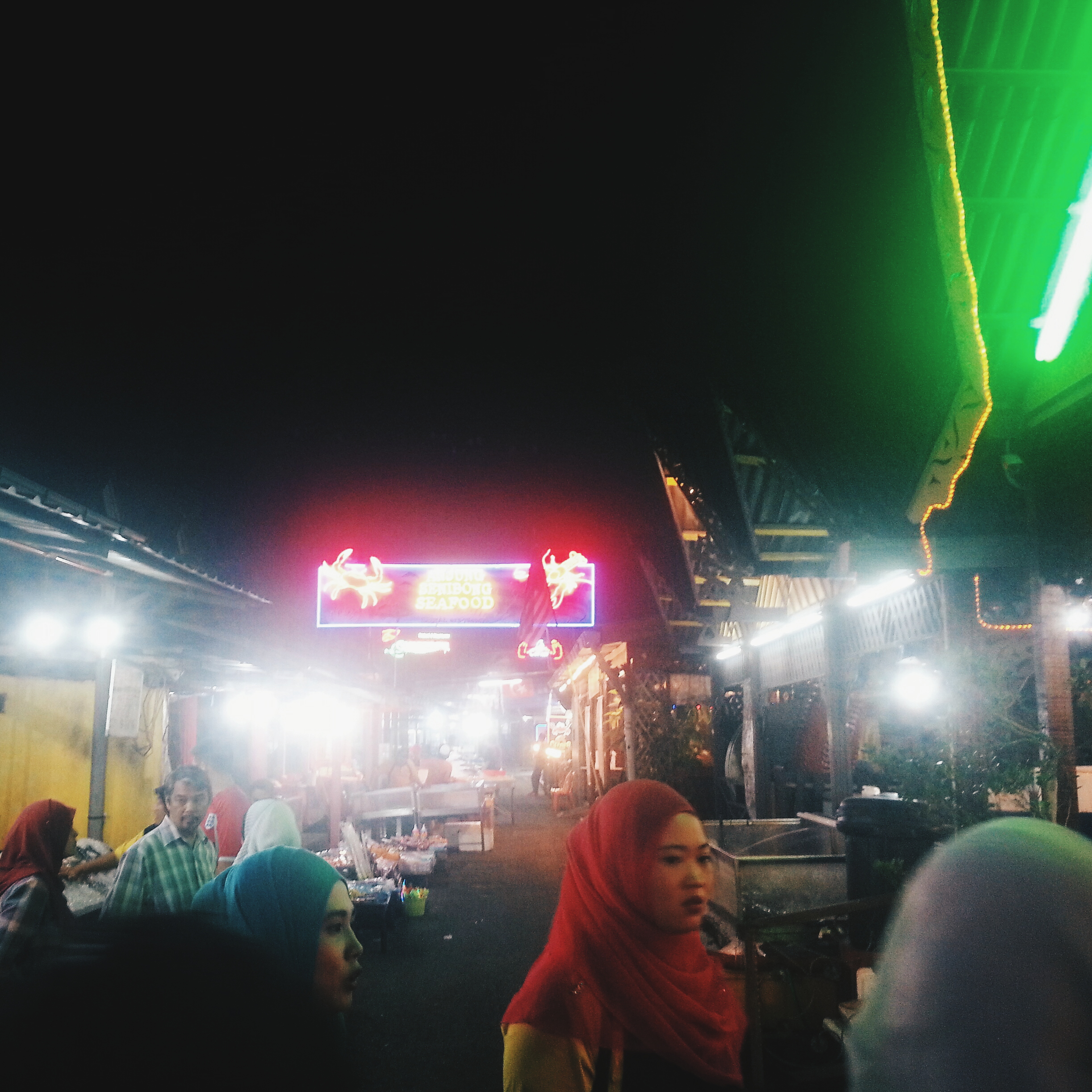
The seafood “market” kinda has a few restaurants placed next to each other. Surprisingly, the prices for their food are significantly different. …and of course we went for the cheapest one. We were greeted with a bunch of waiters and waitresses begging us along with other passers-by to come to their restaurant. Of course, we gave it a pass (and it did put a frown on their faces) since the money they charge for their food ain’t great.
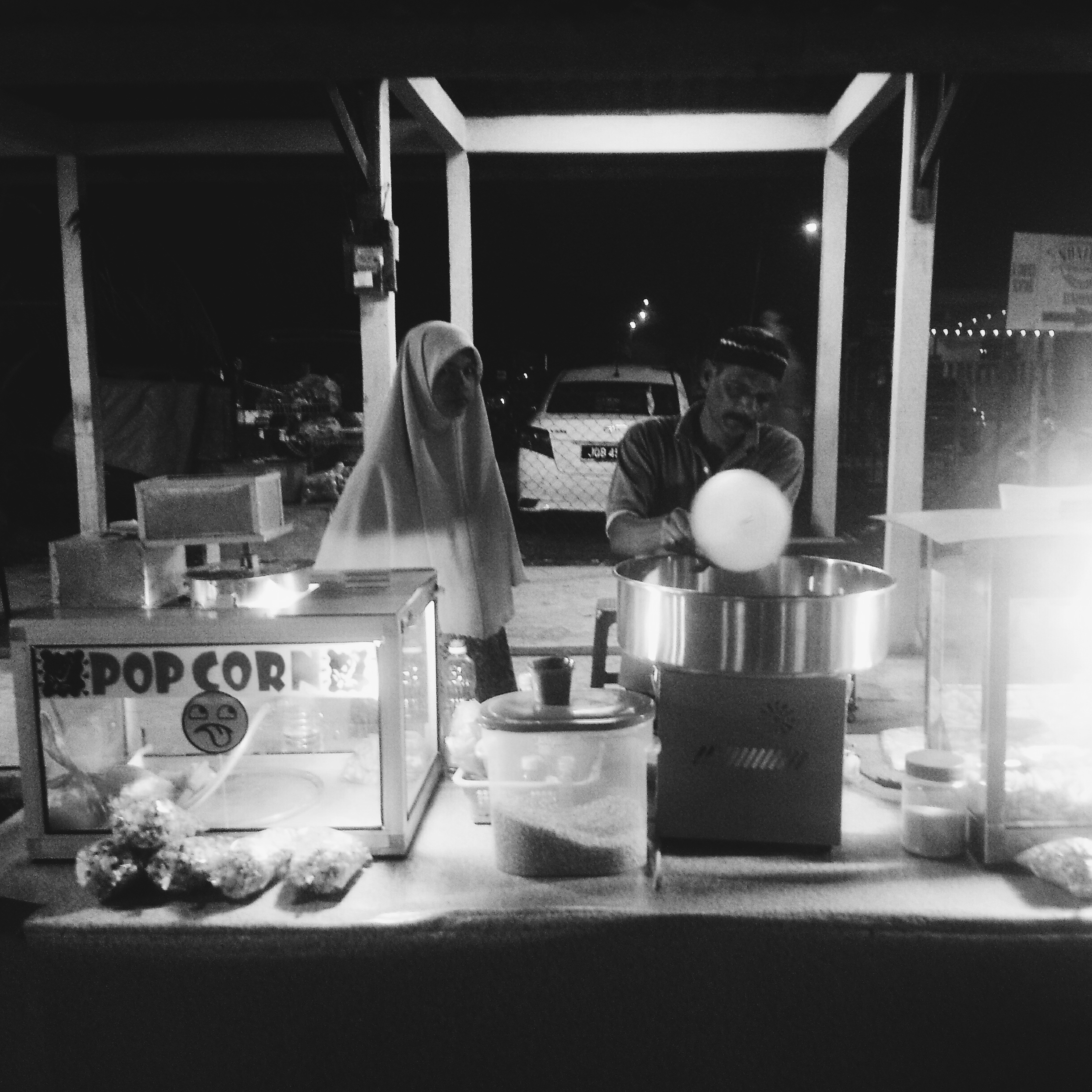
It’s a small little alleyway.Satayman taking a rest…He’s a Satay cook I think.Cotton Candy!Waiters Chilling OutSelling toys.
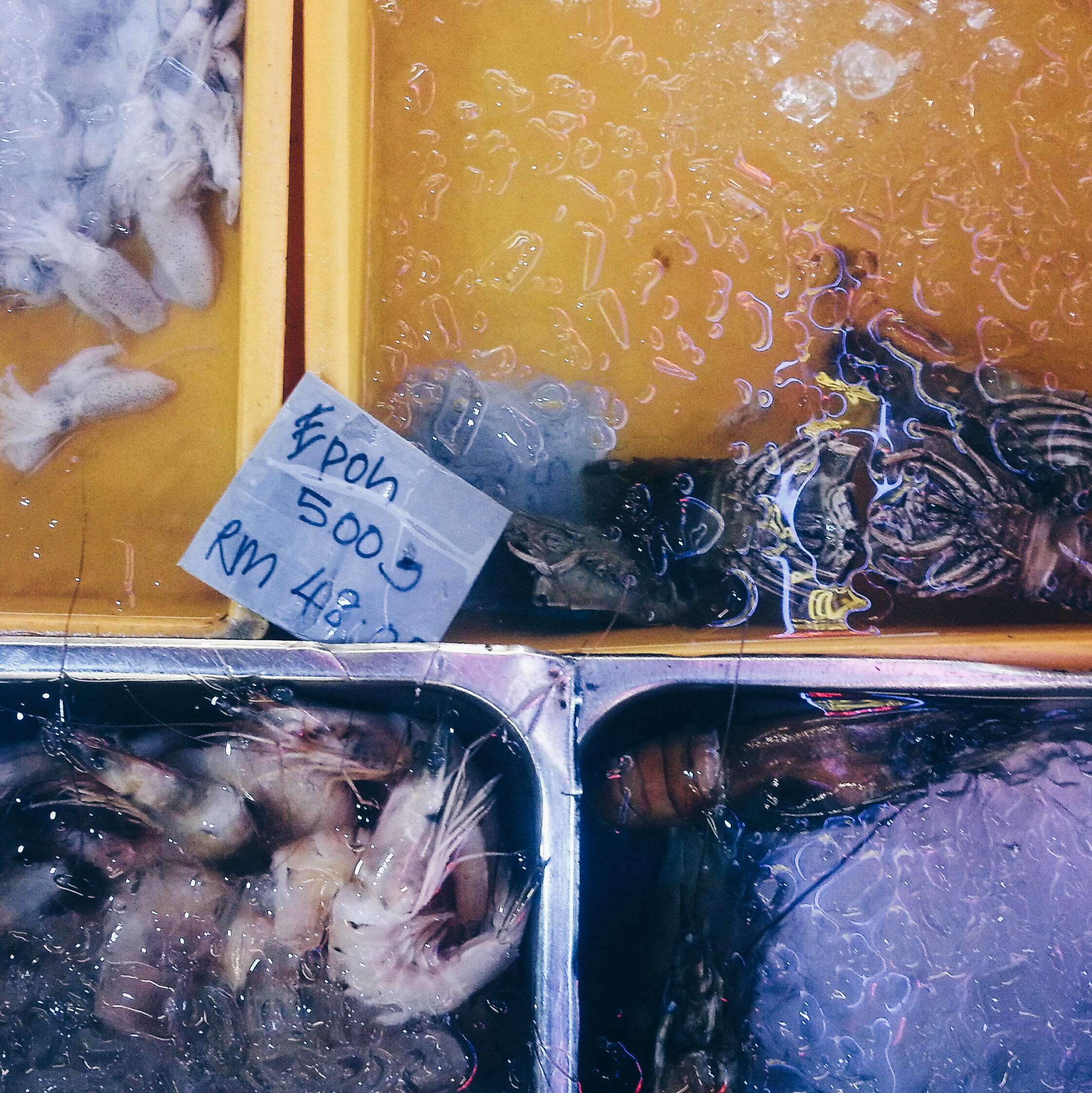
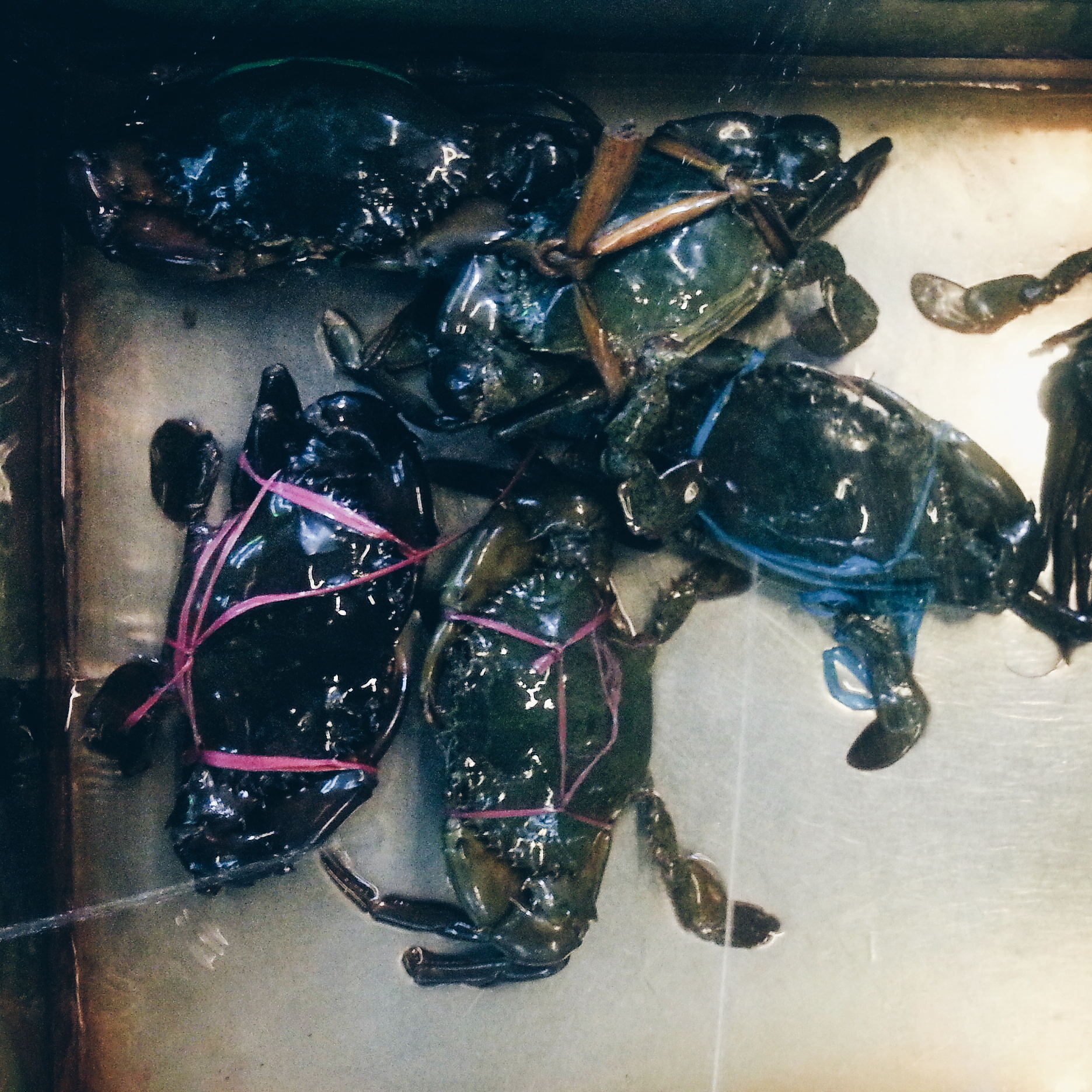
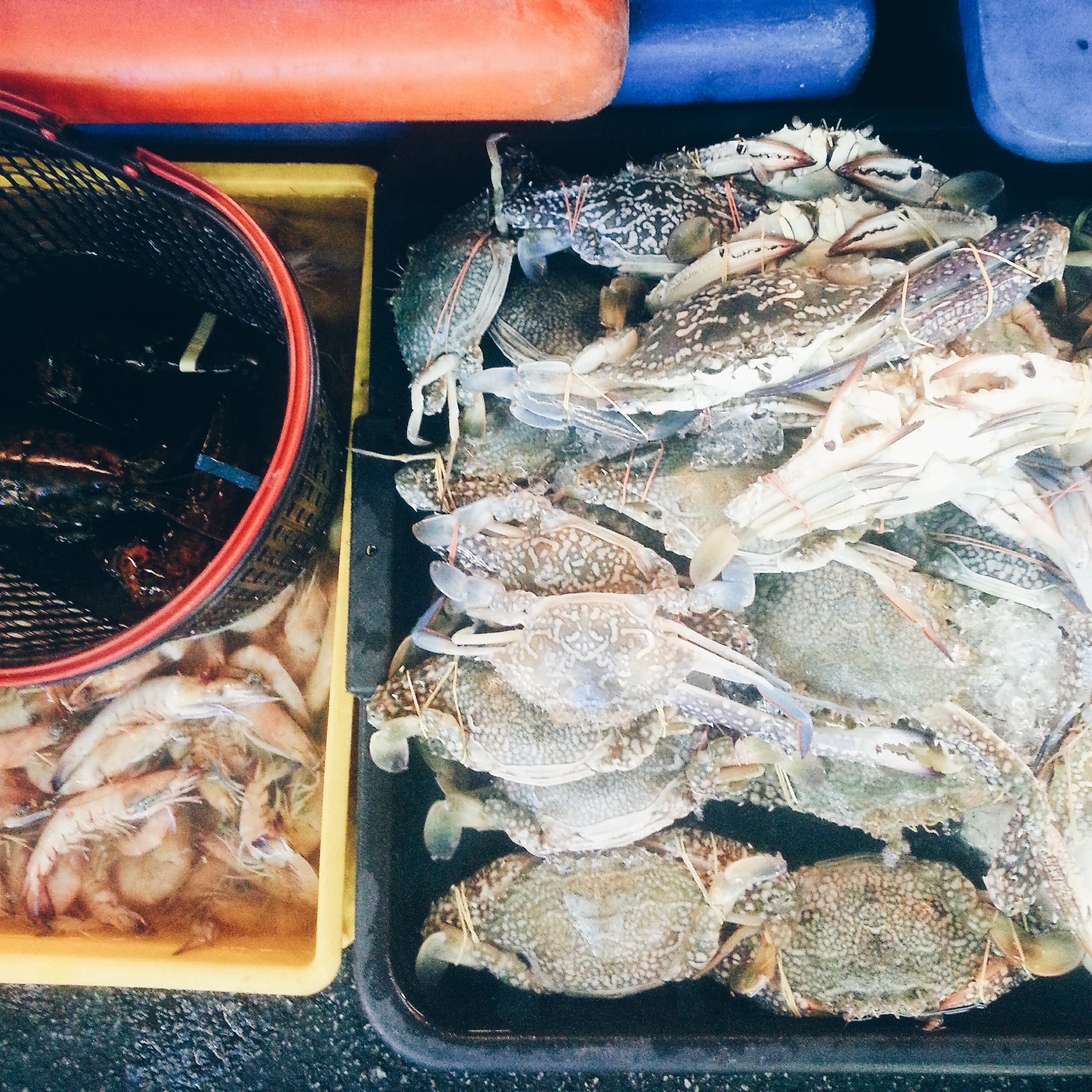
Outside, along the restaurants, there are a couple of shops that sell a variety of things like pirated DVDs, toys, cotton candy, popcorn, and mostly, fresh seafood. It is from there where the restaurants get their supply and cook their food so… you know. Great. Fresh seafood. The smell stinks. Haha. The seafood ranges from crab, to prawn, stingray, fish, lobster, and a bunch of sea creatures that I don’t really recognise at all. Usually the crabs are put in glass containers, prawns, lobster and fish in water tanks, and the rest in blended ice.
How they arrange their seafood.Squids!!!Fishes stacked on top of one another.Live Crab put in a glass container.More crabs and prawns…Creaky floorboards.
So, after doing a little bit of looking around, we found a table and started ordering our food. I didn’t really remember exactly what we ordered, but I guess the photos can sorta tell the story themselves. We were sitting right next to the ocean. The view of the sea (Well, Singapore was opposite) wasn’t as great, once again, thanks to the haze.
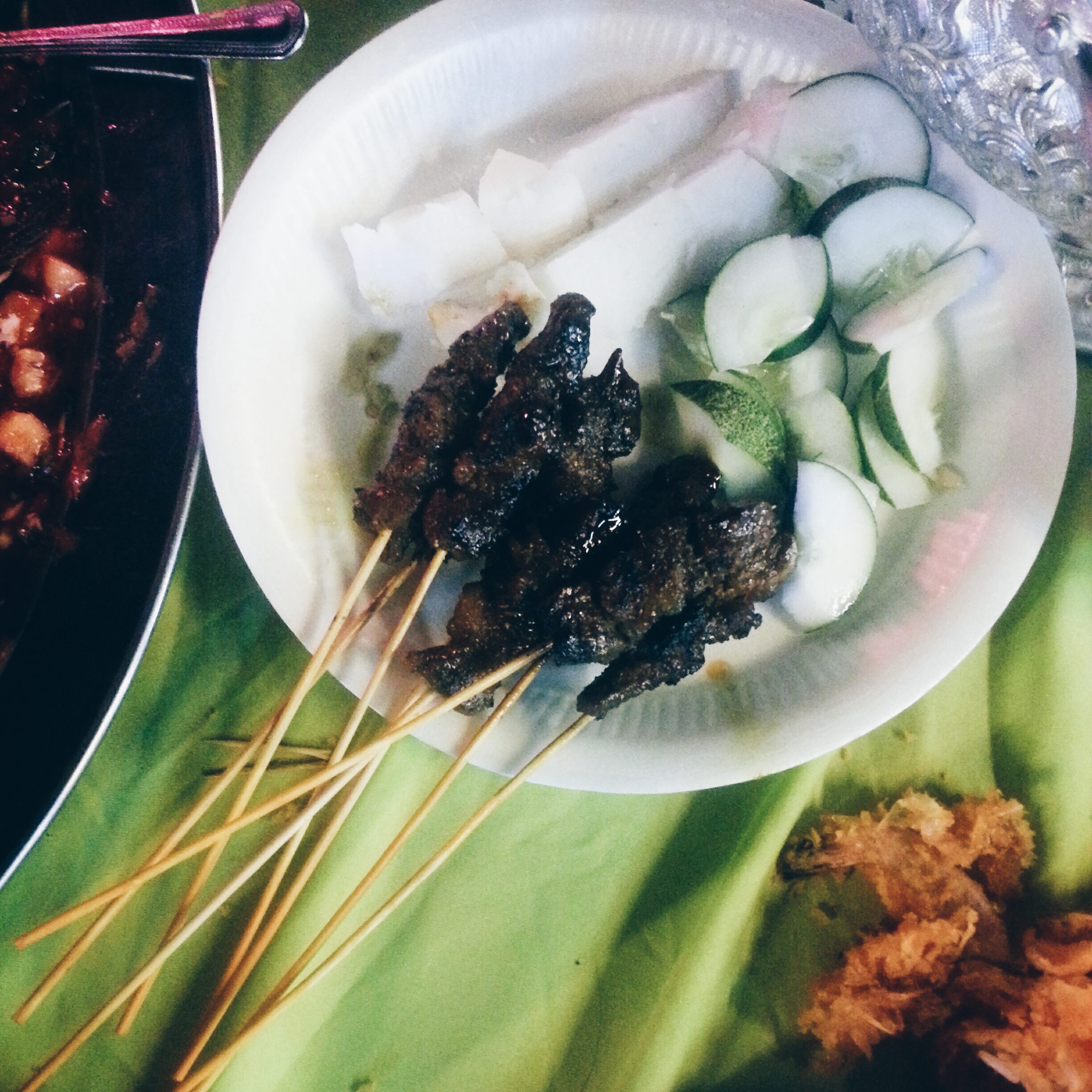
Now comes the food. Well… the food actually ain’t bad. But personally, I didn’t try the crab, lobster or crayfish since I don’t fancy eating crustaceans. Yuck! However, my favourite, ironically, was the butter prawns. Oh, and we ate all of the seafood with rice. There was chicken and beef satay too! They were amazingly tender!
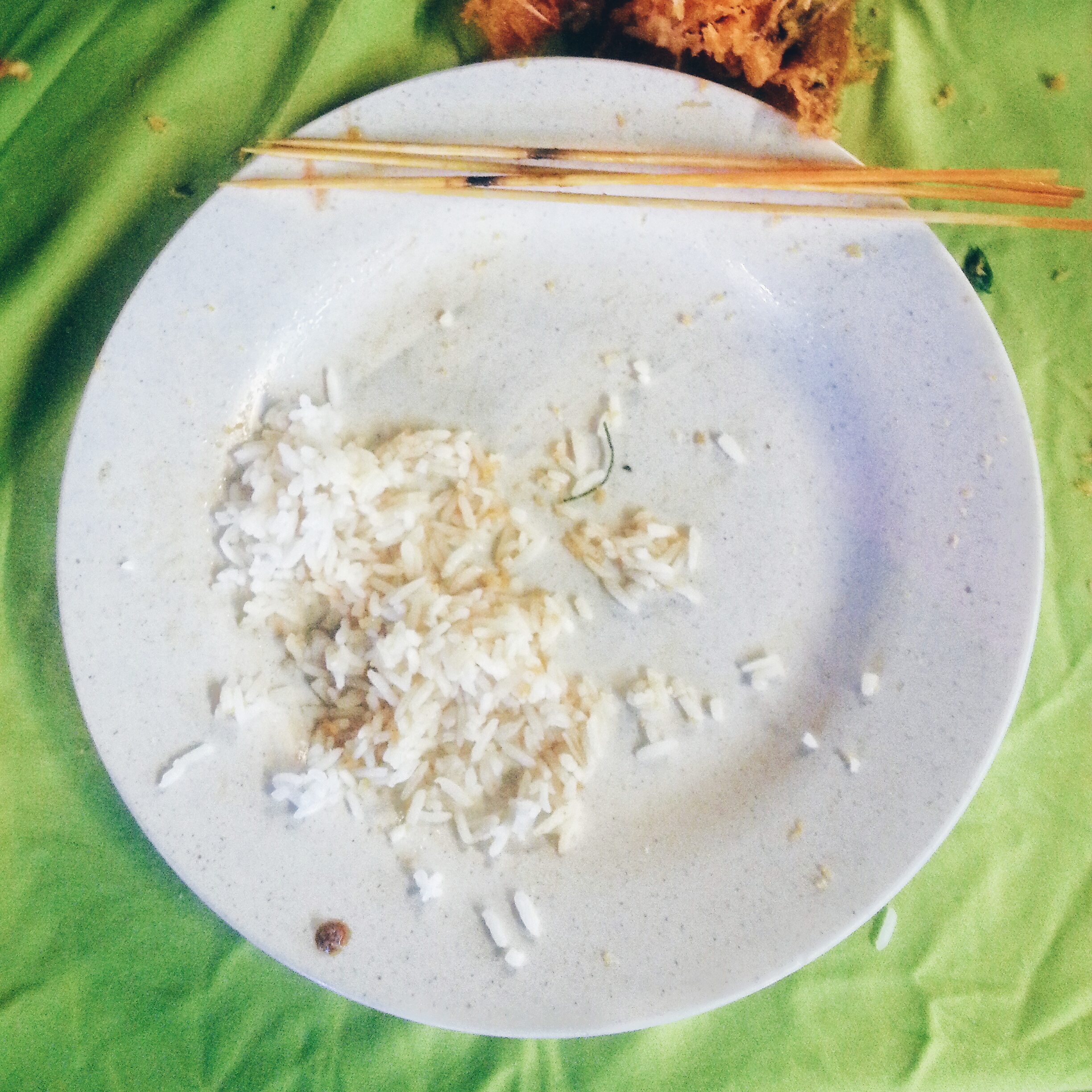
Wide variety of food!Some form of fish I can’t remember the name.Satay!Look mom! I finished my plate!
Overall… it was a great experience! We are planning to return there in the future someday!
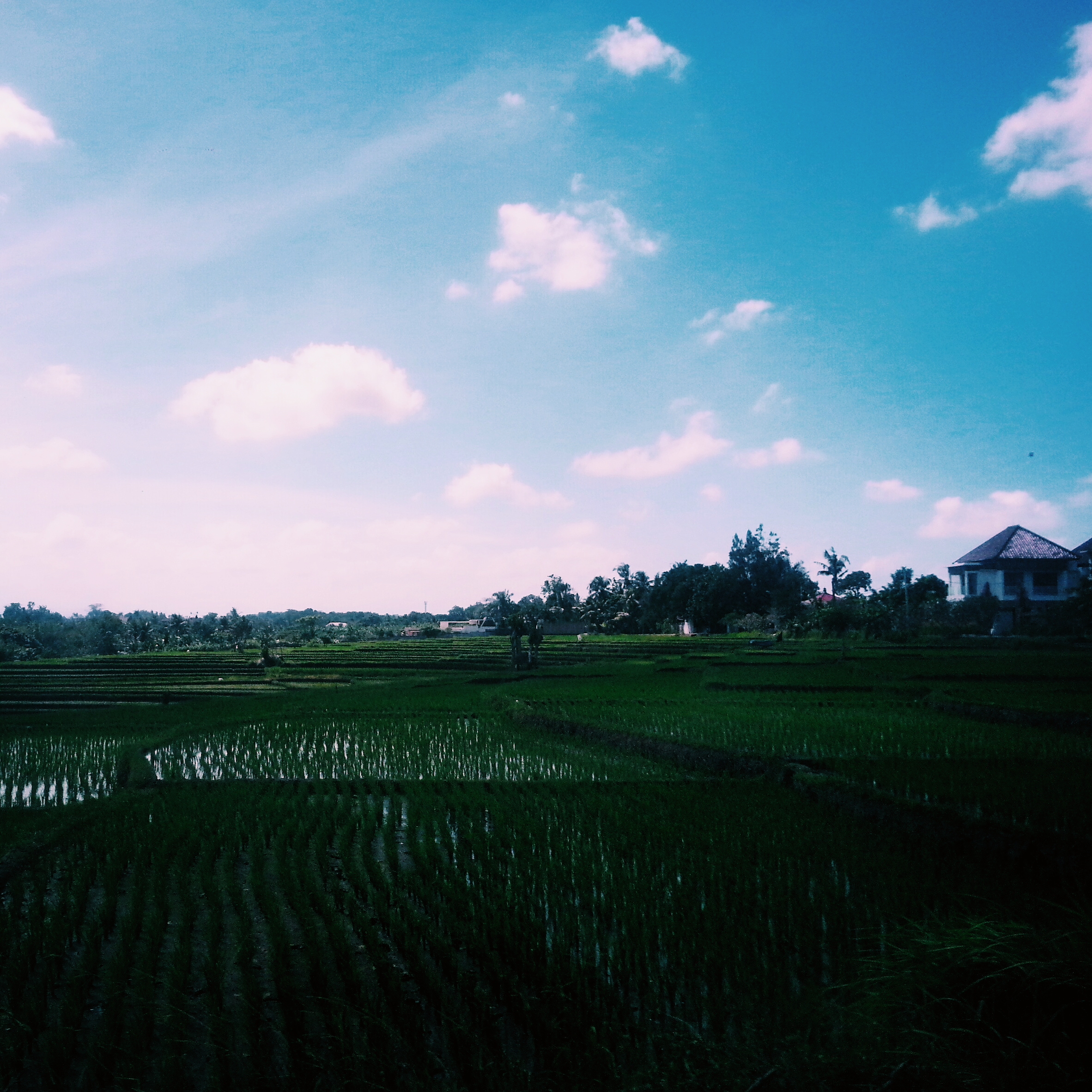
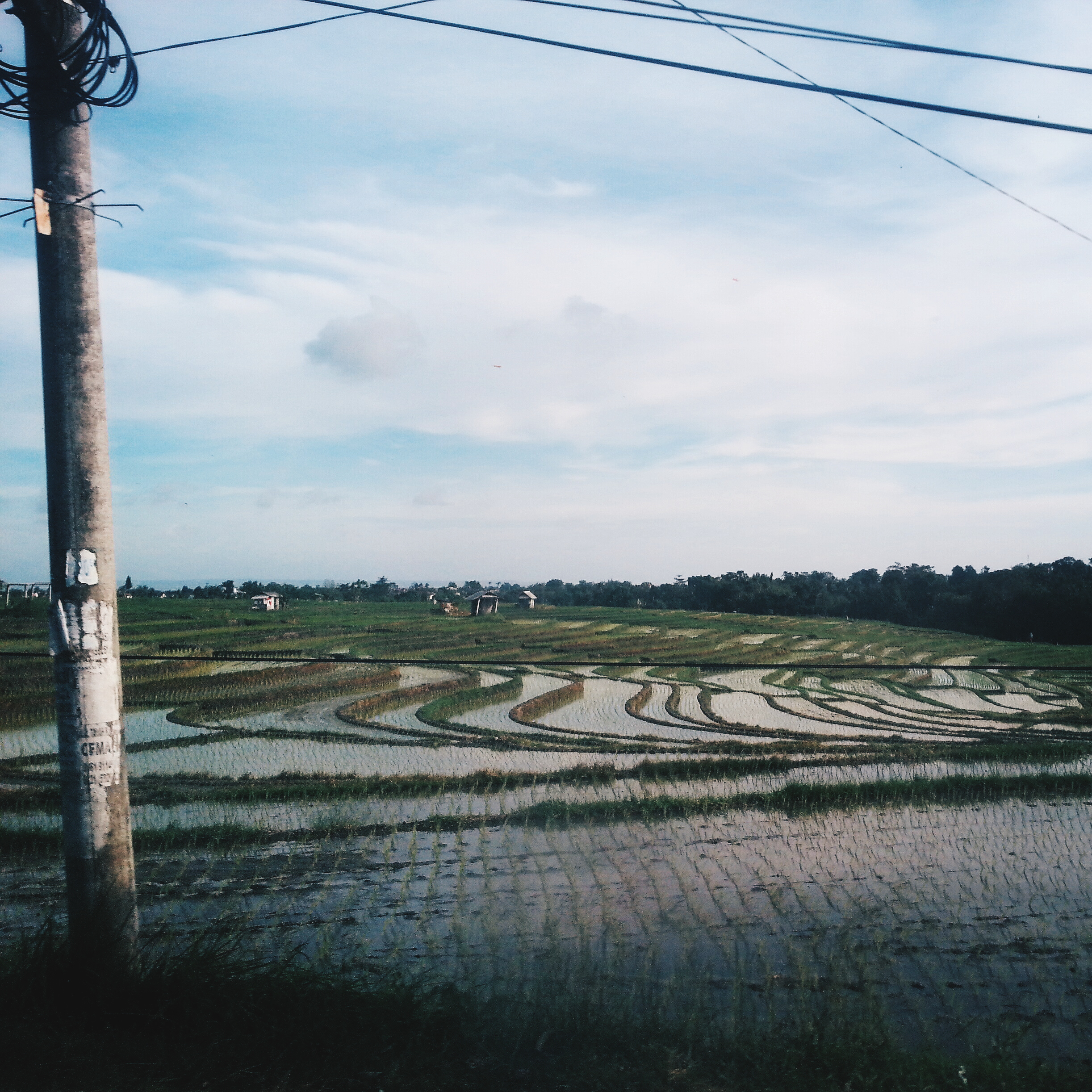
It was my second day in Bali. Woke up and prepared myself at about 7:00am in the morning for a two-hour drive to the mountains. My family and I were planning to go for a cycling tour in a few of the villages there. As we went up the mountains, our sightseeing landscapes were basically a bunch of paddy fields after another.
Balinese Rice Paddy FieldsMore Paddy Fields!
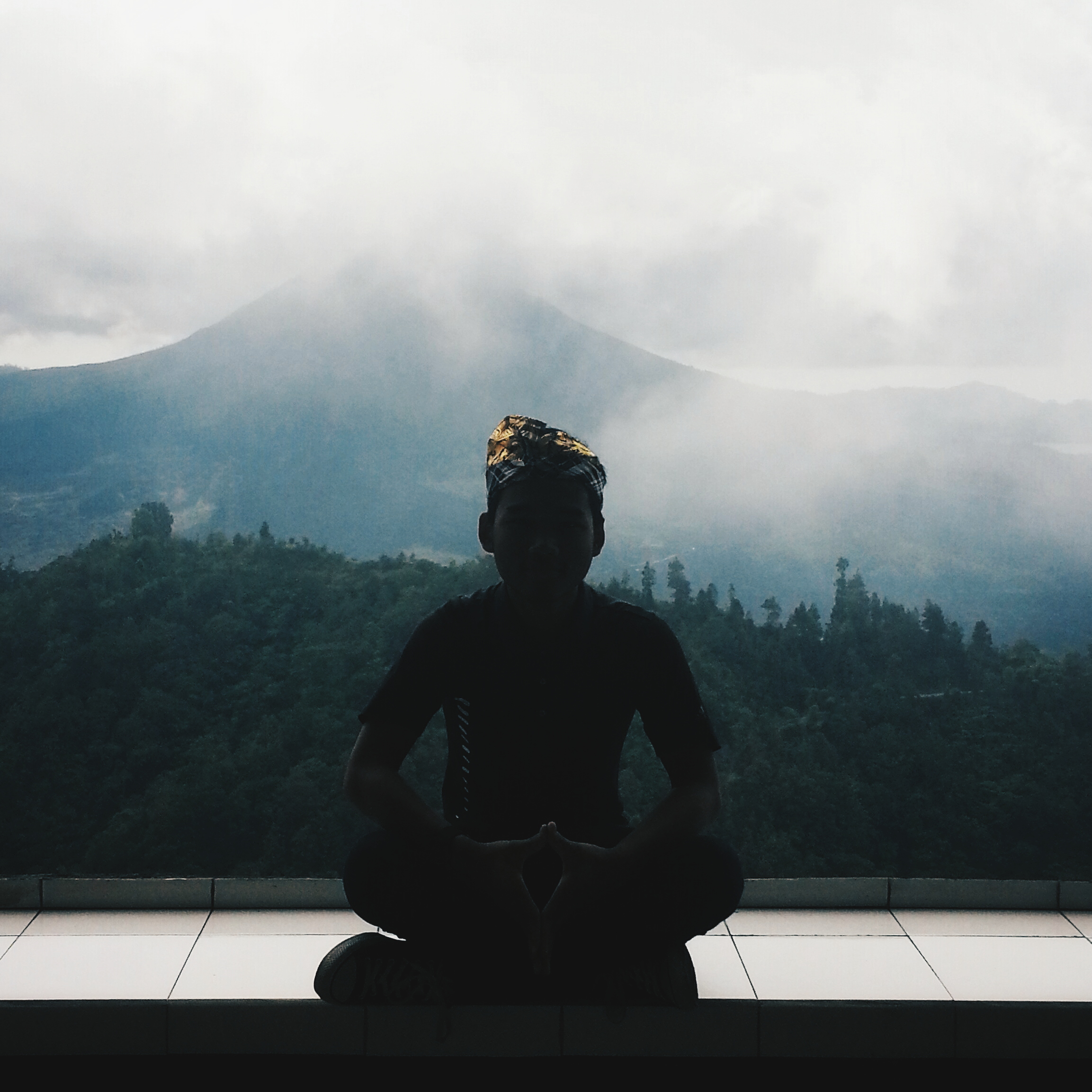
We started our cycling tour at the peak of Mount. Kintamani, also known as Kintamani Volcano. At the peak, we were greeted by a breathtaking view.
View of Mount. AgungNot gonna fall off!Another view of Mount. Agung, Bali’s highest point, in the background.That’s me!
The temperature at Denpasar, the “main” city in Bali was about 30 degrees Celsius. At our current location, it was about 15 degrees, kinda a shock to me, but luckily we didn’t need jackets since the Sun was keeping us warm.
Anyways we had our delicious breakfast in this little restaurant. Simple fried rice, and some tea. Afterwards, we immediately started our biking journey!
Our yummy Breakfast!Lol I’m all the way at the back.
Our first stop was at a Primary School. It was a holiday so there weren’t any students there. There were a couple of teachers there though. Awkwardly staring at us outside their staff rooms, each holding a cup of tea, as we trespassed the school’s boundaries. The Primary School had about 2 small blocks; one for the staff rooms, and one for the student block, which only consisted of about four classrooms. The tour guide told us that a normal school curriculum had about 3 recess times (haha I wished I had that in my school), and students are allowed to go home to have their lunch (I got even more jealous).
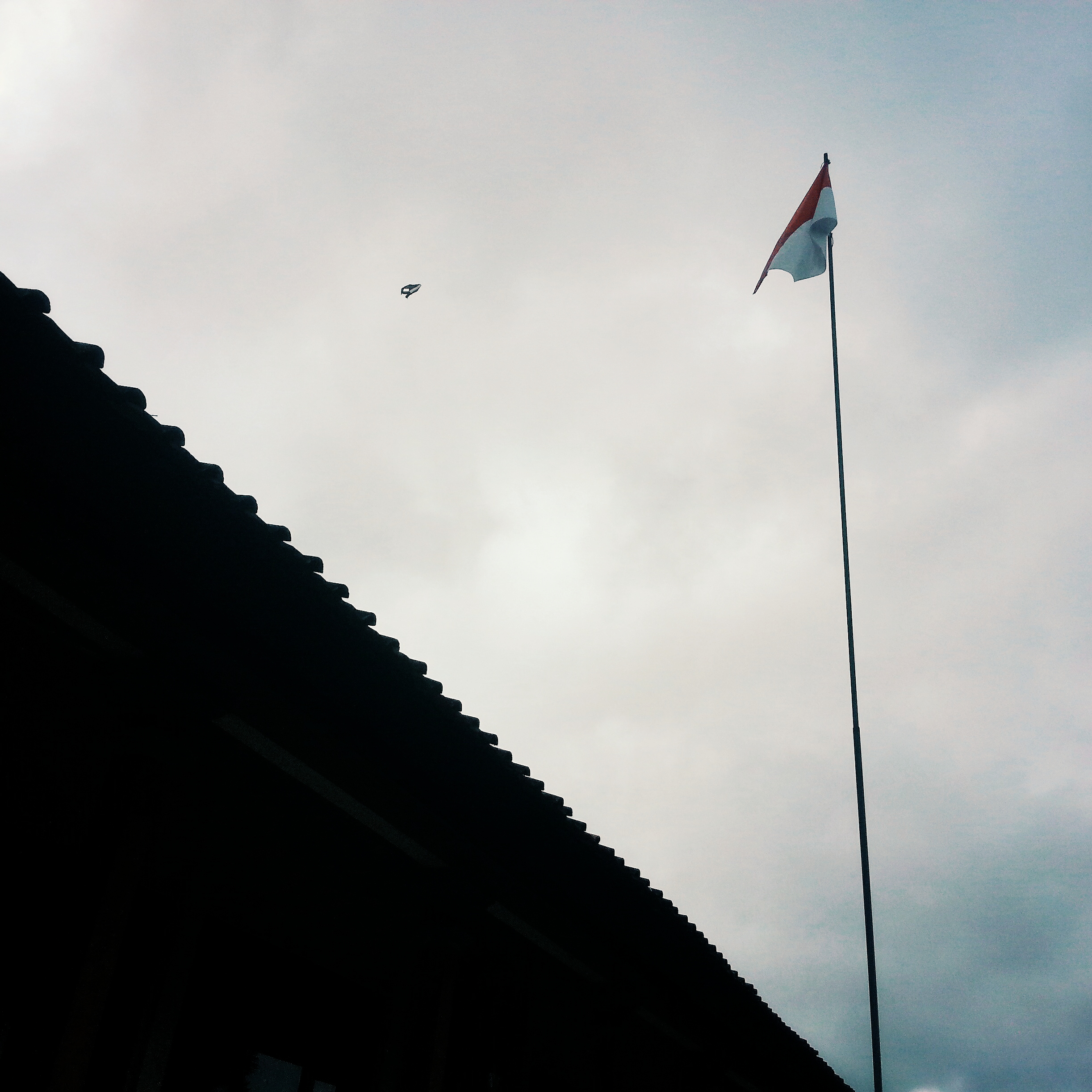
The Indonesian flag flies proudly in front of the classroom blockA classroom entrance with Balinese-style features
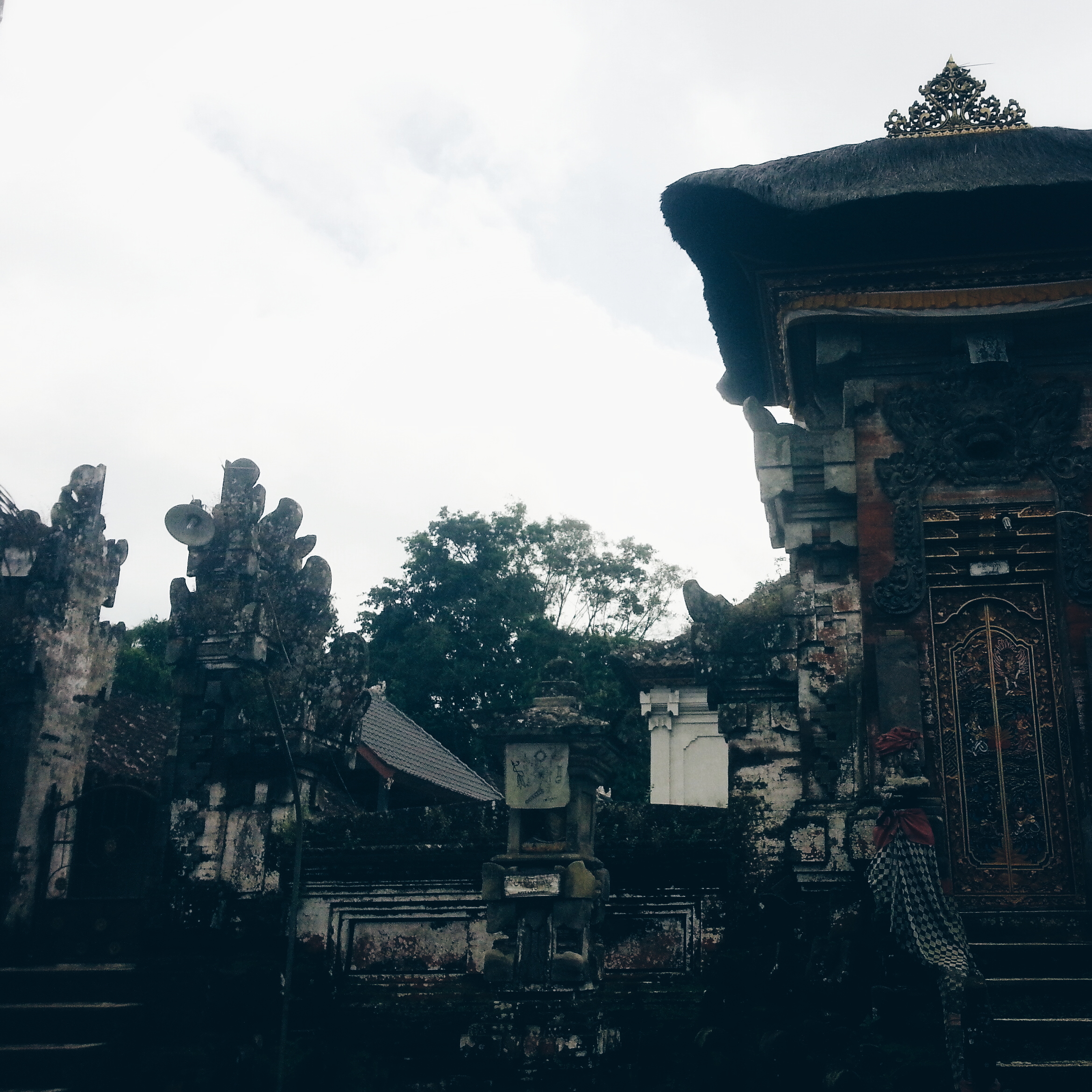
The tour guide also told us that before school starts, normally, the students would pray – according to their beliefs. In a typical Balinese community, there are Hindus, Muslims, and Buddhists living together in harmony. Normally, the Hindus would pray in a nearby temple, which was a stone throw’s away from the school.
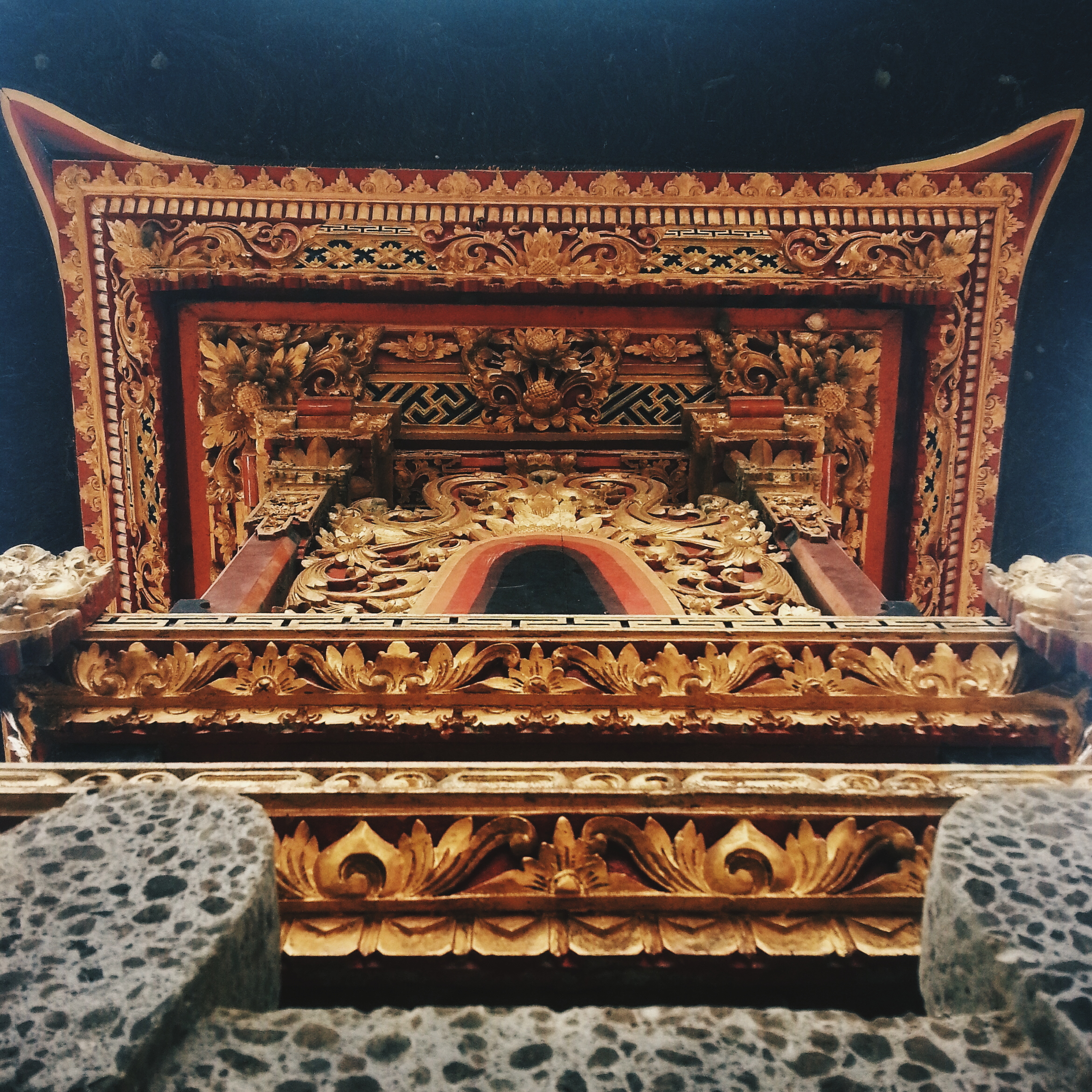
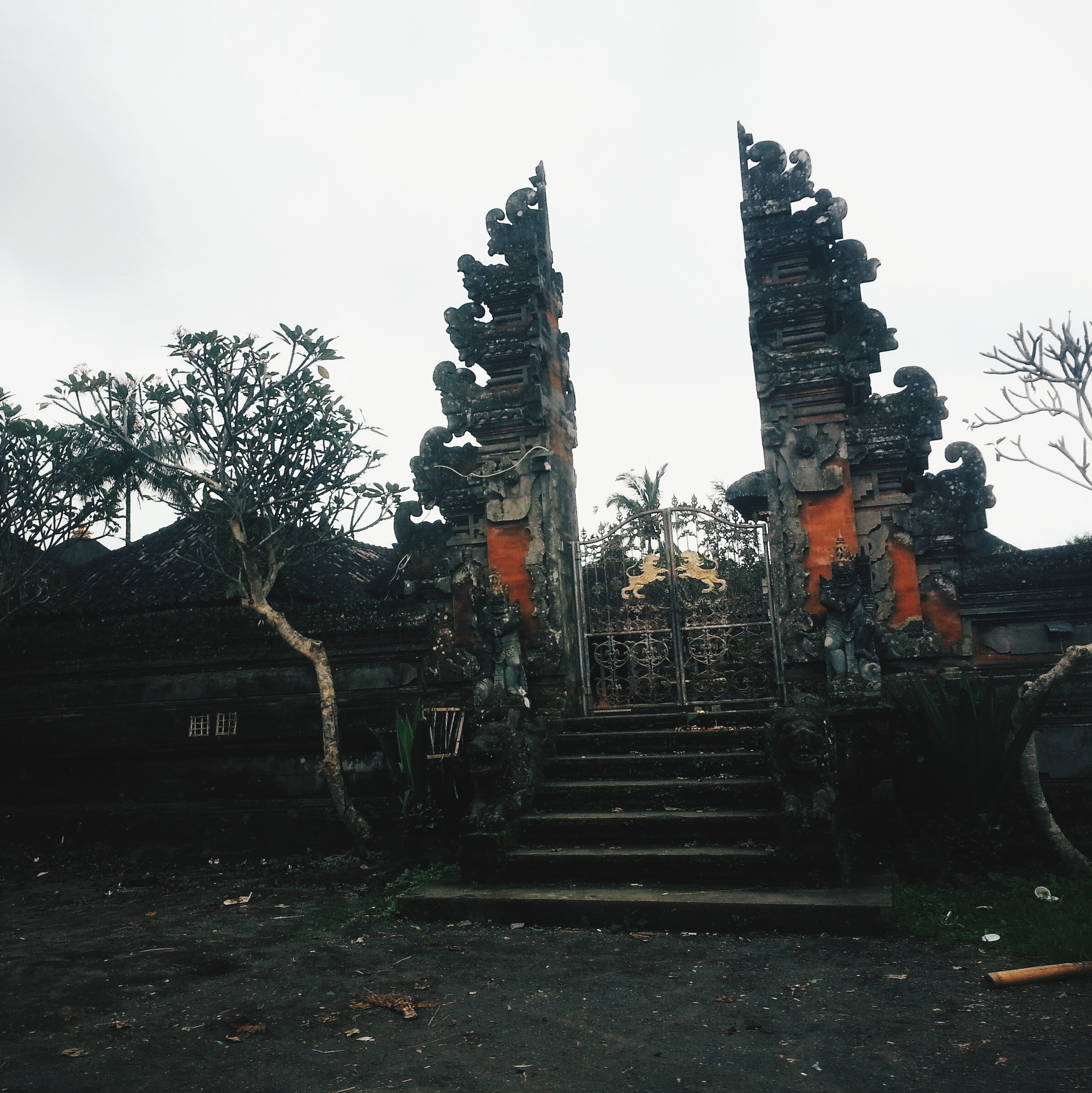
A Hindu shrine in the school compoundA nearby Hindu templeHindu temple entranceA ‘Candi’ with beautiful patterns
Well there was a small village nearby and I did a very brief look-around.
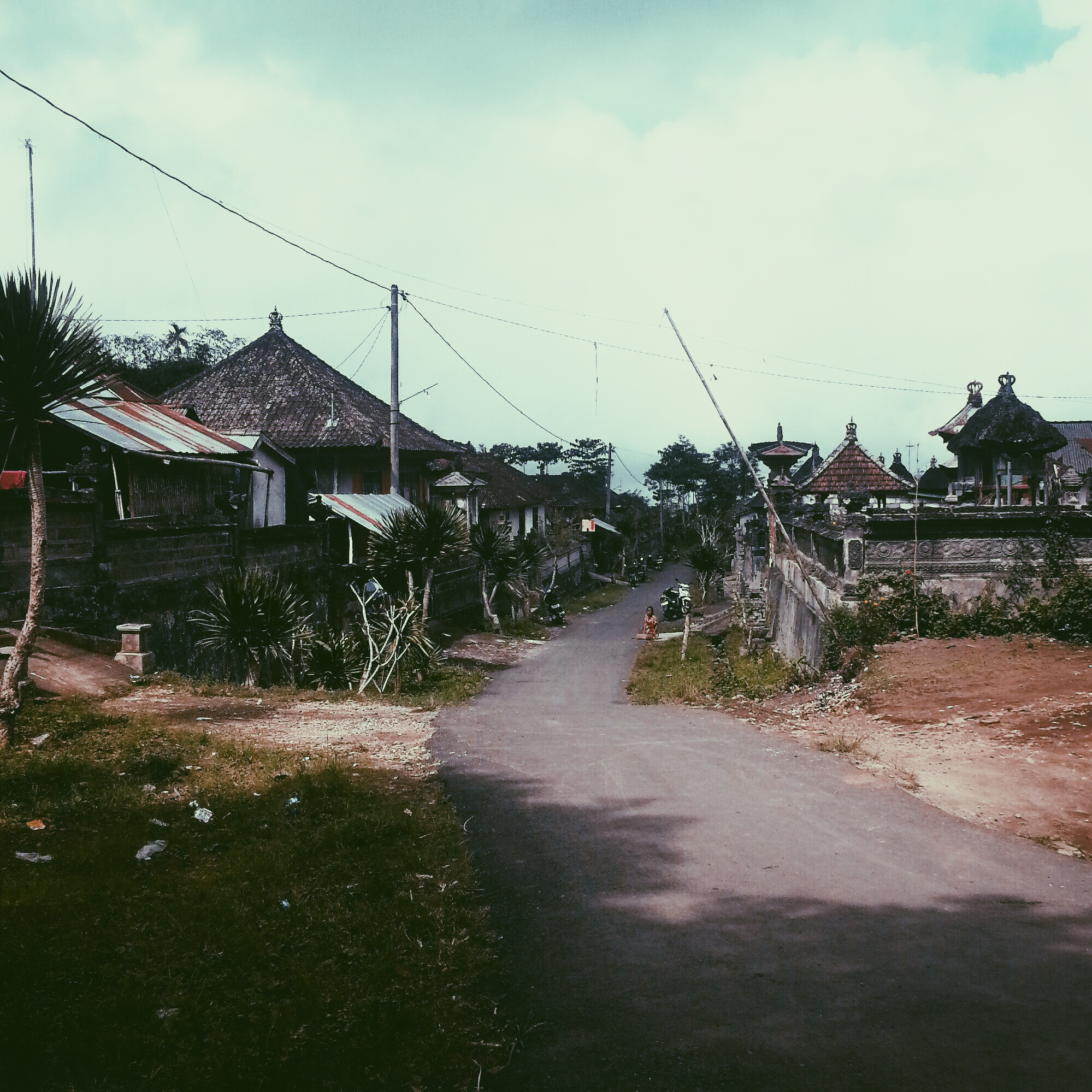
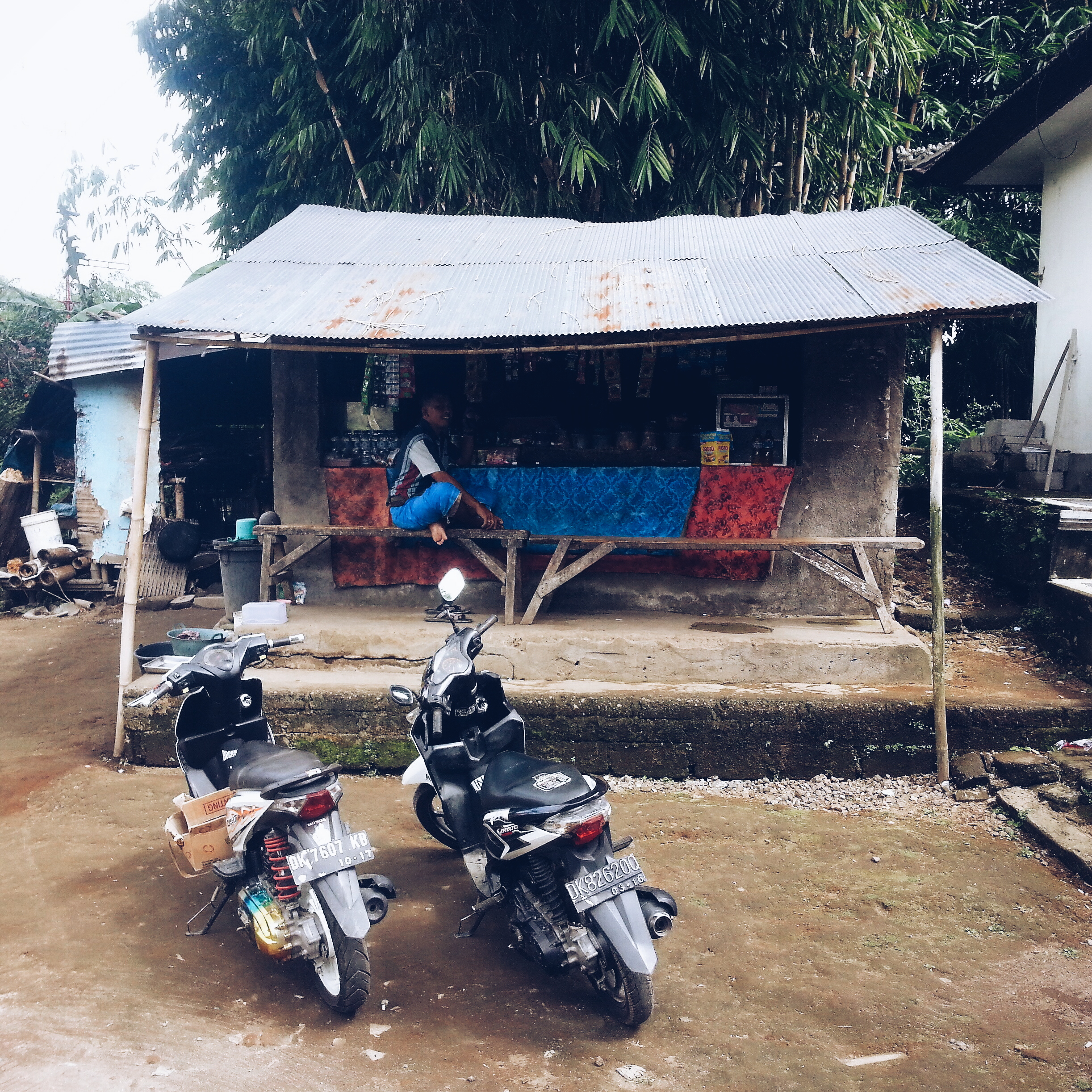
A street in the nearby villageA tuckshop in the village
Afterwards, we continued cycling downhill passing a couple more villages. It’s interesting how there’s a temple every few minutes.
A typical Balinese Hindu temple
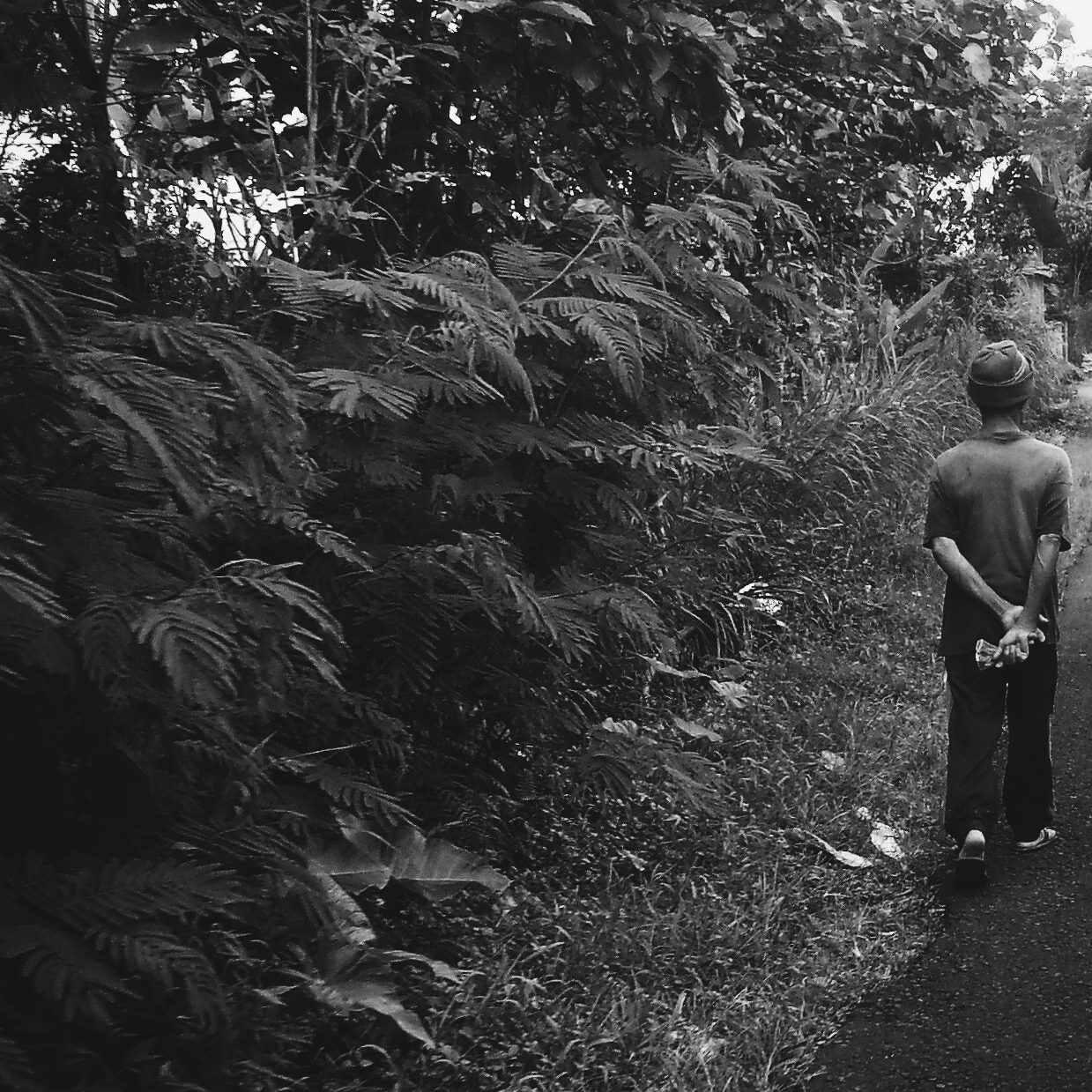
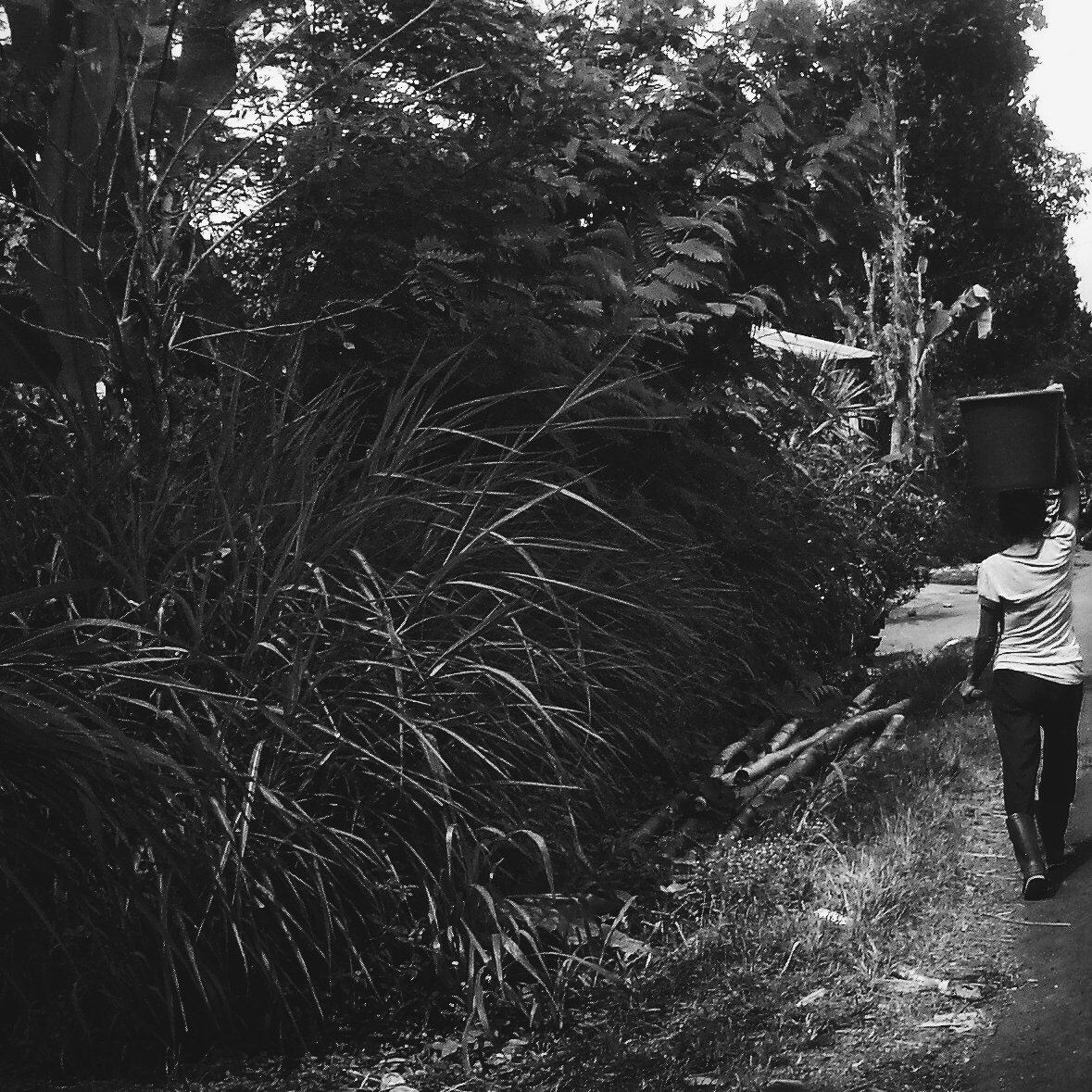
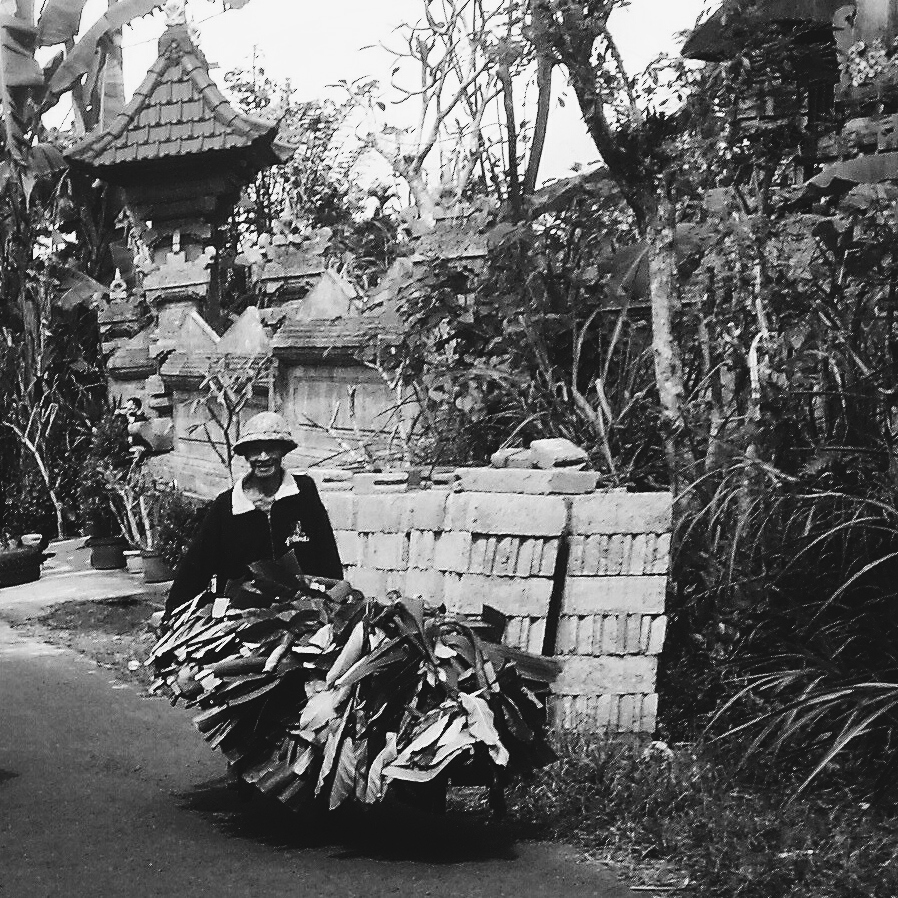
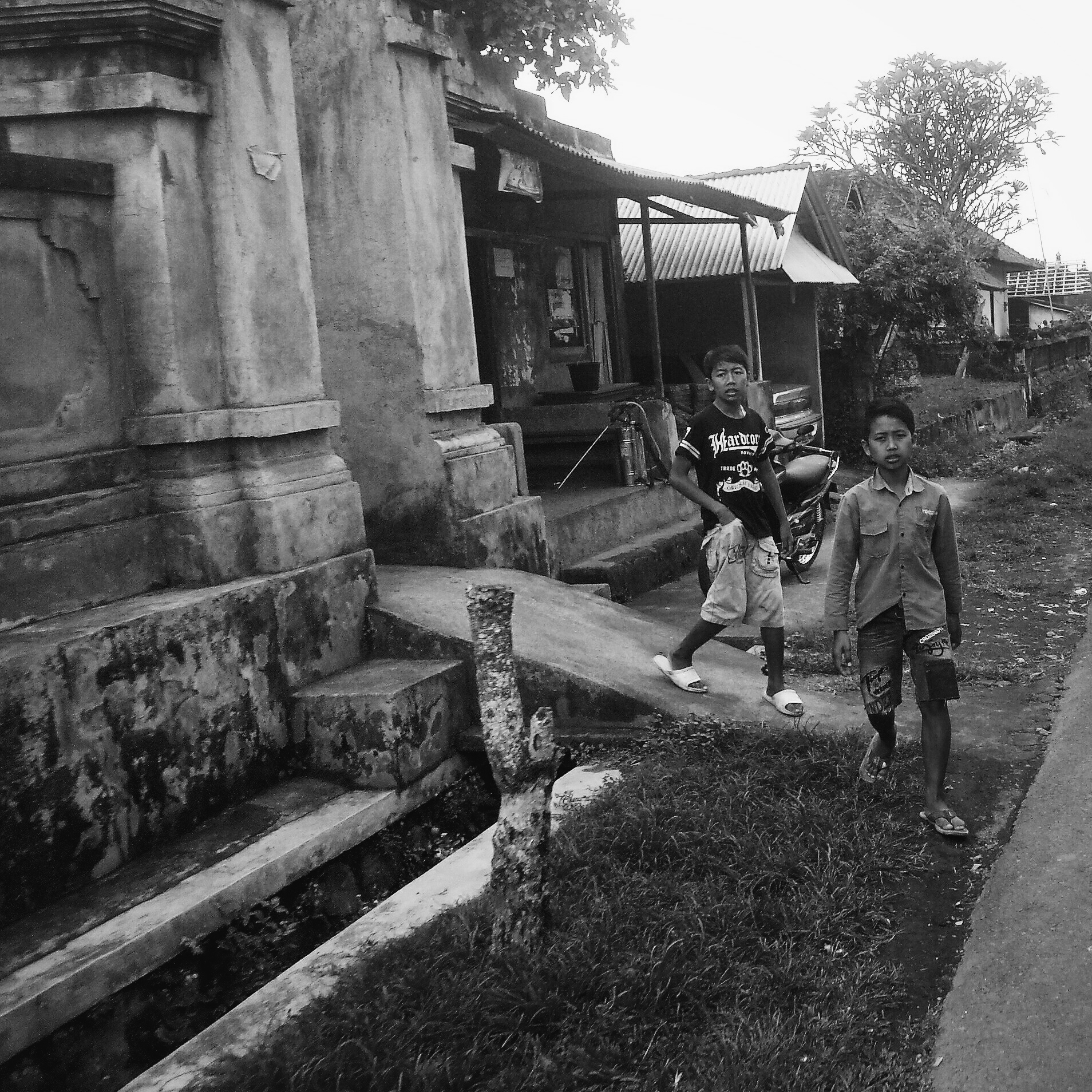
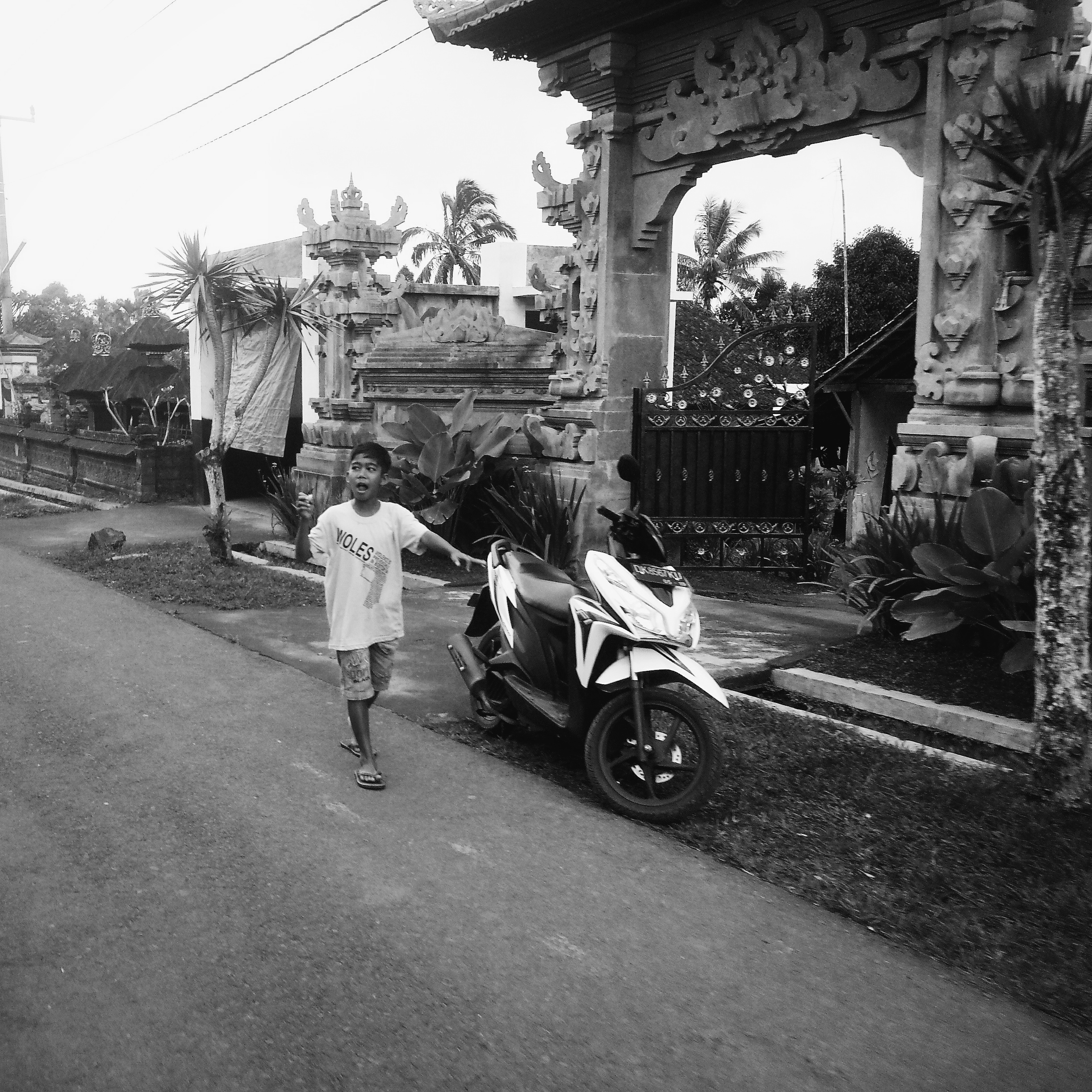
Along the pathways, as we were going downhill, we could find villagers carrying on with their own normal lives. And on top of that, the villagers whom we passed by were friendly too! Almost very single villager waved their hands frantically in the air, and shouted “Hello” with their wide smiles. It was as if they knew us personally.
A villager taking a strollA lady villager carrying stuff overA farmer pushing a cart filled with banana leavesProbably resting after a few hours of workSome of the children who greeted usThis child happens to be taking a walk outside his home
Our next stop was a paddy field. The farmers there let us give a taste of what is like beating the rice grains.
Farmers working hard in the fields
Afterwards, we visited a Balinese home which was under-construction. We explored the different parts of a Balinese home; which included the kitchen, bedroom, guest area, and a family praying area.
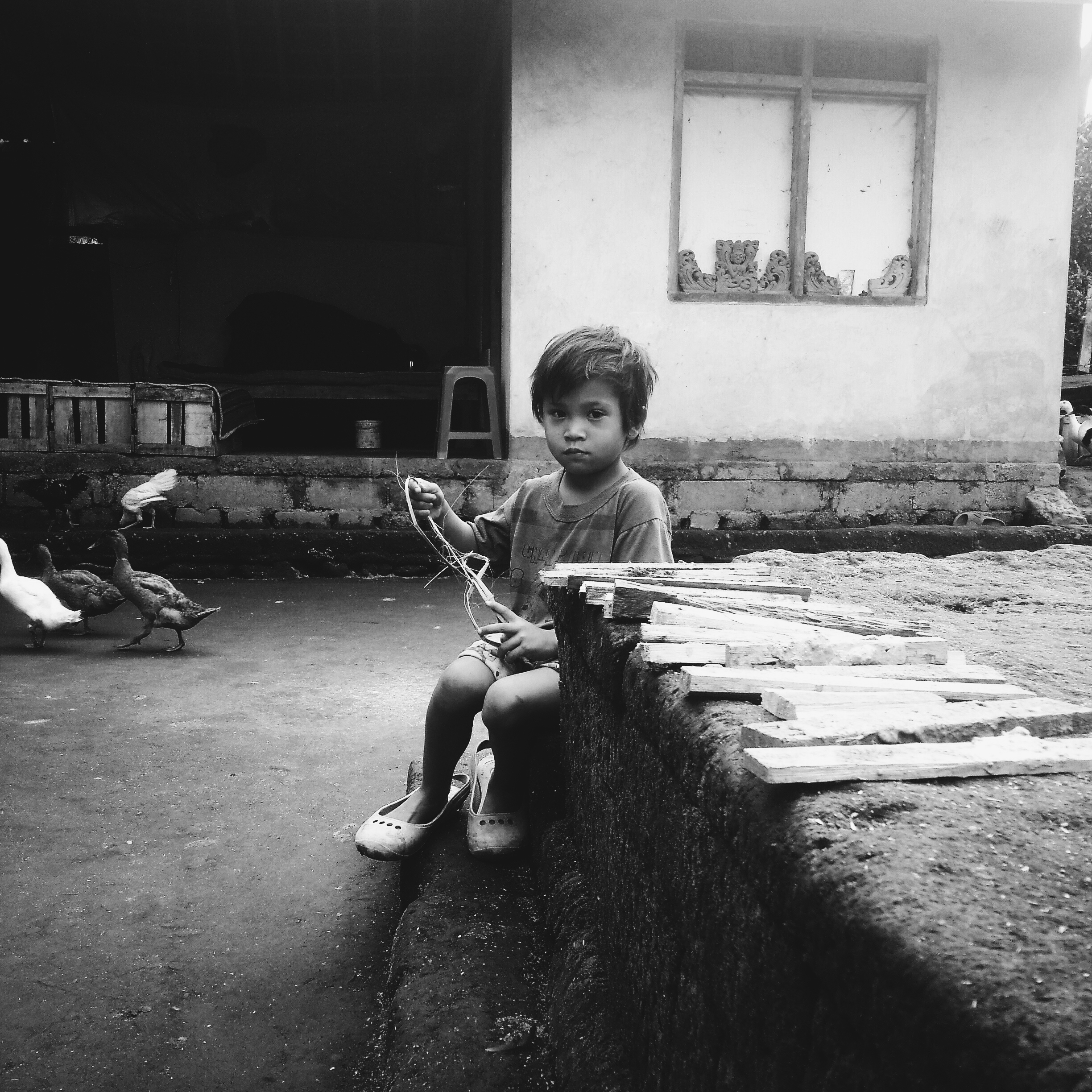
Family praying areaBaskets on the shelves of the kitchenWall patterns of the kitchenA child playing with planks of wood in the Balinese houseVillager working on the roofVillager constructing the bedroom
We ended our tour at another village. There was a busy market in the village with loads of villagers shouting out offers for what they were selling. We closed with a dance by a bunch of young Balinese girls and had some authentic Balinese cuisine.
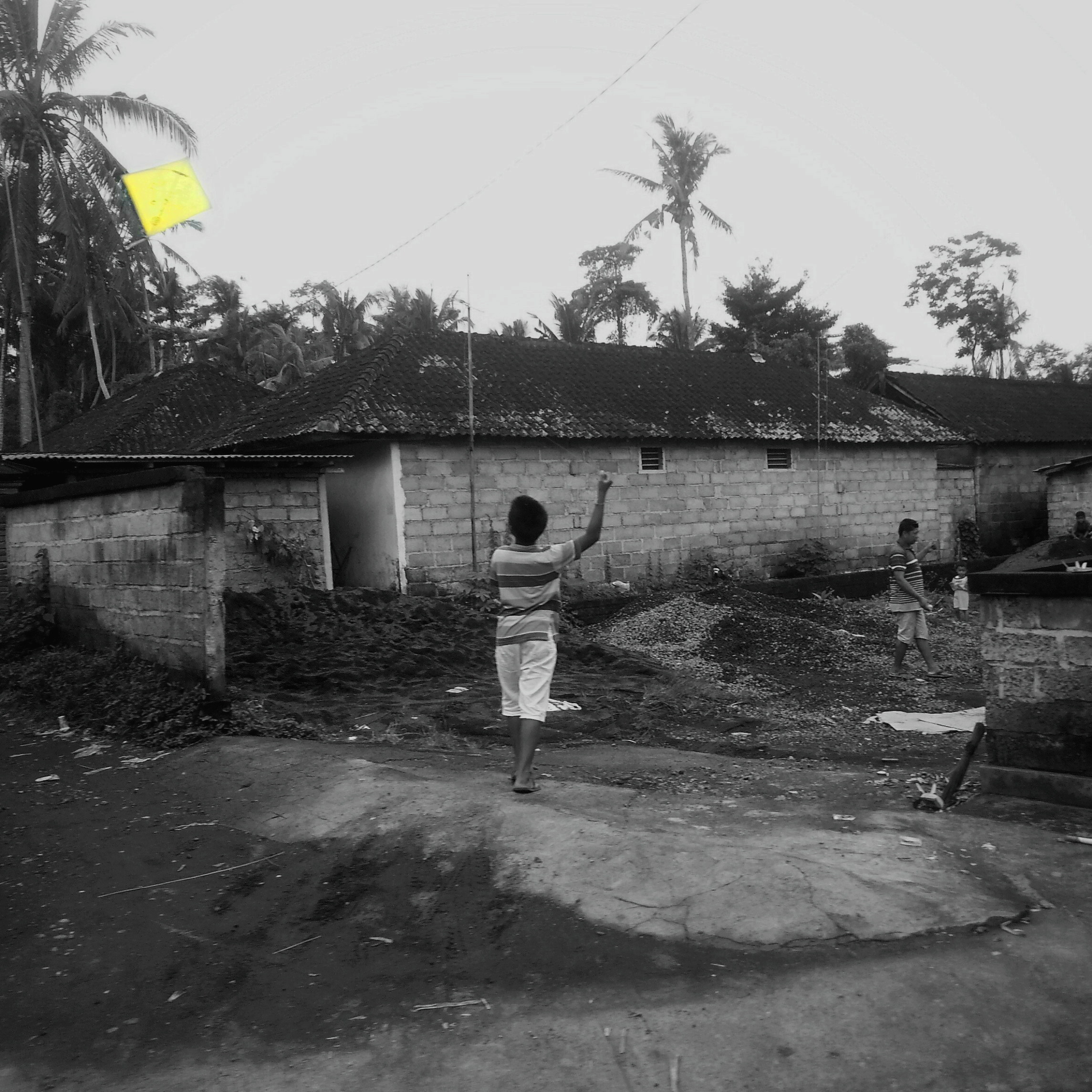
Wrapping up dried seedsA kid playing with a kite near the marketOone of the Balinese dancersAn elderly woman takes a break outside the marketOur lunch! NomnomnomBalinese village ‘skyline’
It was Ubin Day, and I volunteered for a coastal cleanup of the beaches on Pulau Ubin, an island in the north-east, still trapped in time. It was the first time in a few years I revisited this island. It’s an interesting place to go to since it is one of the last few villages we have here in this country. In just a 10-minute boat ride away, you are taken to a completely different environment and place. Well I finished my duties helping out with logistics and stuff, and there was a 2-hour break before the coastal cleanup starts. So, I decided to take the time to explore the island’s main village. Here are some of the photos I took during my time there.
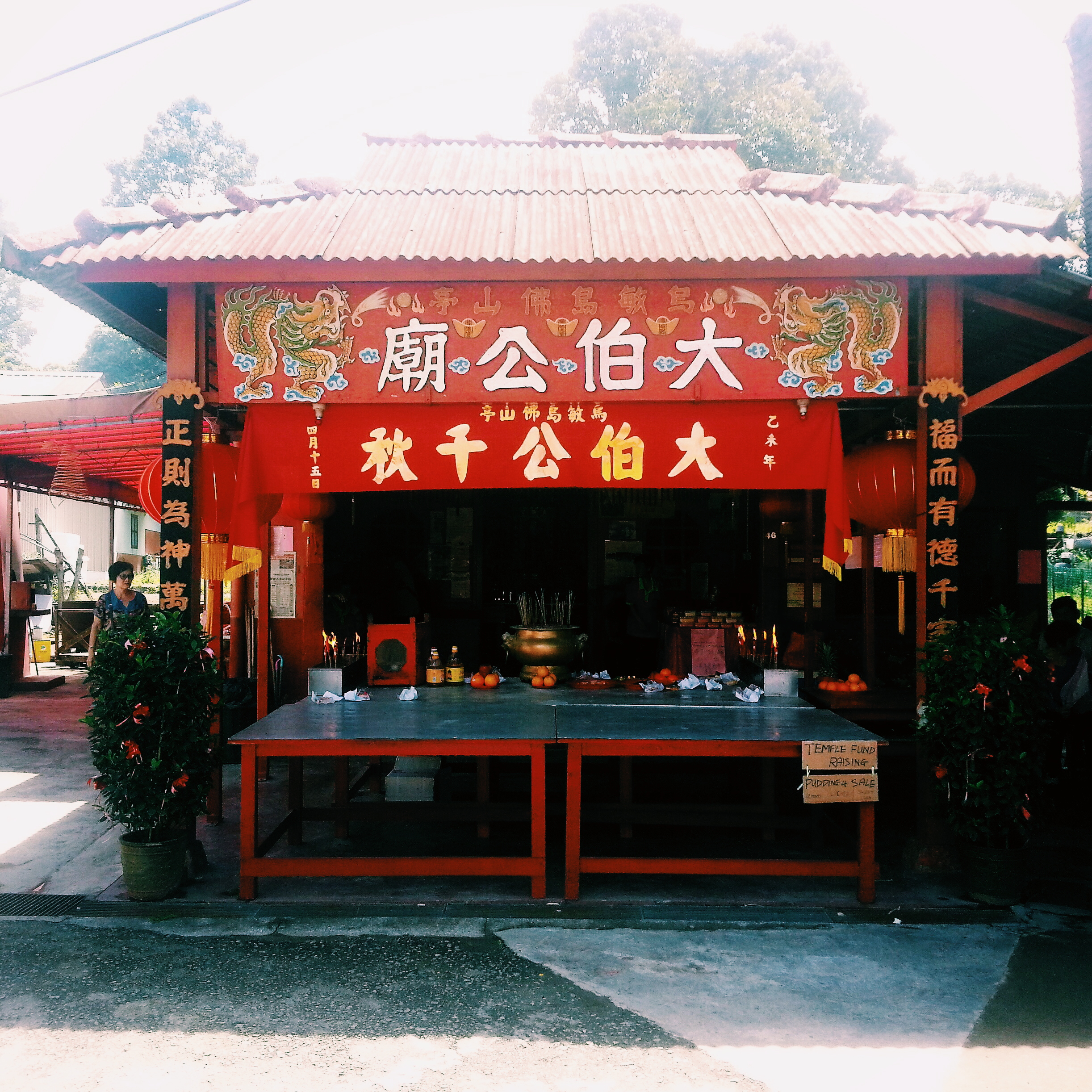
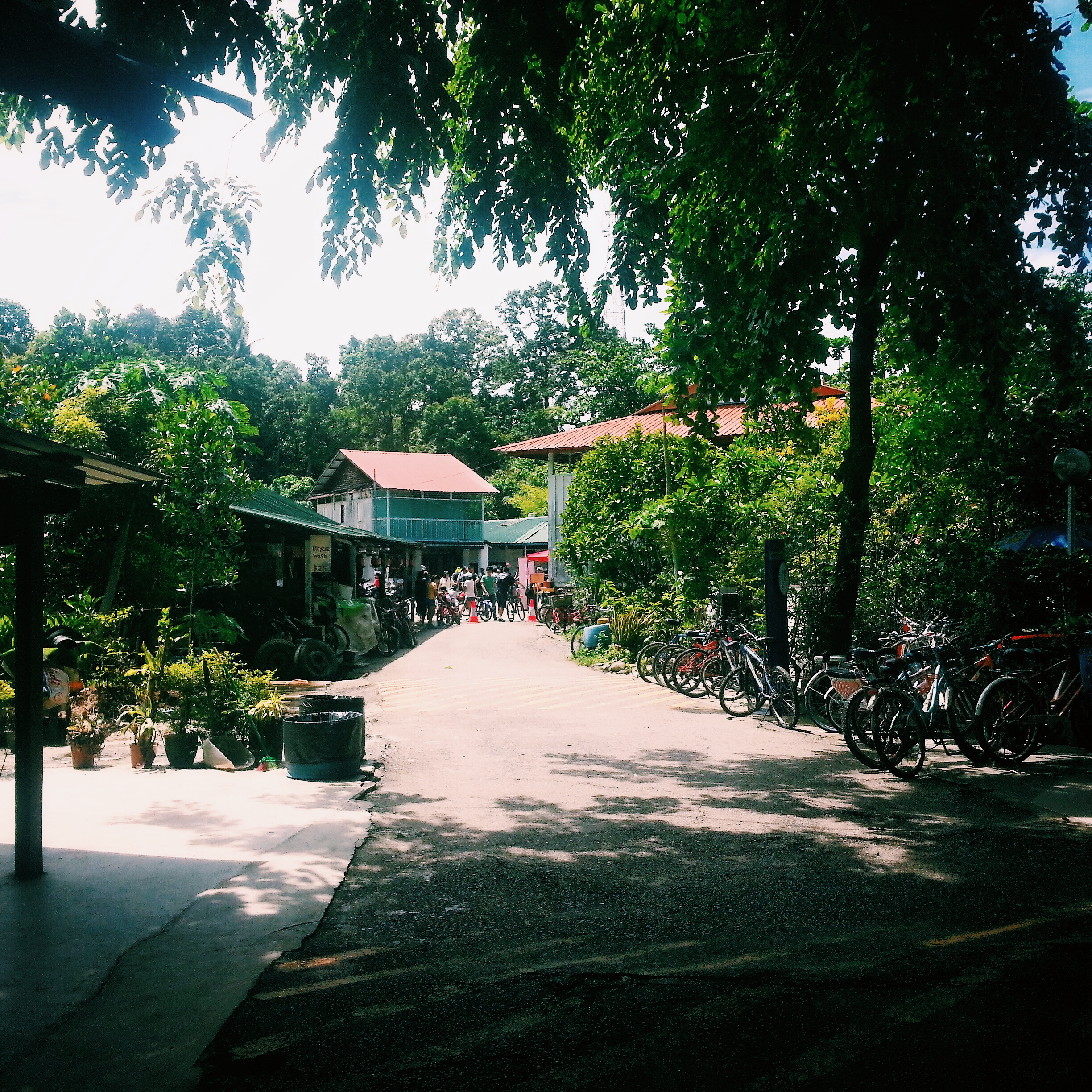
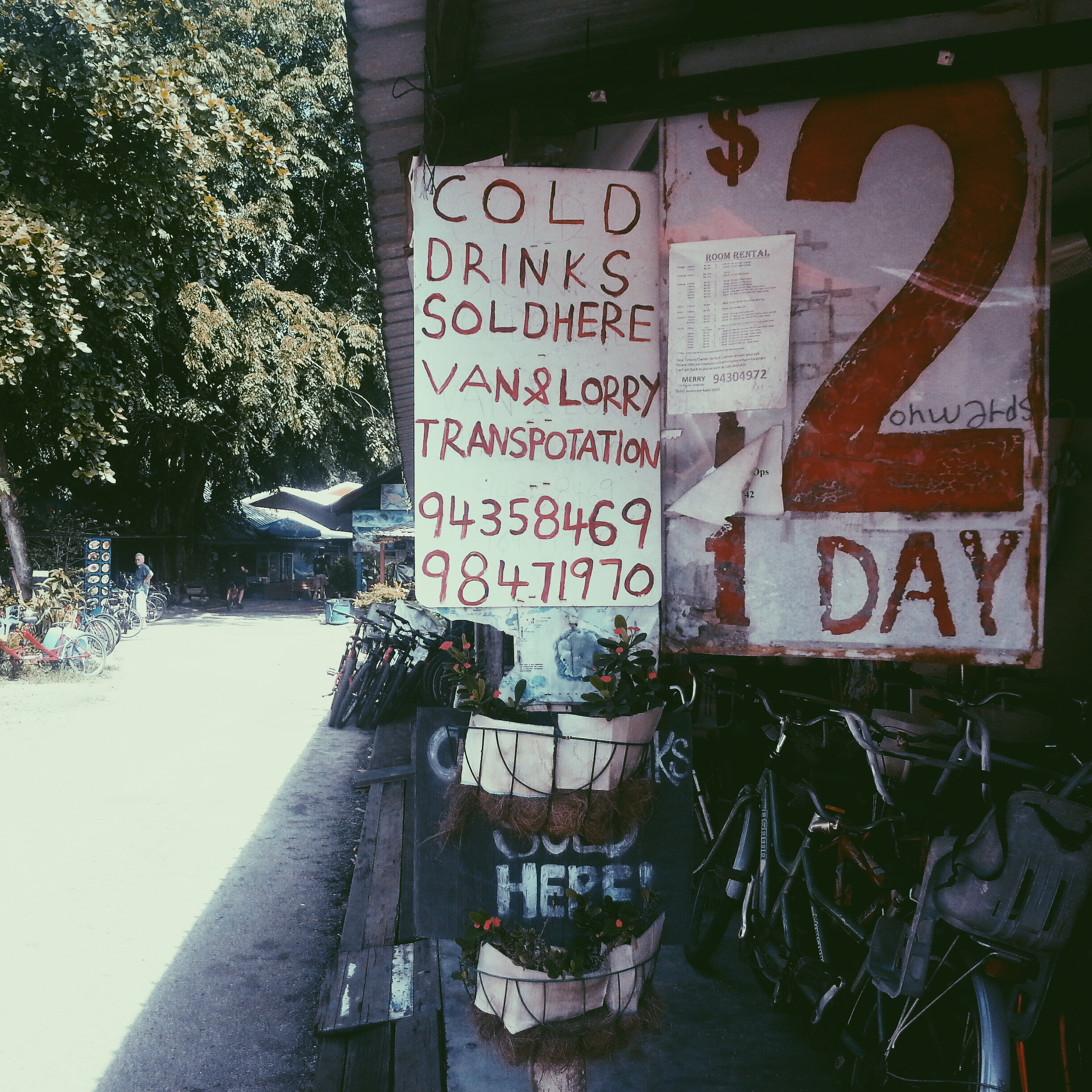
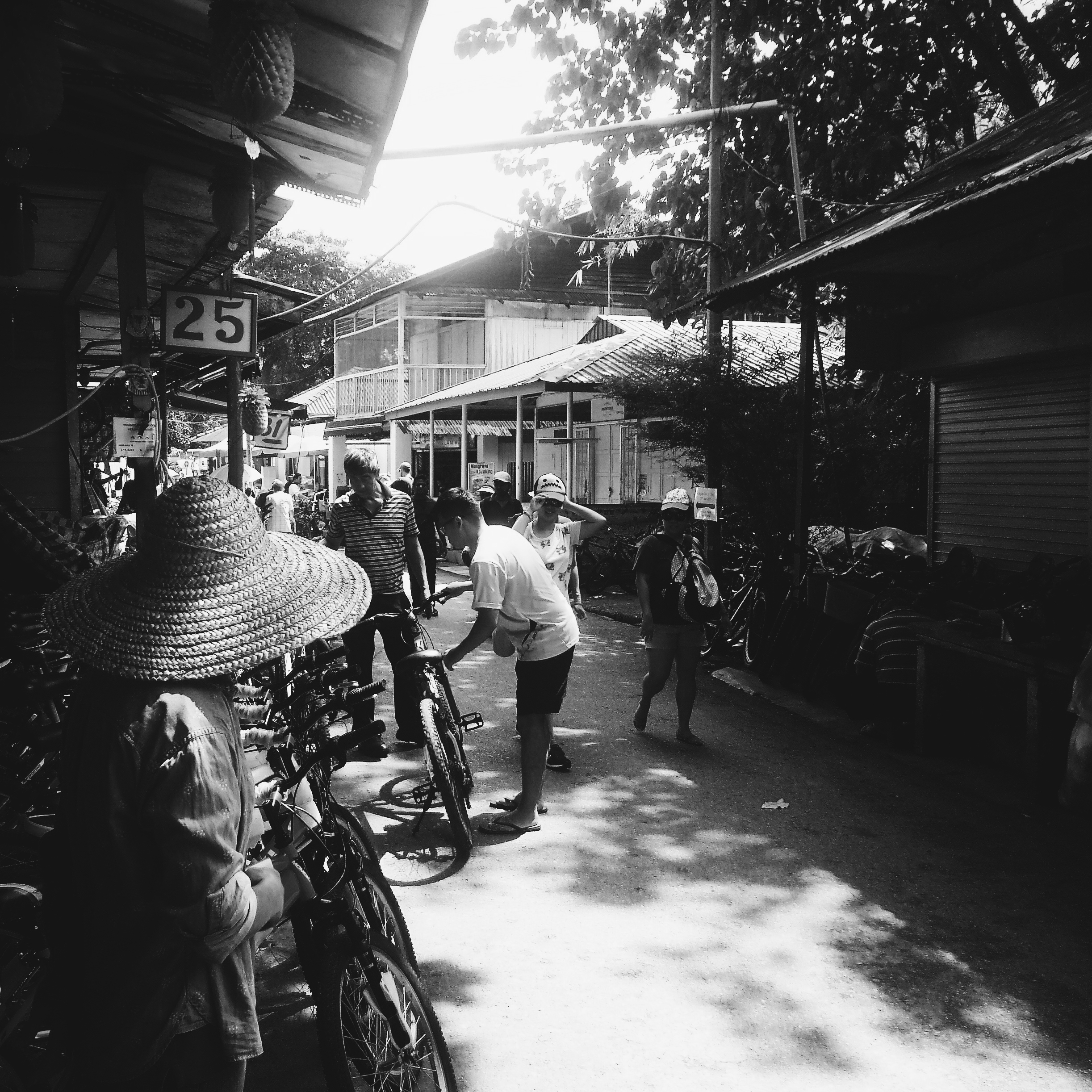
Bum Boat to Pulau UbinPulau Ubin Main VillageA Temple In Pulau UbinAnother View Of The Main VIllageOne Of The Drink Stalls In The Main VillageProcessed with VSCOcam with p5 presetA Typical Kampong HouseA Bike Rental ShopAlleyways In Between The ShopsA Bike Rental Shop Owner Looking Out For CustomersAn Underused PierTaxi Service
Sadly, my phone kinda died halfway through so I didn’t really get a chance to take more pictures of the village. Anyways, see you again Ubin! :’)











































































 Danish Danial Bin Anuar